E-commerce Search Demo
AI Assisted Filters
Parameters
Query:
Category filters: All
AI Assist: ON
Page: 1
Products
Time taken: 4 Max score: 1000.000 Total hits: 100 Full time: 0.0 s
Showing 1-10 of 100 products
 B001HFVXGC Availability: Currently unavailable Score: 1000.000 Category: Home Rating: 4.6 Votes: 3 Find similar productsPeugeot Clef du Vin Professional Service, Stainless Steel. Saveurs de vins: a line of premium quality wine accessories, combining beautiful form with unerring function. Whether traditional or contemporary, wine lovers will appreciate the quality and utility of Peugeot’s openers, decanters, aerators, and thermal control tools. The marquee line of Peugeot’s tasting glasses is the incomparable Les Impitoyables (the pitiless) glasses. So-named because they reveal everything about a wine – its features and its faults, each is hallmarked with the Les Impitoyables etched on its base. 2009 marks an exciting introduction for Peugeot: the Clef du Vin tool. Directly translated, it means Key of Wine. It allows the user to assess the aging potential of any wine and to better enjoy a bottle of wine that was opened prematurely. A unique tool, it is calibrated to rapidly mimic natural bottle aging by acting as a catalyst upon specific compounds found in all wines. When properly used, each second the Clef du Vin disk is in contact with the wine mimics one year of aging: the effect is cumulative and irreversible. A catalyst transfers and loses nothing, so it is completely safe to use and is guaranteed to be effective for life on all types of wines: reds, roses, whites, dry mellow, sweet, and sparkling. Pocket Size Clef du Vin: the dot and holder fold into the handle, making it easy to transport in a pocket or purse; calibrated for a 100 ml glass of wine. Service Size Clef du Vin: rigid, elongated spoon shaped silhouette, making it convenient for everyday use; calibrated for a 100 ml glass of wine. Bottle Size Clef du Vin: rigid, elongated spoon shaped silhouette, larger than the service model; calibrated for a 750 ml bottle of wine. The Professional Clef du Vin models are identified by the all stainless steel construction. The Elegance Clef du Vin models have beautiful cherry wood accents. Both Clef du Vin models arrive in a leatherette box. |  B004TVM5W2 Availability: Currently unavailable Score: 5.525 Category: Home Rating: 3.4 Votes: 14 Find similar productsClef du Vin Pocket Wine Aging Key Wine Age Tool w/ Leather Holster. . |
 B000JLIREG Availability: Currently unavailable Score: 5.435 Category: Home Rating: 3.1 Votes: 12 Find similar productsPek Preservino Hand Held Wine Preserver. The Preservino uses high purity Argon gas to keep wine at the peak of freshness. Simply insert the Preservino's injection nozzle into a hole at the cork's head, inject the Argon gas, remove the nozzle from the cork, and...voila...the Preservino protects every bottle effectively. Wine oxidizes when exposed to air, causing a distinctive sherry-like off-odor and brownish tint that is increasingly recognizable with wine consumption experience. When wine tannins are oxidized, hydrogen peroxide is produced which subsequently oxidizes ethanol into acetaldehyde - the principal compound producing the oxidized odor and masking the wine's fragrance. On opening a bottle, acetaldehyde generation can be detected within as little as two to eight hours, depending on varietal, age, amount of wine contact with air, temperature, etc. White wines and older reds are particularly susceptible to oxidation damage. The biggest factor in oxidation is the amount of wine surface contact with air following opening and pouring. Therefore, wine preservation products that are most effective at reducing air contact with the wine surface will best reduce oxidation. The Wine Steward is the first device ever to truly extend the life of an open bottle of wine and ensure the wine is served at the precise temperature for the perfect flavor-considering different wines require different temperatures for just the right taste. It's the taste of wine that's important to wine lovers, and the Wine Steward is all about taste. A revelation to the wine lover, and indispensable to the connoisseur... the Wine Steward is an essential purchase, and the perfect gift. |  B00005NJEU Availability: Currently unavailable Score: 5.376 Category: Home Rating: 4 Votes: 18 Find similar productsRiedel Vinum Extreme Bordeaux/Cabernet Wine Glass, Set of 4. Product Description VINUM EXTREME is the evolution of the machine-blown pleasure glass concept that began with the mouth-blown Sommeliers series in 1973. Since the quality of wine is constantly improving there is a need to develop forms that do justice to the denser, more concentrated wines, which are closer to perfection. With its glasses, Riedel has given wine a way to optimally transmit its aroma and flavor to the senses of the connoisseur. The revolutionary innovations that have been developed by Riedel over the years in the interaction between the shape of the glass and enjoyment of the wine are common knowledge today, meaning that wine lovers and connoisseurs naturally expect these features in a wine-friendly glass. Our customers across the globe are convinced that only a Riedel glass conveys the sensuousness of the wine. It is therefore essential to offer high-quality, wine-friendly glasses on the market in different price brackets. Linked with this, the development of new shapes that are adapted to the wine, such as Vinum Extreme, is a must! Elegant design for a unique and pleasurable wine-drinking experience: the machine-blown Cabernet glass from the Vinum Extreme series - a wine experience for all your senses Amazon.com Made in Europe by the world's most renowned wine-glass maker Riedel Crystal, founded in 1756, the four large glasses in this set are ideal for Cabernet Sauvignon, Merlot, and full-bodied red Bordeaux wines like Cabernet Franc. The glasses are from Riedel's Vinum Extreme series, which are distinguished by their bowls' dramatically flared diamond shape. The glasses provide an exceptionally wide evaporation surface, thereby intensifying wines' bouquet and silky texture. The glasses are machine-blown of 24 percent lead crystal and conform to Riedel's exacting standards: colorless, transparent, and thin-walled, with lips cut and polished so wine flows smoothly onto the tongue. These glasses are 9-3/4 inches high and hold 30-3/8 ounces. Though glasses shaped and sized for different types of wine seem commonplace today, when Riedel introduced this idea in 1961 it was revolutionary. Since then Riedel has continued fine-tuning glasses to bring out the best characteristics in wines and spirits. Varying bowls' shapes and sizes affects the position of the head when sipping and where wine first contacts the tongue's various taste zones. Riedel crystal is used by fine restaurants all over the world and thus must stand up to frequent trips through a dishwasher. But because lead crystal has a soft, coarse surface to convey intense aromas, Riedel recommends the glasses be hand washed. --Fred Brack From the Manufacturer A Glass Is Not Just a Glass The Content Determines the Shape Riedel's belief when it comes to develop a shape is that design ideas are not born on a drawing board but shaped by trial and error with the help and support of the worlds greatest palates. A person interested in wine is led by color, bouquet, and taste. He often does not consider the glass--used as an instrument to convey the message of the wine. Over the years we have acquired some interesting scientific explanations as to why the shape of a glass so influences the bouquet and taste of alcoholic beverages. The first discovery was made while enjoying wine. The same wine seemed completely different, when served in a variety of glasses--so much so that experienced connoisseurs were made to believe that they were tasting a different wine. In the next step, Riedel was able to determine shapes in which the wine seemed to improve. The grape variety is the key factor determining the relationship between fruit, acidity, tannin, and alcohol in wine. We started to recognize the complicated role played by size and shape in conveying the message of a fine wine. The Influence of Size and Shape on Alcoholic Beverages Bouquet The quality and intensity of aromas are determined by the personality of a wine and the relative affinity of the glass shape. Bouquet can only develop in a range of temperatures. Low temperatures temper the intensity, whereas high temperatures push mainly alcoholic fumes. When describing the importance of the glass shape we assume that the right serving sizes (white wine: 2-3 ounces; red wine: 3-5 ounces) and temperatures are respected. When wine is poured out, it starts to evaporate and the aromas quickly fill the glass in layers according to their density and specific gravity. The lightest vapors are at the rim, the heaviest on the bottom. Consequently the size and the shape of the glass can be fine-tuned to the typical aromas of a grape variety: The lightest, most fragile aromas are those which resemble flower and fruit aromas. Slender, egg-shaped glasses emphasize this kind of aroma. The lightest, most fragile aromas are those which resemble flower and fruit aromas. Slender, egg-shaped glasses emphasize this kind of aroma. The middle is filled with green vegetal aromas and earthy mineral components. The middle is filled with green vegetal aromas and earthy mineral components. The heaviest aromas are those of wood and alcohol. When swirling the glass, the wine moistens additional surface which increases the evaporation and intensity of the aromas. However, it does not allow layers of bouquet to blend together. It is for this reason that the different qualities of aroma noted in a variety of glasses are amazing. (The same wine may have fruit aromas in one glass and green and vegetal herbiness in another). To eliminate this effect, you would have to move the layers vertically and shake the glass. Only then would you discover the same bouquet in all glasses! Experienced tasters rely on their olfactory talents more than their palates to determine the provenance of the sample or the grape variety in blind tastings. Very large glasses with a capacity of more than 25 ounces allow you to sniff through the layers of bouquet by inhaling extremely gently and consistently for more than ten seconds. You can smell through the fruit aromas to the alcohol fumes. Palate We cannot dictate firm rules over personal preferences, though our advice may provide valuable guidelines. Years of experience have shown that 90 percent of wine lovers approve of the suggestions made by Riedel. Physical movements and adjustments are controlled subconsciously. The shape of the glass forces the head to position itself in such a way that you drink and do not spill. Wide open glass shapes require us to sip by lowering the head. Narrow rims roll the head backwards and the liquid flows because of gravity. This delivers and positions the beverage to different zones of the palate. Drinking in big sips to quench the thirst will diminish the influence of the vessel, and only the aftertaste will offer flavor. Alcoholic beverages are consumed according to their strength in small to very small quantities at a time. This gives the chance to control the flow where the beverage contacts the tongue. The resulting nerve message is delivered at a speed of 400 m/sec to our brain where it leaves a lasting first impression. In most cases we would be disappointed if the sweet fruit flavors were lacking, and tart components dominated the taste picture. If this occurs, the blame is usually put on the quality of the wine but never on the shape of the glass. Shape Every wine has its own blend--fruit, acidity, mineral, tannin, alcohol--based on the grape variety, soil, and climate. By studying the character of the grape variety Riedel is able to deliver wine and spirits to the nose and palate so that each beverage can reach its full expression. The finish plays an important part in the overall impression and even this is strongly influenced by the design of the bowl.It will take time to recognize that a glass is not just a glass but an instrument of pleasure and enjoyment. Key Factors in Selecting a Wine Glass Type A wine glass should be: Colorless Transparent Unadorned Thin-walled With a cut and polished lip Egg-shaped Stemmed Made of lead crystal Size The size of a glass is important, showing the quality and intensity of aromas. The evaporation space has to be chosen according to the personality of the wine or spirit. It is best to respect the appropriate serving quantities: Approximately three ounces for white wine Four up to a maximum of five ounces for red wine One ounce for spirits. General RulesRed wines and their character require large glasses, White wines medium-sized glasses, and Spirits small ones in order to emphasize the fruit character and not the alcohol. Shape Riedels belief: The content determines the shape The glasses are designed to emphasize a wines harmony, not its faults. Riedel has always viewed the wine glass as an instrument to bring together: Personality of the wine Smell Taste The sense of sight To appreciate fully the personality of different grape varieties and the subtle character of wines, it is essential to have an appropriately fine-tuned glass shape. The shape is responsible for the flow of the wine and consequently where it touches the various taste zones of the tongue. The initial contact point depends on the shape and volume of the glass, the diameter of the rim, and its finish (whether it is cut and polished or rolled edge) as well as the thickness of the crystal. As you put your wine glass to your lips, your taste buds are on the alert. Once the tongue is in contact with the wine three messages are transmitted at the same time: temperature, texture, and taste. Wine is composed of different elements: fruit, acidity, mineral components, tannin, and alcohol. The combination between the sense of smell and taste leads into the wonderful world of flavor. Taking Care of Riedel Stemware As Riedel glasses are executed in the finest lead crystal, it is important to pay attention to their correct care. The surface is coarser than ordinary glass, which has the advantage of conveying more intense aromas. On the other hand the surface is softer, more delicate, easily scratched, and quickly absorbs environmental odors such as a cardboard smell or the wood of your cupboard. As our glasses have a large surface, this intensifies the effect. If the glasses are not used frequently, nose them before serving. Hand Washing Do not be afraid when washing your glasses by hand. Depending on how greasy the glasses are, use more or less detergent in lukewarm water. Rinse thoroughly afterwards under running water. Before polishing your glasses, steam them over a bowl of boiling water for that extra sparkle. The best way to polish your Riedels is to use lint-free linen that has been washed without a fabric softener--the softener leaves a light film of grease which kills the bubbles in champagne. When wiping, use two cloths and both hands--your left hand to hold the bowl, your right hand to wipe it. Do not force the cloth into the bowl, otherwise the thin walls will not hold the pressure. The disadvantage of holding the glass by the base while wiping the bowl is that you twist the stem which may break. The heaviest aromas are those of wood and alcohol. When swirling the glass, the wine moistens additional surface which increases the evaporation and intensity of the aromas. However, it does not allow layers of bouquet to blend together. It is for this reason that the different qualities of aroma noted in a variety of glasses are amazing. (The same wine may have fruit aromas in one glass and green and vegetal herbiness in another). To eliminate this effect, you would have to move the layers vertically and shake the glass. Only then would you discover the same bouquet in all glasses! Experienced tasters rely on their olfactory talents more than their palates to determine the provenance of the sample or the grape variety in blind tastings. Very large glasses with a capacity of more than 25 ounces allow you to sniff through the layers of bouquet by inhaling extremely gently and consistently for more than ten seconds. You can smell through the fruit aromas to the alcohol fumes. Palate We cannot dictate firm rules over personal preferences, though our advice may provide valuable guidelines. Years of experience have shown that 90 percent of wine lovers approve of the suggestions made by Riedel. Physical movements and adjustments are controlled subconsciously. The shape of the glass forces the head to position itself in such a way that you drink and do not spill. Wide open glass shapes require us to sip by lowering the head. Narrow rims roll the head backwards and the liquid flows because of gravity. This delivers and positions the beverage to different zones of the palate. Drinking in big sips to quench the thirst will diminish the influence of the vessel, and only the aftertaste will offer flavor. Alcoholic beverages are consumed according to their strength in small to very small quantities at a time. This gives the chance to control the flow where the beverage contacts the tongue. The resulting nerve message is delivered at a speed of 400 m/sec to our brain where it leaves a lasting first impression. In most cases we would be disappointed if the sweet fruit flavors were lacking, and tart components dominated the taste picture. If this occurs, the blame is usually put on the quality of the wine but never on the shape of the glass. Shape Every wine has its own blend--fruit, acidity, mineral, tannin, alcohol--based on the grape variety, soil, and climate. By studying the character of the grape variety Riedel is able to deliver wine and spirits to the nose and palate so that each beverage can reach its full expression. The finish plays an important part in the overall impression and even this is strongly influenced by the design of the bowl.It will take time to recognize that a glass is not just a glass but an instrument of pleasure and enjoyment. Key Factors in Selecting a Wine Glass Type A wine glass should be: Colorless Colorless Transparent Transparent Unadorned Unadorned Thin-walled Thin-walled With a cut and polished lip With a cut and polished lip Egg-shaped Egg-shaped Stemmed Stemmed Made of lead crystal Size The size of a glass is important, showing the quality and intensity of aromas. The evaporation space has to be chosen according to the personality of the wine or spirit. It is best to respect the appropriate serving quantities: Approximately three ounces for white wine Four up to a maximum of five ounces for red wine One ounce for spirits. General RulesRed wines and their character require large glasses, White wines medium-sized glasses, and Spirits small ones in order to emphasize the fruit character and not the alcohol. Shape Riedels belief: The content determines the shape The glasses are designed to emphasize a wines harmony, not its faults. Riedel has always viewed the wine glass as an instrument to bring together: Personality of the wine Smell Taste The sense of sight To appreciate fully the personality of different grape varieties and the subtle character of wines, it is essential to have an appropriately fine-tuned glass shape. The shape is responsible for the flow of the wine and consequently where it touches the various taste zones of the tongue. The initial contact point depends on the shape and volume of the glass, the diameter of the rim, and its finish (whether it is cut and polished or rolled edge) as well as the thickness of the crystal. As you put your wine glass to your lips, your taste buds are on the alert. Once the tongue is in contact with the wine three messages are transmitted at the same time: temperature, texture, and taste. Wine is composed of different elements: fruit, acidity, mineral components, tannin, and alcohol. The combination between the sense of smell and taste leads into the wonderful world of flavor. Taking Care of Riedel Stemware As Riedel glasses are executed in the finest lead crystal, it is important to pay attention to their correct care. The surface is coarser than ordinary glass, which has the advantage of conveying more intense aromas. On the other hand the surface is softer, more delicate, easily scratched, and quickly absorbs environmental odors such as a cardboard smell or the wood of your cupboard. As our glasses have a large surface, this intensifies the effect. If the glasses are not used frequently, nose them before serving. Hand Washing Do not be afraid when washing your glasses by hand. Depending on how greasy the glasses are, use more or less detergent in lukewarm water. Rinse thoroughly afterwards under running water. Before polishing your glasses, steam them over a bowl of boiling water for that extra sparkle. The best way to polish your Riedels is to use lint-free linen that has been washed without a fabric softener--the softener leaves a light film of grease which kills the bubbles in champagne. When wiping, use two cloths and both hands--your left hand to hold the bowl, your right hand to wipe it. Do not force the cloth into the bowl, otherwise the thin walls will not hold the pressure. The disadvantage of holding the glass by the base while wiping the bowl is that you twist the stem which may break. Made of lead crystal Size The size of a glass is important, showing the quality and intensity of aromas. The evaporation space has to be chosen according to the personality of the wine or spirit. It is best to respect the appropriate serving quantities: Approximately three ounces for white wine Approximately three ounces for white wine Four up to a maximum of five ounces for red wine Four up to a maximum of five ounces for red wine One ounce for spirits. General RulesRed wines and their character require large glasses, White wines medium-sized glasses, and Spirits small ones in order to emphasize the fruit character and not the alcohol. Shape Riedels belief: The content determines the shape The glasses are designed to emphasize a wines harmony, not its faults. Riedel has always viewed the wine glass as an instrument to bring together: Personality of the wine Smell Taste The sense of sight To appreciate fully the personality of different grape varieties and the subtle character of wines, it is essential to have an appropriately fine-tuned glass shape. The shape is responsible for the flow of the wine and consequently where it touches the various taste zones of the tongue. The initial contact point depends on the shape and volume of the glass, the diameter of the rim, and its finish (whether it is cut and polished or rolled edge) as well as the thickness of the crystal. As you put your wine glass to your lips, your taste buds are on the alert. Once the tongue is in contact with the wine three messages are transmitted at the same time: temperature, texture, and taste. Wine is composed of different elements: fruit, acidity, mineral components, tannin, and alcohol. The combination between the sense of smell and taste leads into the wonderful world of flavor. Taking Care of Riedel Stemware As Riedel glasses are executed in the finest lead crystal, it is important to pay attention to their correct care. The surface is coarser than ordinary glass, which has the advantage of conveying more intense aromas. On the other hand the surface is softer, more delicate, easily scratched, and quickly absorbs environmental odors such as a cardboard smell or the wood of your cupboard. As our glasses have a large surface, this intensifies the effect. If the glasses are not used frequently, nose them before serving. Hand Washing Do not be afraid when washing your glasses by hand. Depending on how greasy the glasses are, use more or less detergent in lukewarm water. Rinse thoroughly afterwards under running water. Before polishing your glasses, steam them over a bowl of boiling water for that extra sparkle. The best way to polish your Riedels is to use lint-free linen that has been washed without a fabric softener--the softener leaves a light film of grease which kills the bubbles in champagne. When wiping, use two cloths and both hands--your left hand to hold the bowl, your right hand to wipe it. Do not force the cloth into the bowl, otherwise the thin walls will not hold the pressure. The disadvantage of holding the glass by the base while wiping the bowl is that you twist the stem which may break. One ounce for spirits. General Rules Red wines and their character require large glasses, Red wines and their character require large glasses, White wines medium-sized glasses, and White wines medium-sized glasses, and Spirits small ones in order to emphasize the fruit character and not the alcohol. Shape Riedels belief: The content determines the shape The glasses are designed to emphasize a wines harmony, not its faults. Riedel has always viewed the wine glass as an instrument to bring together: Personality of the wine Smell Taste The sense of sight To appreciate fully the personality of different grape varieties and the subtle character of wines, it is essential to have an appropriately fine-tuned glass shape. The shape is responsible for the flow of the wine and consequently where it touches the various taste zones of the tongue. The initial contact point depends on the shape and volume of the glass, the diameter of the rim, and its finish (whether it is cut and polished or rolled edge) as well as the thickness of the crystal. As you put your wine glass to your lips, your taste buds are on the alert. Once the tongue is in contact with the wine three messages are transmitted at the same time: temperature, texture, and taste. Wine is composed of different elements: fruit, acidity, mineral components, tannin, and alcohol. The combination between the sense of smell and taste leads into the wonderful world of flavor. Taking Care of Riedel Stemware As Riedel glasses are executed in the finest lead crystal, it is important to pay attention to their correct care. The surface is coarser than ordinary glass, which has the advantage of conveying more intense aromas. On the other hand the surface is softer, more delicate, easily scratched, and quickly absorbs environmental odors such as a cardboard smell or the wood of your cupboard. As our glasses have a large surface, this intensifies the effect. If the glasses are not used frequently, nose them before serving. Hand Washing Do not be afraid when washing your glasses by hand. Depending on how greasy the glasses are, use more or less detergent in lukewarm water. Rinse thoroughly afterwards under running water. Before polishing your glasses, steam them over a bowl of boiling water for that extra sparkle. The best way to polish your Riedels is to use lint-free linen that has been washed without a fabric softener--the softener leaves a light film of grease which kills the bubbles in champagne. When wiping, use two cloths and both hands--your left hand to hold the bowl, your right hand to wipe it. Do not force the cloth into the bowl, otherwise the thin walls will not hold the pressure. The disadvantage of holding the glass by the base while wiping the bowl is that you twist the stem which may break. Spirits small ones in order to emphasize the fruit character and not the alcohol. Shape Riedels belief: The content determines the shape The glasses are designed to emphasize a wines harmony, not its faults. Riedel has always viewed the wine glass as an instrument to bring together: Personality of the wine Personality of the wine Smell Smell Taste Taste The sense of sight To appreciate fully the personality of different grape varieties and the subtle character of wines, it is essential to have an appropriately fine-tuned glass shape. The shape is responsible for the flow of the wine and consequently where it touches the various taste zones of the tongue. The initial contact point depends on the shape and volume of the glass, the diameter of the rim, and its finish (whether it is cut and polished or rolled edge) as well as the thickness of the crystal. As you put your wine glass to your lips, your taste buds are on the alert. Once the tongue is in contact with the wine three messages are transmitted at the same time: temperature, texture, and taste. Wine is composed of different elements: fruit, acidity, mineral components, tannin, and alcohol. The combination between the sense of smell and taste leads into the wonderful world of flavor. Taking Care of Riedel Stemware As Riedel glasses are executed in the finest lead crystal, it is important to pay attention to their correct care. The surface is coarser than ordinary glass, which has the advantage of conveying more intense aromas. On the other hand the surface is softer, more delicate, easily scratched, and quickly absorbs environmental odors such as a cardboard smell or the wood of your cupboard. As our glasses have a large surface, this intensifies the effect. If the glasses are not used frequently, nose them before serving. Hand Washing Do not be afraid when washing your glasses by hand. Depending on how greasy the glasses are, use more or less detergent in lukewarm water. Rinse thoroughly afterwards under running water. Before polishing your glasses, steam them over a bowl of boiling water for that extra sparkle. The best way to polish your Riedels is to use lint-free linen that has been washed without a fabric softener--the softener leaves a light film of grease which kills the bubbles in champagne. When wiping, use two cloths and both hands--your left hand to hold the bowl, your right hand to wipe it. Do not force the cloth into the bowl, otherwise the thin walls will not hold the pressure. The disadvantage of holding the glass by the base while wiping the bowl is that you twist the stem which may break. The sense of sight To appreciate fully the personality of different grape varieties and the subtle character of wines, it is essential to have an appropriately fine-tuned glass shape. The shape is responsible for the flow of the wine and consequently where it touches the various taste zones of the tongue. The initial contact point depends on the shape and volume of the glass, the diameter of the rim, and its finish (whether it is cut and polished or rolled edge) as well as the thickness of the crystal. As you put your wine glass to your lips, your taste buds are on the alert. Once the tongue is in contact with the wine three messages are transmitted at the same time: temperature, texture, and taste. Wine is composed of different elements: fruit, acidity, mineral components, tannin, and alcohol. The combination between the sense of smell and taste leads into the wonderful world of flavor. Taking Care of Riedel Stemware As Riedel glasses are executed in the finest lead crystal, it is important to pay attention to their correct care. The surface is coarser than ordinary glass, which has the advantage of conveying more intense aromas. On the other hand the surface is softer, more delicate, easily scratched, and quickly absorbs environmental odors such as a cardboard smell or the wood of your cupboard. As our glasses have a large surface, this intensifies the effect. If the glasses are not used frequently, nose them before serving. Hand Washing Do not be afraid when washing your glasses by hand. Depending on how greasy the glasses are, use more or less detergent in lukewarm water. Rinse thoroughly afterwards under running water. Before polishing your glasses, steam them over a bowl of boiling water for that extra sparkle. The best way to polish your Riedels is to use lint-free linen that has been washed without a fabric softener--the softener leaves a light film of grease which kills the bubbles in champagne. When wiping, use two cloths and both hands--your left hand to hold the bowl, your right hand to wipe it. Do not force the cloth into the bowl, otherwise the thin walls will not hold the pressure. The disadvantage of holding the glass by the base while wiping the bowl is that you twist the stem which may break. See more. |
 B0012CXMVY Price: $100 Score: 5.319 Category: Home Rating: 3.8 Votes: 81 Find similar productsPeugeot Baltaz Corkscrew. Peugeot, a combination of design and ingenuity Since 1840, Peugeot Mills and products have been an essential benchmark for gourmets and great chefs alike. They are exceptional pieces that have become tableware icons, from coffee mills to salt, pepper or spice grinders, manual or electric, and extended our expertise to produce corkscrews and a range of barware. Peugeot products are a pleasure to use with their sleek and elegant design, their noble indestructible materials, their range of shapes and colors and their ever-more-innovative mechanisms. Includes 10 year warranty from purchase. A wide range of Peugeot Barware so you can get the best from each product All our products are instruments in taste designed with a single goal: to extract the most perfect experience, enjoyment and flavor possible, in the search for a delicious sensory experience. A journey through the world of the senses, an invitation to culinary excellence with a decidedly modern and contemporary approach, reflecting the perception of what is the French art of living today. |  B007EFBYFE Price: $39.95 Score: 5.236 Category: Home Rating: 5 Votes: 4 Find similar productsle Creuset Traditional Corkscrew Nickel, Black. For the wine-loving traditionalist in your life, we offer the traditional corkscrew by Le creuset. Solid, heavyweight die-cast metal handle has a comfortable, ergonomic grip, and is engravable for that custom touch. Gives superior performance with fragile, aged and porous corks (natural and synthetic). durable 2 1/2-inch corkscrew. Slip-resistant design for added control. |
 B001ARFP0C Price: $34.95 Score: 5.208 Category: Home Rating: 4.4 Votes: 279 Find similar productsPeugeot Mathus Blade-Style Corkscrew. Mathus takes the blade-style corkscrew to a new level with ergonomically sound design principles and superior materials. Oenophiles (wine lovers and experts) know all too well how fragile some natural corks can be. Blade-style corkscrews do not penetrate the cork. Instead, the blades are eased in between the cork and bottle, so they squeeze the cork. It can then be extracted with minimal risk of damaging the wine or the cork. This type of opener can also be very effective in removing corks that have been broken by a corkscrew, but it should be noted that blade-style openers should never be used with synthetic corks. Protected by a decorative sheath when not in use. |  B0013VRUI0 Availability: Currently unavailable Score: 5.102 Category: Home Rating: 4 Votes: 4 Find similar productsEisch Breathable Bordeaux Glass. This precision-made glass uses special breathable glass technology, which allows your favorite wine to aerate quicker than in normal glassware. In fact, a wine that is poured into this glass for two to four minutes will show signs of aeration equivalent to the same wine that has been decanted and aerated for one to two hours. |
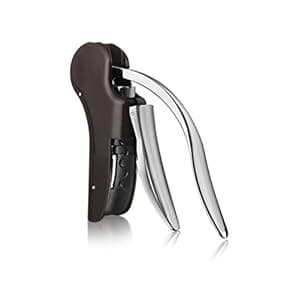 B07915L93B Availability: Currently unavailable Score: 5.076 Category: Home Rating: 3 Votes: 6 Find similar productsVacu Vin 66505606 Lever Vertical Corkscrew, Stainless Steel. Vacu Vin Vertical Lever Corkscrew has two vertical gripping handles that latch onto the top of a wine bottle and a top handle that drives the corkscrew into the cork using a ratchet and quickly removes it. With a beautiful bronze finish and its easy-to-use simplicity, it is ideal for gift giving. Vacu Vin was established as a company in 1986 in order to manufacture and distribute the Wine Saver Pump and Vacuum Bottle Stoppers. The idea for the product emanated directly from the taste of spoiled wine - something that its inventors wanted to prevent once a bottle had been opened. The Vacu Vin Wine Saver was the first device of its kind that was available to the international market. It is now used in over 35 million households and more than 80 countries throughout the world. The award-winning device has been repeatedly imitated by numerous other manufacturers, but the Vacu Vin Wine Saver is still recognized as the market leader. Thus began the Vacu Vin range of wine accessories. |  B076KVHRVQ Price: $499 Score: 5.076 Category: Home Rating: 3.8 Votes: 30 Find similar productsRiedel Duck Decanter, One Size, Clear. Product Description “I prefer to decant wines, both young and old. It is a sign of respect for old wines and a sign of confidence in young wines. Decanting old wines, just a few moments before they are served, helps to ensure that the wines’ clarity and brilliance are not obscured by any deposit that may have developed over time. Decanting young wines several hours before they are served gives the wine a chance to bloom and attain a stage of development that normally requires years of aging.” (Thoughts on decanting by Christian Moueix) The Riedel Duck Decanter is an elegant hand-made crystal decanter that has a capacity of 31 3/4 ounces and is perfect for decanting red wines. Amazon.com Made in Austria by the world's most renowned wine-glass maker (Riedel Crystal, founded in 1756), this strikingly graceful decanter is blown from crystal. It holds 31-3/4 ounces, perfect for one bottle of red wine. While the most common use of a decanter is to prevent sediment in an aged red wine from spoiling the wine's clarity and brilliance, some authorities also recommend decanting young red wines to give them the opportunity to bloom. In either case, this spectacular decanter inspired by the shape of a duck contributes a breathtaking elegance to a dinner table. Standing 5-1/8 inches high at the handle, it measures 13 inches from tail to beak. Riedel crystal is used in fine restaurants all over the world and thus must stand up to frequent trips through a dishwasher. But because lead crystal has a soft surface, Riedel recommends this decanter be hand washed. --Fred Brack. |