E-commerce Search Demo
AI Assisted Filters
Parameters
Query:
Category filters: All
AI Assist: ON
Page: 1
Products
Time taken: 3 Max score: 1000.000 Total hits: 200 Full time: 0.0 s
Showing 1-10 of 200 products
 B001M5TMY2 Availability: Currently unavailable Score: 1000.000 Category: Sports Rating: 2.8 Votes: 35 Find similar productsEureka! Grand Manan 9 - Tent (sleeps 4-5). Product Description You'll be untra-comfortable inside our new Grand Manan 9. With straight lower walls to maximize interior space and a roll up fly for 4-way ventilation this is an ideal 3 person, 3 season tent. Floor size is 9'X9' with a 6' center with 2 doors and 4 windows. There is 21% more headroom than a standard 2-pole dome and 16% more volume with our strainght wall design. Amazon.com With space for up to five people and their gear, the Eureka Grand Manan 9 tent is ideal for small families and groups of friends. The Grand Manan 9 is designed using Eureka's StormShield technology, which combines moisture-repelling materials with a tough, reinforced construction that resists wear and tear. As a result, the tent keeps you warm and dry for spring, summer, and fall camping. The two-pole dome tent also maximizes useable space thanks to its straight wall design, which provides 21 percent more headroom than a standard two-pole tent and 16 percent more volume. The extra space helps you accommodate cots, airbeds, and other furniture without cramping the campers inside. And no one likes a swampy tent, which is why the Grand Manan 9's full coverage fly rolls up, providing four-way ventilation that passes cool air to the interior via the low mesh vents. Additional features include side-opening doors for easy entry; eight interior pockets to keep your essentials close at hand; a bathtub-style floor that protects against splashing and standing water; large double-point vestibules for extra gear storage; and a removable window flap that stores inside a built-in pocket when not in use. The tent's straight wall design helps campers fit an airbed, cot, and other furniture inside. Specifications: Seasons: 3 Seasons: 3 Sleeps: 4-5 Sleeps: 4-5 Floor size: 9 by 9 feet Floor size: 9 by 9 feet Tent area: 81 square feet Tent area: 81 square feet Pack size: 11 by 25 inches Pack size: 11 by 25 inches Center height: 6 feet Center height: 6 feet Minimum weight: 21 pounds, 7 ounces Minimum weight: 21 pounds, 7 ounces Frame: 12.7mm fiberglass, post and grommet Frame: 12.7mm fiberglass, post and grommet Vents: 4 Vents: 4 Doors: 2 Doors: 2 Windows: 4 Windows: 4 Vestibules: 2 Vestibules: 2 Gear loft: Optional, dome Gear loft: Optional, dome Gear loft loops: 4 Gear loft loops: 4 Flashlight loop: 1 Flashlight loop: 1 Storage pockets: 8 Storage pockets: 8 Vestibule area: 52.39 square feet Vestibule area: 52.39 square feet Walls: 68D 190T polyester taffeta, uncoated Walls: 68D 190T polyester taffeta, uncoated Fly: 75D StormShield polyester, 1200mm Fly: 75D StormShield polyester, 1200mm Floor: 75D 190T polyester taffeta, 1500mm coated Floor: 75D 190T polyester taffeta, 1500mm coated Mesh: 40D no-see-um About Eureka Although the exact year is unknown, Eureka's long history begins prior to 1895 in Binghamton, NY, where the company still resides today. Then known as the Eureka Tent & Awning Company, its first wares were canvas products--most notably, Conestoga wagon covers and horse blankets for 19th-century American frontiersmen--as well as American flags, store awnings, and camping tents. The company increased production of its custom canvas products locally throughout the 1930s and early 1940s. The company even fabricated and erected a series of IBM tent cities just outside Binghamton, housing thousands of IBM salesmen during the company's annual stockholders meeting, which had outgrown its previous locale. With the advent of World War II and the increased demand for hospital ward tents, Eureka expanded operations and began shipping tents worldwide. Ultimately, upon the post-war return of the GIs and the resultant housing shortage, Eureka turned its attention to the home front during the 1950s by supplying awnings for the multitude of mobile homes that were purchased. In 1960, renowned explorer Sir Edmund Hillary used Eureka's new and innovative Draw-Tite tent--with its practical, freestanding external frame--in a Himalayan expedition to Nepal (Hillary had climbed to the summit of Mt. Everest only six years earlier). In 1963, Eureka made history during its own Mt. Everest ascent, with more than 60 of its tents sheltering participants during the first all-American Mt. Everest Expedition, where explorers braved fierce 60-plus mph winds and temperatures reached below -20F. Eureka introduced its legendary Timberline tent in the 1970s, targeting it to backpackers and families. The first to employ the StormShield design, the lightweight, self-supporting backpacking tent became one of the most popular tents in the industry, with sales reaching over 1 million by its 10-year anniversary. Eureka tents have also traveled as companions on other historic expeditions, including the American Women's Himalayan Expedition to Annapurna I in 1978 and the first Mt. Everest ascents by a Canadian and American woman in 1986 and 1988. In recent years, Eureka designed and donated tents to Eric Simonson and his team. The group took two historic research expeditions to Mt. Everest, this time in a quest for truth regarding the 1924 attempted summit of early English explorers George Mallory and Andrew Irvine. During the 1999 expedition, the team made history by finding the remains of George Mallory, but the overall mystery remained unsolved. Returning in 2001 to search for more clues, the team found several historical artifacts that are now on display at the Smithsonian. Mesh: 40D no-see-um About Eureka Although the exact year is unknown, Eureka's long history begins prior to 1895 in Binghamton, NY, where the company still resides today. Then known as the Eureka Tent & Awning Company, its first wares were canvas products--most notably, Conestoga wagon covers and horse blankets for 19th-century American frontiersmen--as well as American flags, store awnings, and camping tents. The company increased production of its custom canvas products locally throughout the 1930s and early 1940s. The company even fabricated and erected a series of IBM tent cities just outside Binghamton, housing thousands of IBM salesmen during the company's annual stockholders meeting, which had outgrown its previous locale. With the advent of World War II and the increased demand for hospital ward tents, Eureka expanded operations and began shipping tents worldwide. Ultimately, upon the post-war return of the GIs and the resultant housing shortage, Eureka turned its attention to the home front during the 1950s by supplying awnings for the multitude of mobile homes that were purchased. In 1960, renowned explorer Sir Edmund Hillary used Eureka's new and innovative Draw-Tite tent--with its practical, freestanding external frame--in a Himalayan expedition to Nepal (Hillary had climbed to the summit of Mt. Everest only six years earlier). In 1963, Eureka made history during its own Mt. Everest ascent, with more than 60 of its tents sheltering participants during the first all-American Mt. Everest Expedition, where explorers braved fierce 60-plus mph winds and temperatures reached below -20F. Eureka introduced its legendary Timberline tent in the 1970s, targeting it to backpackers and families. The first to employ the StormShield design, the lightweight, self-supporting backpacking tent became one of the most popular tents in the industry, with sales reaching over 1 million by its 10-year anniversary. Eureka tents have also traveled as companions on other historic expeditions, including the American Women's Himalayan Expedition to Annapurna I in 1978 and the first Mt. Everest ascents by a Canadian and American woman in 1986 and 1988. In recent years, Eureka designed and donated tents to Eric Simonson and his team. The group took two historic research expeditions to Mt. Everest, this time in a quest for truth regarding the 1924 attempted summit of early English explorers George Mallory and Andrew Irvine. During the 1999 expedition, the team made history by finding the remains of George Mallory, but the overall mystery remained unsolved. Returning in 2001 to search for more clues, the team found several historical artifacts that are now on display at the Smithsonian. |  B0043HM5RC Availability: Currently unavailable Score: 10.638 Category: Sports Rating: 3.8 Votes: 86 Find similar productsEureka! Family-Tents Apex. Product Description Tent sleeps 3 and has a floor size of 7' 6 x 6' 6. Features 2 doors with Hi/Low venting and 2 windows. Its pack size is 6 x 24, frame is 9.5 mm fiberglass and has a center height of 4' 3. Amazon.com Lightweight and compact, the multipurpose Eureka Apex 3XT FG three-person tent is ideal for backpackers who want to travel light. The tent is outfitted with a durable, shock-corded, freestanding fiberglass frame and a ring-and-pin/pole pocket assembly, making it easy to set up and extremely stable once it's open. Campers will also appreciate the pair of side-opening D-style doors, which are made entirely of no-see-um mesh. Not only do the doors add airflow to the tent--especially in conjunction with the pair of windows and side roof vents--but they also allow campers to enter and exit the tent without stumbling over their tentmates. Finally, the tent includes two full-coverage vestibules (one over each door), offering extra protection from the elements and additional gear storage. Other features include two mesh storage pockets, four clothes line loops, a flashlight loop, factory-sealed floor seams, a full-cut fly, and a pole pocket in the tent bag for hassle-free storage. All Eureka tents carry a lifetime warranty. Specifications: Seasons: 3 Seasons: 3 Sleeps: 3 Sleeps: 3 Floor size: 7 feet 6 inches by 6 feet 6 inches Floor size: 7 feet 6 inches by 6 feet 6 inches Tent area: 48.75 square feet Tent area: 48.75 square feet Vestibule area: 14 square feet Vestibule area: 14 square feet Packed size: 6.5 by 27 inches Packed size: 6.5 by 27 inches Center height: 4 feet 2 inches Center height: 4 feet 2 inches Minimum weight: 7 pounds 4 ounces Minimum weight: 7 pounds 4 ounces Frame: 9.5mm fiberglass Frame: 9.5mm fiberglass Poles: 2 Poles: 2 Doors: 2 Doors: 2 Windows: 2 Windows: 2 Vestibules: 2 Vestibules: 2 Hooded fly: No Hooded fly: No Storage pockets: 2 Storage pockets: 2 Clothes line loops: 4 Clothes line loops: 4 Gear loft type: D (sold separately) Gear loft type: D (sold separately) Flashlight loop: 1 Flashlight loop: 1 Floor: 1.9-ounce standard taffeta nylon Floor: 1.9-ounce standard taffeta nylon Fly and vestibule: 1.9-ounce standard taffeta nylon Fly and vestibule: 1.9-ounce standard taffeta nylon Roof: 1.9-ounce permeable taffeta nylon Roof: 1.9-ounce permeable taffeta nylon Mesh: 40D no-see-um About Eureka Although the exact year is unknown, Eureka's long history begins prior to 1895 in Binghamton, NY, where the company still resides today. Then known as the Eureka Tent & Awning Company, its first wares were canvas products--most notably, Conestoga wagon covers and horse blankets for 19th-century American frontiersmen--as well as American flags, store awnings, and camping tents. The company increased production of its custom canvas products locally throughout the 1930s and early 1940s. The company even fabricated and erected a series of IBM tent cities just outside Binghamton, housing thousands of IBM salesmen during the company's annual stockholders meeting, which had outgrown its previous locale. With the advent of World War II and the increased demand for hospital ward tents, Eureka expanded operations and began shipping tents worldwide. Ultimately, upon the post-war return of the GIs and the resultant housing shortage, Eureka turned its attention to the home front during the 1950s by supplying awnings for the multitude of mobile homes that were purchased. In 1960, renowned explorer Sir Edmund Hillary used Eureka's new and innovative Draw-Tite tent--with its practical, freestanding external frame--in a Himalayan expedition to Nepal (Hillary had climbed to the summit of Mt. Everest only six years earlier). In 1963, Eureka made history during its own Mt. Everest ascent, with more than 60 of its tents sheltering participants during the first all-American Mt. Everest Expedition, where explorers braved fierce 60-plus mph winds and temperatures reached below -20F. Eureka introduced its legendary Timberline tent in the 1970s, targeting it to backpackers and families. The first to employ the StormShield design, the lightweight, self-supporting backpacking tent became one of the most popular tents in the industry, with sales reaching over 1 million by its 10-year anniversary. Eureka tents have also traveled as companions on other historic expeditions, including the American Women's Himalayan Expedition to Annapurna I in 1978 and the first Mt. Everest ascents by a Canadian and American woman in 1986 and 1988. Mesh: 40D no-see-um About Eureka Although the exact year is unknown, Eureka's long history begins prior to 1895 in Binghamton, NY, where the company still resides today. Then known as the Eureka Tent & Awning Company, its first wares were canvas products--most notably, Conestoga wagon covers and horse blankets for 19th-century American frontiersmen--as well as American flags, store awnings, and camping tents. The company increased production of its custom canvas products locally throughout the 1930s and early 1940s. The company even fabricated and erected a series of IBM tent cities just outside Binghamton, housing thousands of IBM salesmen during the company's annual stockholders meeting, which had outgrown its previous locale. With the advent of World War II and the increased demand for hospital ward tents, Eureka expanded operations and began shipping tents worldwide. Ultimately, upon the post-war return of the GIs and the resultant housing shortage, Eureka turned its attention to the home front during the 1950s by supplying awnings for the multitude of mobile homes that were purchased. In 1960, renowned explorer Sir Edmund Hillary used Eureka's new and innovative Draw-Tite tent--with its practical, freestanding external frame--in a Himalayan expedition to Nepal (Hillary had climbed to the summit of Mt. Everest only six years earlier). In 1963, Eureka made history during its own Mt. Everest ascent, with more than 60 of its tents sheltering participants during the first all-American Mt. Everest Expedition, where explorers braved fierce 60-plus mph winds and temperatures reached below -20F. Eureka introduced its legendary Timberline tent in the 1970s, targeting it to backpackers and families. The first to employ the StormShield design, the lightweight, self-supporting backpacking tent became one of the most popular tents in the industry, with sales reaching over 1 million by its 10-year anniversary. Eureka tents have also traveled as companions on other historic expeditions, including the American Women's Himalayan Expedition to Annapurna I in 1978 and the first Mt. Everest ascents by a Canadian and American woman in 1986 and 1988. |
 B0B5FYPKYL Price: $143.99 Score: 9.901 Category: Sports Rating: 4.6 Votes: 2186 Find similar productsColeman Skydome Camping Tent. With a quick setup under 5 minutes, the Coleman Skydome Camping Tent lets you enjoy more time with friends and family on the next camping trip. There is plenty of room to stretch inside the spacious interior thanks to the nearly vertical walls that offer 20% more headroom than a traditional Coleman dome tent. Plus, a wide door design means you can move air beds, sleeping bags, and other gear in and out with ease. Downpour in the forecast? Not to worry, the WeatherTec system's welded corners and inverted seams help keep you and your gear dry. This 2-person tent's compact size makes it a great choice for car camping or backpacking adventures. Skydome tents are available in a range of sizes (2-person, 4-person, 6-person, or 8-person), with or without Dark Room technology. | 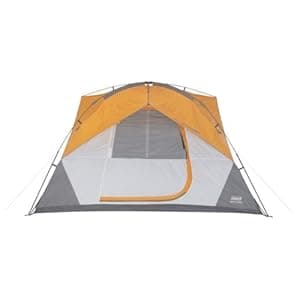 B00AU6JZOQ Availability: Currently unavailable Score: 9.901 Category: Sports Rating: 3.4 Votes: 12 Find similar productsColeman 2000012220 Instant Dome 7. Instant Dome 7 WeatherTec System Keeps you dry Guaranteed Sets up in less than 60 seconds No assembly required, poles are pre-attached to tent Built-in rainfly Maximum ventilation, four auto-roll windows Heavy duty 75D fabric Structure: Instant Dome Tent Footprint: 11 ft. x 10 ft. Center Height: 6 ft. 3 in. Doors: 1 door Sleeps: 7 people Flysheet: 75D Polyester Taffeta (built-in) Inner Tent: 75D Polyester Taffeta Floor: Polyethylene 1000D Poles: Steel and fiberglass. |
 B0015FTE3I Availability: Currently unavailable Score: 9.615 Category: Sports Rating: 4 Votes: 3 Find similar productsColumbia North Rim 10-Foot by 7-Foot 4 Person Dome Tent. Product description The Columbia(r) North Rim dome tent offers a lightweight and compact design that comfortably sleeps up to 4. It utilizes the GoBeDry(r) Ultimate Rain Protection system to help keep you dry and protected from the elements. Internal pockets, cup holders, and a gear loft combine to give you plenty of organization options. Amazon.com Offering a lightweight and compact design that comfortably sleeps up to four campers, Columbia's North Rim tent utilizes the GoBeDry Ultimate Rain Protection system to help keep you dry and protected from the elements. Setup is simple and fast with color-coded poles and user-friendly stake and rain fly attachments. A variety of storage options line the inside of the North Rim so you can keep your gear organized, including internal pockets, cup holders, and a gear loft. Features and Specifications: Sleeps: 4 Sleeps: 4 Seasons: 3 Seasons: 3 GoBe Dry Ultimate Rain Protection system GoBe Dry Ultimate Rain Protection system Camp port allows for passage of cables Camp port allows for passage of cables Internal pockets, cup holders, and gear loft Internal pockets, cup holders, and gear loft Color coded fiberglass poles for easy set up Color coded fiberglass poles for easy set up Polyester taffeta body and rainfly Polyester taffeta body and rainfly 1 door, 4 windows 1 door, 4 windows Area: 120 by 84 by 60 inches (L x W x H) Area: 120 by 84 by 60 inches (L x W x H) Total Weight: 13.4 pounds About Columbia SportswearFounded in 1938, Columbia Sportswear Company has grown from a small family-owned hat distributor to one of the world's largest outerwear brands and the leading seller of skiwear in the United States. Columbia's extensive product line includes a wide variety of outerwear, sportswear, rugged footwear and accessories. Columbia specializes in developing innovative products that are functional yet stylish and offer great value. Eighty-year-old matriarch Gert Boyle, Chairman of the Board, and her son, Tim Boyle, President and CEO, lead the company. Columbia's history starts with Gert's parents, Paul and Marie Lamfrom, when they fled Germany in 1937. They bought a small hat distributorship in Portland, Oregon, and named it Columbia Hat Company, after the river bordering the city. Soon frustrated by poor deliveries from suppliers, the Lamfroms decided to start manufacturing products themselves. In 1948, Gert married college sweetheart Neal Boyle, who joined the family business and later took the helm of the growing company. When Neal suddenly died of a heart attack in 1970, Gert enlisted help from Tim, then a college senior. After that it wasn't long before business really started to take off. Columbia was one of the first companies to make jackets from waterproof/breathable fabric. They introduced the breakthrough technology called the Columbia Interchange System, in which a shell and liner combine for multiple wearing options. In the early 1980s, then 60 year-old Gert began her role as Mother Boyle in Columbia's successful and popular advertising campaign. The company went public in 1998 and moved into a new era as a world leader in the active outdoor apparel industry. Today, Columbia Sportswear employs more than 1,800 people around the world and distributes and sells products in more than 50 countries and to more than 12,000 retailers internationally. Total Weight: 13.4 pounds About Columbia Sportswear Founded in 1938, Columbia Sportswear Company has grown from a small family-owned hat distributor to one of the world's largest outerwear brands and the leading seller of skiwear in the United States. Columbia's extensive product line includes a wide variety of outerwear, sportswear, rugged footwear and accessories. Columbia specializes in developing innovative products that are functional yet stylish and offer great value. Eighty-year-old matriarch Gert Boyle, Chairman of the Board, and her son, Tim Boyle, President and CEO, lead the company. Columbia's history starts with Gert's parents, Paul and Marie Lamfrom, when they fled Germany in 1937. They bought a small hat distributorship in Portland, Oregon, and named it Columbia Hat Company, after the river bordering the city. Soon frustrated by poor deliveries from suppliers, the Lamfroms decided to start manufacturing products themselves. In 1948, Gert married college sweetheart Neal Boyle, who joined the family business and later took the helm of the growing company. When Neal suddenly died of a heart attack in 1970, Gert enlisted help from Tim, then a college senior. After that it wasn't long before business really started to take off. Columbia was one of the first companies to make jackets from waterproof/breathable fabric. They introduced the breakthrough technology called the Columbia Interchange System, in which a shell and liner combine for multiple wearing options. In the early 1980s, then 60 year-old Gert began her role as Mother Boyle in Columbia's successful and popular advertising campaign. The company went public in 1998 and moved into a new era as a world leader in the active outdoor apparel industry. Today, Columbia Sportswear employs more than 1,800 people around the world and distributes and sells products in more than 50 countries and to more than 12,000 retailers internationally. |  B000W9TT2E Availability: Currently unavailable Score: 9.434 Category: Sports Rating: 2.9 Votes: 30 Find similar productsKelty Family-Tents kelty Green River Tent. Product Description The reaonably price Green River is a roomy tent that comes outfitted with a bonus screened-in vestibule with pull down shades. If you want protection from insects and critters and maximum ventilation, this tent is an obvious choice. Amazon.com A great choice for car camping or use for a basecamp, the Kelty Green River provides a roomy interior for four campers as well as a front screenroom with room enough to store gear or set up chairs for watching the sunset. This tent sleeps up to four campers, offers three-season usage, and a freestanding design that enables you to move it around your campsite to find the optimum position. It also includes large mesh windows for good ventilation, UV resistant polyester fly, and color-coded poles for quick-and-easy setup. Weighing 20 pounds, 15 ounces, the four-person Green River has a 81 square foot floor area, and a 43.6 square foot vestibule area. The shockcorded fiberglass poles have color coded clips that make setup a breeze. The tent also offers post and grommet type assembly with locking pole tips for convenience and security. Kelty's ArcEdge construction lifts floor seams up off the ground, preventing water seepage around the floor and wall seams. Other features include a single flashlight loop, mesh interior pockets for gear storage, external guy points for added stability in windy conditions, and noiseless zipper pulls. Specifications Dimensions: 108 x 108 x 71 inches Dimensions: 108 x 108 x 71 inches Interior height: 5 feet, 11 inches Interior height: 5 feet, 11 inches Floor area: 81 square feet Floor area: 81 square feet Vestibule area: 43.6 square feet Vestibule area: 43.6 square feet Weight: 20 pounds, 15 ounces Weight: 20 pounds, 15 ounces Seasons: 3 Seasons: 3 Doors: 1 Doors: 1 Windows: 2 Windows: 2 Wall material: 68D 190T polyester ripstop Wall material: 68D 190T polyester ripstop Floor material: 1800mm PU nylon-taffeta Floor material: 1800mm PU nylon-taffeta Fly material: 75D 190T, 1800mm PU polyester ripstop Fly material: 75D 190T, 1800mm PU polyester ripstop Number of poles: 4 Number of poles: 4. |
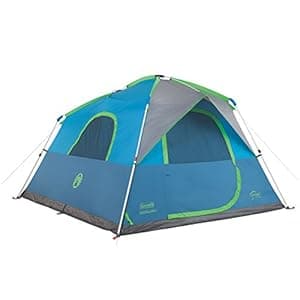 B019N9WHJ0 Availability: Currently unavailable Score: 9.346 Category: Sports Rating: 3.6 Votes: 18 Find similar productsColeman Camping Instant Signal Mountain Tent. Adventure is moments away when you set up the Coleman signal mountain 6-Person instant tent. Pre-attached poles make setup a simple matter of unfold, extend and secure, so your tent and the integrated rain fly are ready in about 60 seconds. If it rains, the weathertec system with its patented welded floors and Inverted seams will help you stay dry. Additionally, a door awning helps to keep the water out. A ground vent increases air circulation to help you stay cool and comfortable. Illumiline reflective Guy lines are more visible so you don't get tripped up if you need to take a walk at night. Inside, there's enough room to stretch out on two queen-sized airbeds. When it's time to head home, the tent fits into an included carry bag until you're off on your next adventure. |  B002PAYI3S Availability: Currently unavailable Score: 9.091 Category: Sports Rating: 3.1 Votes: 28 Find similar productsWenzel Big Bend 12-by-10 Foot Five-Person Two-Room Family Dome Tent. Product Description The Wenzel Big Bend is a 12-foot x 10-foot, seven-sided-dome tent with 68 inches of center head room. It accommodates five campers on a welded-polyethylene tub-style floor to keep out ground moisture and is made of rugged, unique Weather Armor weather-resistant polyester with a polyurethane coating for toughness and reliability. The hanging divider curtain creates two separate rooms for privacy. A removable hooped fly over the back to back D-style door keeps out the rain. Double-stitched, lap-felled seams through out the body of the tent provide a shingle effect against water. All threads, zippers and webbing are treated with superior water repellency applications to enforce these critical areas. Mesh doors, two windows, and mesh roof provide a cross breeze. The lightweight, shockcorded fiberglass frame has a pin and ring system for easy set-up. This tent includes two hanging pockets for storage, an integrated mud mat to help keep the tent clean and has a 10-year warranty against defects. Specifications: • Base: 12 ft. x 10 ft. • Center Height: 68 in. • Area: 94 sq. ft. • Doors: Back to back Dutch D style • Floor: welded polyethylene • Frame: fiberglass • Stakes: plastic • Sleeps: 5 • Carry Weight: 14.3 lbs Amazon.com Spacious and weather-resistant, the Wenzel Big Bend 12-by-10-foot family dome tent sleeps up to five campers in its two rooms, making it ideal for mid-size families or couples with lots of gear. The Big Bend is made of rugged, weather-repellent Weather Armor polyester with a polyurethane coating for reliability, helping it keep water out and warmth in. The sonic-sealed, polyethylene tub-style floor, meanwhile, is welded and not sewn, eliminating needle holes that might otherwise attract water seepage. And campers will love the variety of ventilation points--including two mesh doors, two mesh windows, and a mesh roof--which combine to create a refreshing cross breeze on warm evenings. The Big Bend is also easy to set up, with shock-corded fiberglass poles and a pin-and-ring system. And when it comes time to hit the sheets, you can either create one large sleeping room or roll down the divider curtain to create two separate rooms. The rooms can function as individual bedrooms for the campers or as a sleeping room and living area. Other details include an integrated mud mat to keep the tent clean, a removable fly with a hoop frame over the door, two hanging pockets for storage, and a storage duffel. Specifications: Base: 14 by 10 feet Base: 14 by 10 feet Center height: 68 inches Center height: 68 inches Area: 94 square feet Area: 94 square feet Capacity: 5 people Capacity: 5 people Carrying weight: 14.3 pounds Carrying weight: 14.3 pounds Warranty: 10 years Amazon.com Tent Guide Selecting a Tent Fortunately, there are all kinds of tents for weekend car campers, Everest expeditions, and everything in-between. Here are a few things to keep in mind: Expect the Worst In general, it's wise to choose a tent that's designed to withstand the worst possible conditions you think you'll face. For instance, if you're a summer car camper in a region where weather is predictable, an inexpensive family or all-purpose tent will likely do the trick--especially if a vehicle is nearby and you can make a mad dash for safety when bad weather swoops in. If you're a backpacker, alpine climber, or bike explorer, or if you like to car camp in all seasons, you'll want to buy something designed to handle more adversity. Three- and Four-Season Tents For summer, early fall, and late spring outings, choose a three-season tent. At minimum, a quality three-season tent will have lightweight aluminum poles, a reinforced floor, durable stitching, and a quality rain fly. Some three-season tents offer more open-air netting and are specifically designed for summer backpacking or other activities. Many premium tents will also feature pre-sealed, taped seams and a silicone-impregnated rain fly for enhanced waterproofing. For winter camping or alpine travel, go with a four-season model. Because they typically feature more durable fabric coatings, as well as more poles, four-season tents are designed to handle heavy snowfall and high winds without collapsing. Of course, four-season tents exact a weight penalty of about 10 to 20 percent in trade for their strength and durability. They also tend to be more expensive. Domes and Tunnels Tents are broadly categorized into two types: freestanding, which can stand up on their own, and tents that must be staked down in order to stand upright. Freestanding tents often incorporate a dome-shaped design, and most four-season tents are constructed this way because a dome leaves no flat spots on the outer surface where snow can collect. Domes are also inherently stronger than any other design. Meanwhile, many three-season models employ a modified dome configuration called a tunnel. These are still freestanding, but they require fewer poles than a dome, use less fabric, and typically have a rectangular floor plan that offers less storage space than a dome configuration. Many one and two-person tents are not freestanding, but they make up for it by being lighter. Because they use fewer poles, they can also be quicker to set up than a dome. Size Matters Ask yourself how many people you'd like to fit in your fabric hotel now and in the future. For soloists and minimalists, check out one-person tents. If you're a mega-minimalist, or if you have your eye on doing some big wall climbs, a waterproof-breathable bivy sack is the ticket. Some bivy sacks feature poles and stake points to give you a little more breathing room. Also, if you don't need bug protection and you want to save weight, check out open-air shelters. Families who plan on car camping in good weather can choose from a wide range of jumbo-sized tents that will accommodate all your little ones with room to spare. A wide range of capacities is available for three- and four-season backpacking and expedition tents. Remember, though, the bigger the tent you buy, the heavier it will be, although it's easy to break up the tent components among several people in your group. It's also helpful to compare the volume and floor-space measurements of models you're considering. Warranty: 10 years Amazon.com Tent Guide Selecting a Tent Fortunately, there are all kinds of tents for weekend car campers, Everest expeditions, and everything in-between. Here are a few things to keep in mind: Expect the Worst In general, it's wise to choose a tent that's designed to withstand the worst possible conditions you think you'll face. For instance, if you're a summer car camper in a region where weather is predictable, an inexpensive family or all-purpose tent will likely do the trick--especially if a vehicle is nearby and you can make a mad dash for safety when bad weather swoops in. If you're a backpacker, alpine climber, or bike explorer, or if you like to car camp in all seasons, you'll want to buy something designed to handle more adversity. Three- and Four-Season Tents For summer, early fall, and late spring outings, choose a three-season tent. At minimum, a quality three-season tent will have lightweight aluminum poles, a reinforced floor, durable stitching, and a quality rain fly. Some three-season tents offer more open-air netting and are specifically designed for summer backpacking or other activities. Many premium tents will also feature pre-sealed, taped seams and a silicone-impregnated rain fly for enhanced waterproofing. For winter camping or alpine travel, go with a four-season model. Because they typically feature more durable fabric coatings, as well as more poles, four-season tents are designed to handle heavy snowfall and high winds without collapsing. Of course, four-season tents exact a weight penalty of about 10 to 20 percent in trade for their strength and durability. They also tend to be more expensive. Domes and Tunnels Tents are broadly categorized into two types: freestanding, which can stand up on their own, and tents that must be staked down in order to stand upright. Freestanding tents often incorporate a dome-shaped design, and most four-season tents are constructed this way because a dome leaves no flat spots on the outer surface where snow can collect. Domes are also inherently stronger than any other design. Meanwhile, many three-season models employ a modified dome configuration called a tunnel. These are still freestanding, but they require fewer poles than a dome, use less fabric, and typically have a rectangular floor plan that offers less storage space than a dome configuration. Many one and two-person tents are not freestanding, but they make up for it by being lighter. Because they use fewer poles, they can also be quicker to set up than a dome. Size Matters Ask yourself how many people you'd like to fit in your fabric hotel now and in the future. For soloists and minimalists, check out one-person tents. If you're a mega-minimalist, or if you have your eye on doing some big wall climbs, a waterproof-breathable bivy sack is the ticket. Some bivy sacks feature poles and stake points to give you a little more breathing room. Also, if you don't need bug protection and you want to save weight, check out open-air shelters. Families who plan on car camping in good weather can choose from a wide range of jumbo-sized tents that will accommodate all your little ones with room to spare. A wide range of capacities is available for three- and four-season backpacking and expedition tents. Remember, though, the bigger the tent you buy, the heavier it will be, although it's easy to break up the tent components among several people in your group. It's also helpful to compare the volume and floor-space measurements of models you're considering. |
 B007AF0G0C Availability: Currently unavailable Score: 9.091 Category: Sports Rating: 4 Votes: 1 Find similar productsMountain Hardwear Yurtini™ Tent. Yurts are one of the oldest housing structures, and possibly the most efficient. Based on the classic yurt design, the Yurtini's round shape allows 208 square feet of floor space, enough room for six people to sleep comfortably. | 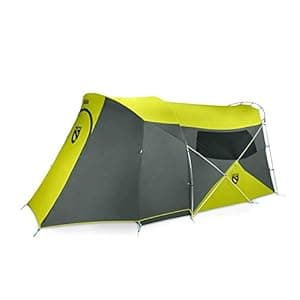 B083B93H4S Availability: Currently unavailable Score: 8.772 Category: Sports Rating: 4.2 Votes: 8 Find similar productsNemo Wagontop 6P (Granite Grey/Birch Leaf Green) 2020. The Wagontop is luxury camping embodied, perfect for families or groups of all sizes. Thanks to a unique pole structure, it provides unparalleled interior space and room to stand up and stretch, allowing for almost perfectly vertical walls and built-in overhangs at both ends that afford all-weather ventilation. Generous windows and doors provide both views and ventilation, but close tight when needed for privacy and protection from the elements. The tent’s single-walled construction and two or three poles (depending on the model) keep the pieces to a minimum and setup simple. For 2020, the Wagontop has been updated with easier-to-use hardware for the side windows, custom hubs, and even more durable floors. Deck this tent out with a Garage, a luxurious Victory Blanket, or a Sunshade to keep cool in hot climates, and you'll have a comfortable palace in the forest. |