E-commerce Search Demo
AI Assisted Filters
Parameters
Query:
Category filters: All
AI Assist: ON
Page: 1
Products
Time taken: 5 Max score: 1000.000 Total hits: 100 Full time: 0.0 s
Showing 1-10 of 100 products
 B005HUPY90 Availability: Currently unavailable Score: 1000.000 Category: Clothing Rating: 4 Votes: 5 Find similar productsAmazon Collection Sterling Silver and 14k Gold Earrings and Pendant Necklace Set. The Amazon Curated Collection Discover the Amazon Curated Collection of fine and fashion jewelry. The expansive selection of high-quality jewelry featured in the Amazon Curated Collection offers everyday values that range from precious gemstone and diamond pieces to the latest fashion designs. This hand-selected assortment features an array of diamond, gemstone, and precious metal designs that receive a quality inspection, including from Amazon’s staff graduate gemologist, to ensure they meet Amazon’s high standards. All diamonds featured in the Amazon Curated Collection are certified by our suppliers to be conflict free, and IGI, GIA, or AGS certifications are provided on white diamonds of .75 carats or larger on all stud earrings, rings, and pendant necklaces. Pieces from the Amazon Curated Collection come packaged in a custom box, making them wonderful gifts. In addition, we offer free one-day shipping within the continental U.S. on items over $500. International shipping options for friends and family overseas are available for an additional fee. The Amazon Curated Collection offers a specialized customer service team that is available seven days a week to answer any product questions before, during or after the purchase. If you’re not satisfied for any reason, you will receive a full refund and free return shipping within the U.S. if you return your purchase within 30 days. Find a special gift for a loved one or a beautiful piece that complements your personal style with jewelry from the Amazon Curated Collection. Gemstones Color Jewelers describe the color of a gemstone in terms of three characteristics: hue, saturation, and tone. A gemstone's basic color is its hue, and those with purer hues (for emeralds, green; for sapphires, blue; and for rubies, red) are generally considered more valuable. Often, however, a hint of another color can be detected. Saturation is a measure of the intensity or purity of a gem's hue and is determined by the degree to which gray or brown hues mute its defining color. Value tends to increase with saturation, so a fully saturated purplish blue sapphire may well be more expensive than a muted pure blue one. The tone of a gemstone, a measurement of its lightness or darkness, is usually given as light, medium-light, medium, medium-dark, or dark. Clarity A flawless gemstone is rare and expensive. As with diamonds, most gemstones have inclusions, or tiny mineral flaws, that can be seen under magnification or by the careful eye. Make sure that any inclusions in the stone do not penetrate deeply into the gem, as this may cause it to break or crack. Clarity grades range from VVS (very, very slightly included) to I3, in which inclusions are prominent and severely affect the gemstone's beauty. Cut A gemstone's cut refers to its proportions and symmetry. In making a gemstone look appealing--the stone should be symmetrical in all dimensions so that it will appear balanced, and that its facets will reflect light evenly. Color should also be taken into account when cutting for optical efficiency. If a stone's color is highly saturated, a shallow cut will allow it to pass more light, while a deeper cut may increase the vividness of a less saturated gem. There is no generally accepted grading system for gemstone cut. Size Though a gemstone's weight is usually given in carats, this may not give an accurate idea of its size, because different types of stone have different densities. Therefore, a one-carat sapphire or ruby will be smaller than a one-carat emerald, though they have the same weight, because sapphires and rubies (both a form of the mineral corundum) are more dense than emeralds. Gemstones can also be measured in dimensions (diameter, length, and width). It is important to know the dimensions to ensure that the gemstone weight will be visible and well-proportioned in the setting. Gemstone Treatment Gemstones are often treated to enhance color and fill cracks. Please note: if a gemstone has been treated, this information will be provided in the specifications on the stone's product detail page. There are various accepted techniques, depending on the type of stone: Oils and resins are frequently used to fill surface-reaching fissures in emeralds and rubies. This process is not permanent; however, if a treated ruby or emerald is subjected to high heat, the filler may leak out of the stone. Sapphires and rubies are often heated in a kiln or furnace to enhance their color. Such heat treatment, which is considered permanent, has been used for centuries. Lightly colored sapphires may also undergo diffusion treatment. This is done by heating a stone in the presence of coloring elements such as titanium or iron, which causes a thin layer of color to be diffused into the stone's surface. Because this color layer is so thin, a diffusion-treated sapphire should not be re-polished. Gemstone Care To clean gemstone jewelry, first wipe it with a soft cloth to remove any dirt. Emeralds require only the use of a soft cloth, as cleaners may damage these soft gems. Sapphires and rubies can be cleaned with either an ultrasonic cleaner or a solution of one part ammonia to six parts water, with a soft brush. Store your gemstone jewelry in a soft cloth pouch or jewelry case so it does not touch other pieces in your collection. As with all jewelry, normal wear and tear can loosen prongs and settings, so it is a good idea to have it checked by a professional jeweler who can make repairs as needed. | 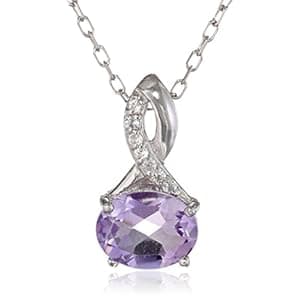 B00KXYT2CK Availability: Currently unavailable Score: 11.236 Category: Clothing Rating: 3.2 Votes: 4 Find similar productsAmazon Collection Sterling Silver Gemstone Pendant Necklace. The Amazon Curated Collection Discover the Amazon Curated Collection of fine and fashion jewelry. The expansive selection of high-quality jewelry featured in the Amazon Curated Collection offers everyday values that range from precious gemstone and diamond pieces to the latest fashion designs. This hand-selected assortment features an array of diamond, gemstone, and precious metal designs that receive a quality inspection, including from Amazon’s staff graduate gemologist, to ensure they meet Amazon’s high standards. All diamonds featured in the Amazon Curated Collection are certified by our suppliers to be conflict free, and IGI, GIA, or AGS certifications are provided on white diamonds of .75 carats or larger on all stud earrings, rings, and pendant necklaces. Pieces from the Amazon Curated Collection come packaged in a custom box, making them wonderful gifts. In addition, we offer free one-day shipping within the continental U.S. on items over $500. International shipping options for friends and family overseas are available for an additional fee. The Amazon Curated Collection offers a specialized customer service team that is available seven days a week to answer any product questions before, during or after the purchase. If you’re not satisfied for any reason, you will receive a full refund and free return shipping within the U.S. if you return your purchase within 30 days. Find a special gift for a loved one or a beautiful piece that complements your personal style with jewelry from the Amazon Curated Collection. Gemstones Color Jewelers describe the color of a gemstone in terms of three characteristics: hue, saturation, and tone. A gemstone's basic color is its hue, and those with purer hues (for emeralds, green; for sapphires, blue; and for rubies, red) are generally considered more valuable. Often, however, a hint of another color can be detected. Saturation is a measure of the intensity or purity of a gem's hue and is determined by the degree to which gray or brown hues mute its defining color. Value tends to increase with saturation, so a fully saturated purplish blue sapphire may well be more expensive than a muted pure blue one. The tone of a gemstone, a measurement of its lightness or darkness, is usually given as light, medium-light, medium, medium-dark, or dark. Clarity A flawless gemstone is rare and expensive. As with diamonds, most gemstones have inclusions, or tiny mineral flaws, that can be seen under magnification or by the careful eye. Make sure that any inclusions in the stone do not penetrate deeply into the gem, as this may cause it to break or crack. Clarity grades range from VVS (very, very slightly included) to I3, in which inclusions are prominent and severely affect the gemstone's beauty. Cut A gemstone's cut refers to its proportions and symmetry. In making a gemstone look appealing--the stone should be symmetrical in all dimensions so that it will appear balanced, and that its facets will reflect light evenly. Color should also be taken into account when cutting for optical efficiency. If a stone's color is highly saturated, a shallow cut will allow it to pass more light, while a deeper cut may increase the vividness of a less saturated gem. There is no generally accepted grading system for gemstone cut. Size Though a gemstone's weight is usually given in carats, this may not give an accurate idea of its size, because different types of stone have different densities. Therefore, a one-carat sapphire or ruby will be smaller than a one-carat emerald, though they have the same weight, because sapphires and rubies (both a form of the mineral corundum) are more dense than emeralds. Gemstones can also be measured in dimensions (diameter, length, and width). It is important to know the dimensions to ensure that the gemstone weight will be visible and well-proportioned in the setting. Gemstone Treatment Gemstones are often treated to enhance color and fill cracks. Please note: if a gemstone has been treated, this information will be provided in the specifications on the stone's product detail page. There are various accepted techniques, depending on the type of stone: Oils and resins are frequently used to fill surface-reaching fissures in emeralds and rubies. This process is not permanent; however, if a treated ruby or emerald is subjected to high heat, the filler may leak out of the stone. Sapphires and rubies are often heated in a kiln or furnace to enhance their color. Such heat treatment, which is considered permanent, has been used for centuries. Lightly colored sapphires may also undergo diffusion treatment. This is done by heating a stone in the presence of coloring elements such as titanium or iron, which causes a thin layer of color to be diffused into the stone's surface. Because this color layer is so thin, a diffusion-treated sapphire should not be re-polished. Gemstone Care To clean gemstone jewelry, first wipe it with a soft cloth to remove any dirt. Emeralds require only the use of a soft cloth, as cleaners may damage these soft gems. Sapphires and rubies can be cleaned with either an ultrasonic cleaner or a solution of one part ammonia to six parts water, with a soft brush. Store your gemstone jewelry in a soft cloth pouch or jewelry case so it does not touch other pieces in your collection. As with all jewelry, normal wear and tear can loosen prongs and settings, so it is a good idea to have it checked by a professional jeweler who can make repairs as needed. |
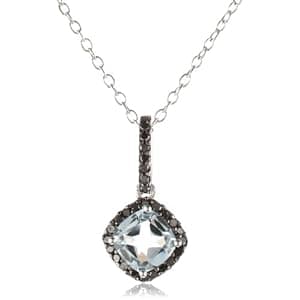 B005PTQFFU Availability: Currently unavailable Score: 10.638 Category: Clothing Rating: 3 Votes: 1 Find similar productsAmazon Collection Sterling Silver Aquamarine and Black Diamond Pendant Necklace (0.14 cttw), 18. The Amazon Curated Collection Discover the Amazon Curated Collection of fine and fashion jewelry. The expansive selection of high-quality jewelry featured in the Amazon Curated Collection offers everyday values that range from precious gemstone and diamond pieces to the latest fashion designs. This hand-selected assortment features an array of diamond, gemstone, and precious metal designs that receive a quality inspection, including from Amazon’s staff graduate gemologist, to ensure they meet Amazon’s high standards. All diamonds featured in the Amazon Curated Collection are certified by our suppliers to be conflict free, and IGI, GIA, or AGS certifications are provided on white diamonds of .75 carats or larger on all stud earrings, rings, and pendant necklaces. Pieces from the Amazon Curated Collection come packaged in a custom box, making them wonderful gifts. In addition, we offer free one-day shipping within the continental U.S. on items over $500. International shipping options for friends and family overseas are available for an additional fee. The Amazon Curated Collection offers a specialized customer service team that is available seven days a week to answer any product questions before, during or after the purchase. If you’re not satisfied for any reason, you will receive a full refund and free return shipping within the U.S. if you return your purchase within 30 days. Find a special gift for a loved one or a beautiful piece that complements your personal style with jewelry from the Amazon Curated Collection. Gemstones Color Jewelers describe the color of a gemstone in terms of three characteristics: hue, saturation, and tone. A gemstone's basic color is its hue, and those with purer hues (for emeralds, green; for sapphires, blue; and for rubies, red) are generally considered more valuable. Often, however, a hint of another color can be detected. Saturation is a measure of the intensity or purity of a gem's hue and is determined by the degree to which gray or brown hues mute its defining color. Value tends to increase with saturation, so a fully saturated purplish blue sapphire may well be more expensive than a muted pure blue one. The tone of a gemstone, a measurement of its lightness or darkness, is usually given as light, medium-light, medium, medium-dark, or dark. Clarity A flawless gemstone is rare and expensive. As with diamonds, most gemstones have inclusions, or tiny mineral flaws, that can be seen under magnification or by the careful eye. Make sure that any inclusions in the stone do not penetrate deeply into the gem, as this may cause it to break or crack. Clarity grades range from VVS (very, very slightly included) to I3, in which inclusions are prominent and severely affect the gemstone's beauty. Cut A gemstone's cut refers to its proportions and symmetry. In making a gemstone look appealing--the stone should be symmetrical in all dimensions so that it will appear balanced, and that its facets will reflect light evenly. Color should also be taken into account when cutting for optical efficiency. If a stone's color is highly saturated, a shallow cut will allow it to pass more light, while a deeper cut may increase the vividness of a less saturated gem. There is no generally accepted grading system for gemstone cut. Size Though a gemstone's weight is usually given in carats, this may not give an accurate idea of its size, because different types of stone have different densities. Therefore, a one-carat sapphire or ruby will be smaller than a one-carat emerald, though they have the same weight, because sapphires and rubies (both a form of the mineral corundum) are more dense than emeralds. Gemstones can also be measured in dimensions (diameter, length, and width). It is important to know the dimensions to ensure that the gemstone weight will be visible and well-proportioned in the setting. Gemstone Treatment Gemstones are often treated to enhance color and fill cracks. Please note: if a gemstone has been treated, this information will be provided in the specifications on the stone's product detail page. There are various accepted techniques, depending on the type of stone: Oils and resins are frequently used to fill surface-reaching fissures in emeralds and rubies. This process is not permanent; however, if a treated ruby or emerald is subjected to high heat, the filler may leak out of the stone. Sapphires and rubies are often heated in a kiln or furnace to enhance their color. Such heat treatment, which is considered permanent, has been used for centuries. Lightly colored sapphires may also undergo diffusion treatment. This is done by heating a stone in the presence of coloring elements such as titanium or iron, which causes a thin layer of color to be diffused into the stone's surface. Because this color layer is so thin, a diffusion-treated sapphire should not be re-polished. Gemstone Care To clean gemstone jewelry, first wipe it with a soft cloth to remove any dirt. Emeralds require only the use of a soft cloth, as cleaners may damage these soft gems. Sapphires and rubies can be cleaned with either an ultrasonic cleaner or a solution of one part ammonia to six parts water, with a soft brush. Store your gemstone jewelry in a soft cloth pouch or jewelry case so it does not touch other pieces in your collection. As with all jewelry, normal wear and tear can loosen prongs and settings, so it is a good idea to have it checked by a professional jeweler who can make repairs as needed. |  B005DEAQTS Availability: Currently unavailable Score: 10.526 Category: Clothing Rating: 5 Votes: 1 Find similar productsAmazon Collection Sterling Silver Garnet and Marcasite Square Shaped Pendant Necklace, 18. The Amazon Curated Collection Discover the Amazon Curated Collection of fine and fashion jewelry. The expansive selection of high-quality jewelry featured in the Amazon Curated Collection offers everyday values that range from precious gemstone and diamond pieces to the latest fashion designs. This hand-selected assortment features an array of diamond, gemstone, and precious metal designs that receive a quality inspection, including from Amazon’s staff graduate gemologist, to ensure they meet Amazon’s high standards. All diamonds featured in the Amazon Curated Collection are certified by our suppliers to be conflict free, and IGI, GIA, or AGS certifications are provided on white diamonds of .75 carats or larger on all stud earrings, rings, and pendant necklaces. Pieces from the Amazon Curated Collection come packaged in a custom box, making them wonderful gifts. In addition, we offer free one-day shipping within the continental U.S. on items over $500. International shipping options for friends and family overseas are available for an additional fee. The Amazon Curated Collection offers a specialized customer service team that is available seven days a week to answer any product questions before, during or after the purchase. If you’re not satisfied for any reason, you will receive a full refund and free return shipping within the U.S. if you return your purchase within 30 days. Find a special gift for a loved one or a beautiful piece that complements your personal style with jewelry from the Amazon Curated Collection. Gemstones Color Jewelers describe the color of a gemstone in terms of three characteristics: hue, saturation, and tone. A gemstone's basic color is its hue, and those with purer hues (for emeralds, green; for sapphires, blue; and for rubies, red) are generally considered more valuable. Often, however, a hint of another color can be detected. Saturation is a measure of the intensity or purity of a gem's hue and is determined by the degree to which gray or brown hues mute its defining color. Value tends to increase with saturation, so a fully saturated purplish blue sapphire may well be more expensive than a muted pure blue one. The tone of a gemstone, a measurement of its lightness or darkness, is usually given as light, medium-light, medium, medium-dark, or dark. Clarity A flawless gemstone is rare and expensive. As with diamonds, most gemstones have inclusions, or tiny mineral flaws, that can be seen under magnification or by the careful eye. Make sure that any inclusions in the stone do not penetrate deeply into the gem, as this may cause it to break or crack. Clarity grades range from VVS (very, very slightly included) to I3, in which inclusions are prominent and severely affect the gemstone's beauty. Cut A gemstone's cut refers to its proportions and symmetry. In making a gemstone look appealing--the stone should be symmetrical in all dimensions so that it will appear balanced, and that its facets will reflect light evenly. Color should also be taken into account when cutting for optical efficiency. If a stone's color is highly saturated, a shallow cut will allow it to pass more light, while a deeper cut may increase the vividness of a less saturated gem. There is no generally accepted grading system for gemstone cut. Size Though a gemstone's weight is usually given in carats, this may not give an accurate idea of its size, because different types of stone have different densities. Therefore, a one-carat sapphire or ruby will be smaller than a one-carat emerald, though they have the same weight, because sapphires and rubies (both a form of the mineral corundum) are more dense than emeralds. Gemstones can also be measured in dimensions (diameter, length, and width). It is important to know the dimensions to ensure that the gemstone weight will be visible and well-proportioned in the setting. Gemstone Treatment Gemstones are often treated to enhance color and fill cracks. Please note: if a gemstone has been treated, this information will be provided in the specifications on the stone's product detail page. There are various accepted techniques, depending on the type of stone: Oils and resins are frequently used to fill surface-reaching fissures in emeralds and rubies. This process is not permanent; however, if a treated ruby or emerald is subjected to high heat, the filler may leak out of the stone. Sapphires and rubies are often heated in a kiln or furnace to enhance their color. Such heat treatment, which is considered permanent, has been used for centuries. Lightly colored sapphires may also undergo diffusion treatment. This is done by heating a stone in the presence of coloring elements such as titanium or iron, which causes a thin layer of color to be diffused into the stone's surface. Because this color layer is so thin, a diffusion-treated sapphire should not be re-polished. Gemstone Care To clean gemstone jewelry, first wipe it with a soft cloth to remove any dirt. Emeralds require only the use of a soft cloth, as cleaners may damage these soft gems. Sapphires and rubies can be cleaned with either an ultrasonic cleaner or a solution of one part ammonia to six parts water, with a soft brush. Store your gemstone jewelry in a soft cloth pouch or jewelry case so it does not touch other pieces in your collection. As with all jewelry, normal wear and tear can loosen prongs and settings, so it is a good idea to have it checked by a professional jeweler who can make repairs as needed. |
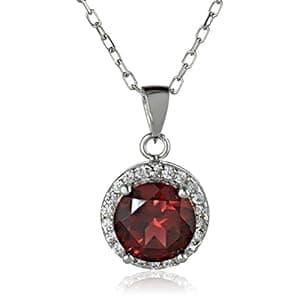 B00JVW3QZE Availability: Currently unavailable Score: 10.417 Category: Clothing Rating: 3.7 Votes: 50 Find similar productsAmazon Collection Sterling Silver 8mm Pendant Necklace. The Amazon Curated Collection Discover the Amazon Curated Collection of fine and fashion jewelry. The expansive selection of high-quality jewelry featured in the Amazon Curated Collection offers everyday values that range from precious gemstone and diamond pieces to the latest fashion designs. This hand-selected assortment features an array of diamond, gemstone, and precious metal designs that receive a quality inspection, including from Amazon’s staff graduate gemologist, to ensure they meet Amazon’s high standards. All diamonds featured in the Amazon Curated Collection are certified by our suppliers to be conflict free, and IGI, GIA, or AGS certifications are provided on white diamonds of .75 carats or larger on all stud earrings, rings, and pendant necklaces. Pieces from the Amazon Curated Collection come packaged in a custom box, making them wonderful gifts. In addition, we offer free one-day shipping within the continental U.S. on items over $500. International shipping options for friends and family overseas are available for an additional fee. The Amazon Curated Collection offers a specialized customer service team that is available seven days a week to answer any product questions before, during or after the purchase. If you’re not satisfied for any reason, you will receive a full refund and free return shipping within the U.S. if you return your purchase within 30 days. Find a special gift for a loved one or a beautiful piece that complements your personal style with jewelry from the Amazon Curated Collection. Gemstones Color Jewelers describe the color of a gemstone in terms of three characteristics: hue, saturation, and tone. A gemstone's basic color is its hue, and those with purer hues (for emeralds, green; for sapphires, blue; and for rubies, red) are generally considered more valuable. Often, however, a hint of another color can be detected. Saturation is a measure of the intensity or purity of a gem's hue and is determined by the degree to which gray or brown hues mute its defining color. Value tends to increase with saturation, so a fully saturated purplish blue sapphire may well be more expensive than a muted pure blue one. The tone of a gemstone, a measurement of its lightness or darkness, is usually given as light, medium-light, medium, medium-dark, or dark. Clarity A flawless gemstone is rare and expensive. As with diamonds, most gemstones have inclusions, or tiny mineral flaws, that can be seen under magnification or by the careful eye. Make sure that any inclusions in the stone do not penetrate deeply into the gem, as this may cause it to break or crack. Clarity grades range from VVS (very, very slightly included) to I3, in which inclusions are prominent and severely affect the gemstone's beauty. Cut A gemstone's cut refers to its proportions and symmetry. In making a gemstone look appealing--the stone should be symmetrical in all dimensions so that it will appear balanced, and that its facets will reflect light evenly. Color should also be taken into account when cutting for optical efficiency. If a stone's color is highly saturated, a shallow cut will allow it to pass more light, while a deeper cut may increase the vividness of a less saturated gem. There is no generally accepted grading system for gemstone cut. Size Though a gemstone's weight is usually given in carats, this may not give an accurate idea of its size, because different types of stone have different densities. Therefore, a one-carat sapphire or ruby will be smaller than a one-carat emerald, though they have the same weight, because sapphires and rubies (both a form of the mineral corundum) are more dense than emeralds. Gemstones can also be measured in dimensions (diameter, length, and width). It is important to know the dimensions to ensure that the gemstone weight will be visible and well-proportioned in the setting. Gemstone Treatment Gemstones are often treated to enhance color and fill cracks. Please note: if a gemstone has been treated, this information will be provided in the specifications on the stone's product detail page. There are various accepted techniques, depending on the type of stone: Oils and resins are frequently used to fill surface-reaching fissures in emeralds and rubies. This process is not permanent; however, if a treated ruby or emerald is subjected to high heat, the filler may leak out of the stone. Sapphires and rubies are often heated in a kiln or furnace to enhance their color. Such heat treatment, which is considered permanent, has been used for centuries. Lightly colored sapphires may also undergo diffusion treatment. This is done by heating a stone in the presence of coloring elements such as titanium or iron, which causes a thin layer of color to be diffused into the stone's surface. Because this color layer is so thin, a diffusion-treated sapphire should not be re-polished. Gemstone Care To clean gemstone jewelry, first wipe it with a soft cloth to remove any dirt. Emeralds require only the use of a soft cloth, as cleaners may damage these soft gems. Sapphires and rubies can be cleaned with either an ultrasonic cleaner or a solution of one part ammonia to six parts water, with a soft brush. Store your gemstone jewelry in a soft cloth pouch or jewelry case so it does not touch other pieces in your collection. As with all jewelry, normal wear and tear can loosen prongs and settings, so it is a good idea to have it checked by a professional jeweler who can make repairs as needed. |  B00IZGFYR0 Availability: Currently unavailable Score: 10.309 Category: Clothing Rating: 4.5 Votes: 6 Find similar productsAmazon Collection Sterling Silver Gemstone and Diamond Accent Oval Tree of Life Pendant Necklace, 18. The Amazon Curated Collection Discover the Amazon Curated Collection of fine and fashion jewelry. The expansive selection of high-quality jewelry featured in the Amazon Curated Collection offers everyday values that range from precious gemstone and diamond pieces to the latest fashion designs. This hand-selected assortment features an array of diamond, gemstone, and precious metal designs that receive a quality inspection, including from Amazon’s staff graduate gemologist, to ensure they meet Amazon’s high standards. All diamonds featured in the Amazon Curated Collection are certified by our suppliers to be conflict free, and IGI, GIA, or AGS certifications are provided on white diamonds of .75 carats or larger on all stud earrings, rings, and pendant necklaces. Pieces from the Amazon Curated Collection come packaged in a custom box, making them wonderful gifts. In addition, we offer free one-day shipping within the continental U.S. on items over $500. International shipping options for friends and family overseas are available for an additional fee. The Amazon Curated Collection offers a specialized customer service team that is available seven days a week to answer any product questions before, during or after the purchase. If you’re not satisfied for any reason, you will receive a full refund and free return shipping within the U.S. if you return your purchase within 30 days. Find a special gift for a loved one or a beautiful piece that complements your personal style with jewelry from the Amazon Curated Collection. Gemstones Color Jewelers describe the color of a gemstone in terms of three characteristics: hue, saturation, and tone. A gemstone's basic color is its hue, and those with purer hues (for emeralds, green; for sapphires, blue; and for rubies, red) are generally considered more valuable. Often, however, a hint of another color can be detected. Saturation is a measure of the intensity or purity of a gem's hue and is determined by the degree to which gray or brown hues mute its defining color. Value tends to increase with saturation, so a fully saturated purplish blue sapphire may well be more expensive than a muted pure blue one. The tone of a gemstone, a measurement of its lightness or darkness, is usually given as light, medium-light, medium, medium-dark, or dark. Clarity A flawless gemstone is rare and expensive. As with diamonds, most gemstones have inclusions, or tiny mineral flaws, that can be seen under magnification or by the careful eye. Make sure that any inclusions in the stone do not penetrate deeply into the gem, as this may cause it to break or crack. Clarity grades range from VVS (very, very slightly included) to I3, in which inclusions are prominent and severely affect the gemstone's beauty. Cut A gemstone's cut refers to its proportions and symmetry. In making a gemstone look appealing--the stone should be symmetrical in all dimensions so that it will appear balanced, and that its facets will reflect light evenly. Color should also be taken into account when cutting for optical efficiency. If a stone's color is highly saturated, a shallow cut will allow it to pass more light, while a deeper cut may increase the vividness of a less saturated gem. There is no generally accepted grading system for gemstone cut. Size Though a gemstone's weight is usually given in carats, this may not give an accurate idea of its size, because different types of stone have different densities. Therefore, a one-carat sapphire or ruby will be smaller than a one-carat emerald, though they have the same weight, because sapphires and rubies (both a form of the mineral corundum) are more dense than emeralds. Gemstones can also be measured in dimensions (diameter, length, and width). It is important to know the dimensions to ensure that the gemstone weight will be visible and well-proportioned in the setting. Gemstone Treatment Gemstones are often treated to enhance color and fill cracks. Please note: if a gemstone has been treated, this information will be provided in the specifications on the stone's product detail page. There are various accepted techniques, depending on the type of stone: Oils and resins are frequently used to fill surface-reaching fissures in emeralds and rubies. This process is not permanent; however, if a treated ruby or emerald is subjected to high heat, the filler may leak out of the stone. Sapphires and rubies are often heated in a kiln or furnace to enhance their color. Such heat treatment, which is considered permanent, has been used for centuries. Lightly colored sapphires may also undergo diffusion treatment. This is done by heating a stone in the presence of coloring elements such as titanium or iron, which causes a thin layer of color to be diffused into the stone's surface. Because this color layer is so thin, a diffusion-treated sapphire should not be re-polished. Gemstone Care To clean gemstone jewelry, first wipe it with a soft cloth to remove any dirt. Emeralds require only the use of a soft cloth, as cleaners may damage these soft gems. Sapphires and rubies can be cleaned with either an ultrasonic cleaner or a solution of one part ammonia to six parts water, with a soft brush. Store your gemstone jewelry in a soft cloth pouch or jewelry case so it does not touch other pieces in your collection. As with all jewelry, normal wear and tear can loosen prongs and settings, so it is a good idea to have it checked by a professional jeweler who can make repairs as needed. |
 B00OUJQOWK Availability: Currently unavailable Score: 10.204 Category: Clothing Rating: 3.2 Votes: 26 Find similar productsAmazon Collection Sterling Silver Freshwater Cultured Pearl and Diamond Accent Jewelry Set. The Amazon Curated Collection Discover the Amazon Curated Collection of fine and fashion jewelry. The expansive selection of high-quality jewelry featured in the Amazon Curated Collection offers everyday values that range from precious gemstone and diamond pieces to the latest fashion designs. This hand-selected assortment features an array of diamond, gemstone and precious metal designs that receive a quality inspection, including from Amazon’s staff graduate gemologist, to ensure they meet Amazon’s high standards. All diamonds featured in the Amazon Curated Collection are certified by our suppliers to be conflict free, and IGI, GIA, or AGS certifications are provided on white diamonds of .75 carats or larger on all stud earrings, rings, and pendant necklaces. Pieces from the Amazon Curated Collection come packaged in a custom box, making them wonderful gifts. In addition, we offer free one-day shipping within the continental US on items over $500. International shipping options for friends and family overseas are available for an additional fee. The Amazon Curated Collection offers a specialized customer service team that is available seven days a week to answer any product questions before, during or after the purchase. If you’re not satisfied for any reason, you will receive a full refund and free return shipping within the US if you return your purchase within 30 days. Find a special gift for a loved one or a beautiful piece that complements your personal style with jewelry from the Amazon Curated Collection. Diamond Clarity: No two diamonds are alike. A diamond's most distinguishing characteristics are its inclusions, marks that are often invisible to the naked eye. However, under a jeweler's magnifying loupe or microscope they can look like crystals, tiny rivers, or clouds. A diamond's clarity is determined by the presence or absence of inclusions--fewer inclusions mean better clarity--and how visible they are. The greater a diamond's clarity, the greater its brilliance and value. A diamond categorized as internally flawless will have no inclusions, but this is extremely rare. Diamond Color: Though diamonds come in a wide range of colors, colorless diamonds have traditionally been considered the most valuable. Most diamonds are graded on a scale using the letters of the alphabet, from D (colorless), the best grade, through Z (a light yellow). It is difficult for the untrained eye to notice such variations in color unless stones are being compared side by side. Diamond Carat Weight: A diamond's weight is measured in carats, with one carat being equivalent to 100 points. You will often see a diamond referred to as a 3/4-carat stone or a 75-point diamond. Larger stones are often more highly valued, but size should not be the only consideration--high brilliance, which varies according to clarity, cut, and color grade, is highly desirable in a diamond. Diamond Certification: A diamond certificate represents independent verification that the stone purchased has all the qualities of cut, color, clarity, shape, and weight expected. It is a further indication of the condition and value of that diamond as represented on our site. Such certificates are issued by several agencies employing highly trained gemologists and provide an unbiased and accurate evaluation of the diamond. These gemologists scrutinize each stone to analyze its dimensions, clarity, cut, color, finish, symmetry, and other details. Diamonds purchased from the Amazon.com Collection may be certified by the Gemological Institute of America or the International Gemological Institute. The type of certificate provided will be noted in the product specifications of your jewelry purchase; if you do not see a certificate type noted, one will not be provided. Our Diamond Policy: Amazon.com sources high-quality diamonds from some of the world's largest suppliers. All our diamond suppliers certify that to their best knowledge their diamonds are not conflict diamonds. Diamond Care: Diamonds, as the hardest substance on earth, are resistant to damage. However, diamond jewelry is set in different metals, and care will vary from piece to piece. Diamonds should be cleaned in a solution of one part ammonia to six parts water, using a gentle scrubbing brush to remove any dirt. It is a good idea to have them cleaned once a year by a professional jeweler, at which time the security of the setting can be checked as well. Diamond jewelry should be stored in a soft cloth pouch to ensure that the stone will not scratch other jewelry. Freshwater Cultured Pearls These pearls are gathered from freshwater lake and river mollusks. Most Freshwater pearls come from China and they can be mostly round to off-round, or rice-shaped to baroque. They look similar to Akoya pearls, but are the perfect gift when on a budget. They might be slightly less symmetrical, smaller, or not as easily matched, but these minor differences provide a major value for the price. Cultivation Pearls are produced naturally in the body of salt and freshwater mollusks, such as oysters and mussels. When these animals sense an irritant, such as a grain of sand, they produce a soft coating of calcium carbonate substance around it. The result is a pearl. Because perfectly round, naturally produced pearls are so rare, a process known as cultivation was developed by Kokichi Mikimoto in the early 1900s. A small bead of polished shell, the nucleus, is used as an irritant and delicately inserted into the mantle of a mollusk. It takes approximately 20-24 months of intensive husbandry to cultivate a saltwater pearl and somewhat less time to cultivate freshwater pearls. The harvest usually takes place during the months of June and September. Color Mollusks produce pearls in a variety of colors, accommodating most personal preferences and budgets. The general color of a pearl is also known as the body color. Pearls typically range from white, cream, and yellow to pink, silver, or black. An overtone of secondary color is sometimes seen. For instance, a pearl may appear to be white, but upon closer inspection a rosy hue is detected. The body color would then be termed white-rosé. Color variation does not affect the quality of the pearl, though it should be noted that color matching is important when choosing pearls for some necklaces, earrings, or bracelets. In fashion jewelry, pearls can sometimes be dyed to achieve the desired color, which should be mentioned in the product description or specifications. Lustre The appealing, deep shine of a pearl is often what defines its beauty. This shine is produced by multiple layers of semi-opaque calcium carbonate crystals, called nacre. The nacre reflects light on the surface of the pearl, producing brilliance and sheen. Lustre is an integral feature in determining the quality of a pearl. Large pearls have a thicker nacre and, therefore, a higher lustre. When comparing a small Freshwater pearl to a large South Sea pearl, the difference is clearly visible to the untrained eye and should be considered when purchasing pearls. Shape While pearls come in many different shapes, the rarest and highest-quality are round. Akoya, Tahitian, and South Sea oysters tend to produce the roundest pearls, while those of Freshwater mollusks can be oval to slightly off-round. When considering a pearl purchase, whether it be a necklace, bracelet, or earrings, look for consistency in the shapes of the pearls. Many of the less symmetrical shapes are used in stylish jewelry which can be quite beautiful: the drop pearl's shape lends well to earrings, and the baroque pearl features irregular shapes that work well as necklace accents. In addition, a half sphere pearl called a mabe is often used in earrings, necklaces, and bracelets. Size An oyster's particular type and size has a direct effect on how large the pearl it produces will be, and pearls do come in a wide range of sizes. Round pearls are measured according to their diameter, while baroque pearls are measured by their length and width. A pearl's size does not necessarily affect its quality, but it does affect its price. Large, round pearls are rare and their lustre is usually high--this beautiful combination of traits is often reflected in the cost of such pearls. Average pearl sizes (in diameter): Akoya: 6-8mm Freshwater: 5-6.5mm South Sea: 11-13mm Tahitian: 11-12mm Keshi: 4-10mm Surface Markings Often when an oyster creates a pearl, the nacre does not develop smoothly. The surface of a pearl is judged by how many marks are visible in the nacre. These imperfections can be small and unnoticeable or quite large and distinct. Like diamonds, pearls are rarely flawless. However, high lustre or the way pearls are strung and set can help conceal surface markings. Care Proper care of pearls is not difficult if you remember that they are organic and produced by a living thing. Pearls are soft and delicate, but when cared for with common sense, they will maintain their lustre for centuries. The pearls should not come in contact with cosmetics, hairspray, perfume, chlorinated water, or other harsh chemicals. To keep them clean, let them be the last item put on when dressing, and the first item taken off at the end of an evening. The best way to maintain their lustre is to wear the pearls often, and wipe them down with a soft cloth afterward--pearls absorb the oils from skin, which helps keep them moist. Pearls should be stored in a cloth pouch or jewelry bag, separated from other jewelry to prevent nicks or chipping. Periodically, pearl strands should be restrung since the silk thread used to tie the pearls together breaks down over time. |  B00CFHE494 Availability: Currently unavailable Score: 10.000 Category: Clothing Rating: 5 Votes: 2 Find similar productsAmazon Collection Sterling Silver with Yellow Gold Plated Swiss Blue Topaz and Diamond-Accented Pendant Necklace, 18. The Amazon Curated Collection Discover the Amazon Curated Collection of fine and fashion jewelry. The expansive selection of high-quality jewelry featured in the Amazon Curated Collection offers everyday values that range from precious gemstone and diamond pieces to the latest fashion designs. This hand-selected assortment features an array of diamond, gemstone, and precious metal designs that receive a quality inspection, including from Amazon’s staff graduate gemologist, to ensure they meet Amazon’s high standards. All diamonds featured in the Amazon Curated Collection are certified by our suppliers to be conflict free, and IGI, GIA, or AGS certifications are provided on white diamonds of .75 carats or larger on all stud earrings, rings, and pendant necklaces. Pieces from the Amazon Curated Collection come packaged in a custom box, making them wonderful gifts. In addition, we offer free one-day shipping within the continental U.S. on items over $500. International shipping options for friends and family overseas are available for an additional fee. The Amazon Curated Collection offers a specialized customer service team that is available seven days a week to answer any product questions before, during or after the purchase. If you’re not satisfied for any reason, you will receive a full refund and free return shipping within the U.S. if you return your purchase within 30 days. Find a special gift for a loved one or a beautiful piece that complements your personal style with jewelry from the Amazon Curated Collection. Gemstones Color Jewelers describe the color of a gemstone in terms of three characteristics: hue, saturation, and tone. A gemstone's basic color is its hue, and those with purer hues (for emeralds, green; for sapphires, blue; and for rubies, red) are generally considered more valuable. Often, however, a hint of another color can be detected. Saturation is a measure of the intensity or purity of a gem's hue and is determined by the degree to which gray or brown hues mute its defining color. Value tends to increase with saturation, so a fully saturated purplish blue sapphire may well be more expensive than a muted pure blue one. The tone of a gemstone, a measurement of its lightness or darkness, is usually given as light, medium-light, medium, medium-dark, or dark. Clarity A flawless gemstone is rare and expensive. As with diamonds, most gemstones have inclusions, or tiny mineral flaws, that can be seen under magnification or by the careful eye. Make sure that any inclusions in the stone do not penetrate deeply into the gem, as this may cause it to break or crack. Clarity grades range from VVS (very, very slightly included) to I3, in which inclusions are prominent and severely affect the gemstone's beauty. Cut A gemstone's cut refers to its proportions and symmetry. In making a gemstone look appealing--the stone should be symmetrical in all dimensions so that it will appear balanced, and that its facets will reflect light evenly. Color should also be taken into account when cutting for optical efficiency. If a stone's color is highly saturated, a shallow cut will allow it to pass more light, while a deeper cut may increase the vividness of a less saturated gem. There is no generally accepted grading system for gemstone cut. Size Though a gemstone's weight is usually given in carats, this may not give an accurate idea of its size, because different types of stone have different densities. Therefore, a one-carat sapphire or ruby will be smaller than a one-carat emerald, though they have the same weight, because sapphires and rubies (both a form of the mineral corundum) are more dense than emeralds. Gemstones can also be measured in dimensions (diameter, length, and width). It is important to know the dimensions to ensure that the gemstone weight will be visible and well-proportioned in the setting. Gemstone Treatment Gemstones are often treated to enhance color and fill cracks. Please note: if a gemstone has been treated, this information will be provided in the specifications on the stone's product detail page. There are various accepted techniques, depending on the type of stone: Oils and resins are frequently used to fill surface-reaching fissures in emeralds and rubies. This process is not permanent; however, if a treated ruby or emerald is subjected to high heat, the filler may leak out of the stone. Sapphires and rubies are often heated in a kiln or furnace to enhance their color. Such heat treatment, which is considered permanent, has been used for centuries. Lightly colored sapphires may also undergo diffusion treatment. This is done by heating a stone in the presence of coloring elements such as titanium or iron, which causes a thin layer of color to be diffused into the stone's surface. Because this color layer is so thin, a diffusion-treated sapphire should not be re-polished. Gemstone Care To clean gemstone jewelry, first wipe it with a soft cloth to remove any dirt. Emeralds require only the use of a soft cloth, as cleaners may damage these soft gems. Sapphires and rubies can be cleaned with either an ultrasonic cleaner or a solution of one part ammonia to six parts water, with a soft brush. Store your gemstone jewelry in a soft cloth pouch or jewelry case so it does not touch other pieces in your collection. As with all jewelry, normal wear and tear can loosen prongs and settings, so it is a good idea to have it checked by a professional jeweler who can make repairs as needed. |
 B00Q2RNSRC Availability: Currently unavailable Score: 10.000 Category: Clothing Rating: 4 Votes: 10 Find similar productsAmazon Collection 18K Yellow Gold Plated Sterling Silver Genuine Black Agate, White Agate, and Green Jade Hoop Earrings Set. The Amazon Curated Collection Discover the Amazon Curated Collection of fine and fashion jewelry. The expansive selection of high-quality jewelry featured in the Amazon Curated Collection offers everyday values that range from precious gemstone and diamond pieces to the latest fashion designs. This hand-selected assortment features an array of diamond, gemstone and precious metal designs that receive a quality inspection, including from Amazon’s staff graduate gemologist, to ensure they meet Amazon’s high standards. All diamonds featured in the Amazon Curated Collection are certified by our suppliers to be conflict free, and IGI, GIA, or AGS certifications are provided on white diamonds of .75 carats or larger on all stud earrings, rings, and pendant necklaces. Pieces from the Amazon Curated Collection come packaged in a custom box, making them wonderful gifts. In addition, we offer free one-day shipping within the continental US on items over $500. International shipping options for friends and family overseas are available for an additional fee. The Amazon Curated Collection offers a specialized customer service team that is available seven days a week to answer any product questions before, during or after the purchase. If you’re not satisfied for any reason, you will receive a full refund and free return shipping within the US if you return your purchase within 30 days. Find a special gift for a loved one or a beautiful piece that complements your personal style with jewelry from the Amazon Curated Collection. Gemstones Color Jewelers describe the color of a gemstone in terms of three characteristics: hue, saturation, and tone. A gemstone's basic color is its hue, and those with purer hues (for emeralds, green; for sapphires, blue; and for rubies, red) are generally considered more valuable. Often, however, a hint of another color can be detected. Saturation is a measure of the intensity or purity of a gem's hue and is determined by the degree to which gray or brown hues mute its defining color. Value tends to increase with saturation, so a fully saturated purplish blue sapphire may well be more expensive than a muted pure blue one. The tone of a gemstone, a measurement of its lightness or darkness, is usually given as light, medium-light, medium, medium-dark, or dark. Clarity A flawless gemstone is rare and expensive. As with diamonds, most gemstones have inclusions, or tiny mineral flaws, that can be seen under magnification or by the careful eye. Make sure that any inclusions in the stone do not penetrate deeply into the gem, as this may cause it to break or crack. Clarity grades range from VVS (very, very slightly included) to I3, in which inclusions are prominent and severely affect the gemstone's beauty. Cut A gemstone's cut refers to its proportions and symmetry. In making a gemstone look appealing--the stone should be symmetrical in all dimensions so that it will appear balanced, and that its facets will reflect light evenly. Color should also be taken into account when cutting for optical efficiency. If a stone's color is highly saturated, a shallow cut will allow it to pass more light, while a deeper cut may increase the vividness of a less saturated gem. There is no generally accepted grading system for gemstone cut. Size Though a gemstone's weight is usually given in carats, this may not give an accurate idea of its size, because different types of stone have different densities. Therefore, a one-carat sapphire or ruby will be smaller than a one-carat emerald, though they have the same weight, because sapphires and rubies (both a form of the mineral corundum) are more dense than emeralds. Gemstones can also be measured in dimensions (diameter, length, and width). It is important to know the dimensions to ensure that the gemstone weight will be visible and well-proportioned in the setting. Gemstone Treatment Gemstones are often treated to enhance color and fill cracks. Please note: if a gemstone has been treated, this information will be provided in the specifications on the stone's product detail page. There are various accepted techniques, depending on the type of stone: Oils and resins are frequently used to fill surface-reaching fissures in emeralds and rubies. This process is not permanent; however, if a treated ruby or emerald is subjected to high heat, the filler may leak out of the stone. Sapphires and rubies are often heated in a kiln or furnace to enhance their color. Such heat treatment, which is considered permanent, has been used for centuries. Lightly colored sapphires may also undergo diffusion treatment. This is done by heating a stone in the presence of coloring elements such as titanium or iron, which causes a thin layer of color to be diffused into the stone's surface. Because this color layer is so thin, a diffusion-treated sapphire should not be re-polished. Gemstone Care To clean gemstone jewelry, first wipe it with a soft cloth to remove any dirt. Emeralds require only the use of a soft cloth, as cleaners may damage these soft gems. Sapphires and rubies can be cleaned with either an ultrasonic cleaner or a solution of one part ammonia to six parts water, with a soft brush. Store your gemstone jewelry in a soft cloth pouch or jewelry case so it does not touch other pieces in your collection. As with all jewelry, normal wear and tear can loosen prongs and settings, so it is a good idea to have it checked by a professional jeweler who can make repairs as needed. |  B009SHTNBS Availability: Currently unavailable Score: 9.615 Category: Clothing Rating: 4.1 Votes: 5 Find similar productsAmazon Collection Sterling Silver Gemstone and Diamond Accent Oval Drop Leverback Earrings. The Amazon Curated Collection Discover the Amazon Curated Collection of fine and fashion jewelry. The expansive selection of high-quality jewelry featured in the Amazon Curated Collection offers everyday values that range from precious gemstone and diamond pieces to the latest fashion designs. This hand-selected assortment features an array of diamond, gemstone, and precious metal designs that receive a quality inspection, including from Amazon’s staff graduate gemologist, to ensure they meet Amazon’s high standards. All diamonds featured in the Amazon Curated Collection are certified by our suppliers to be conflict free, and IGI, GIA, or AGS certifications are provided on white diamonds of .75 carats or larger on all stud earrings, rings, and pendant necklaces. Pieces from the Amazon Curated Collection come packaged in a custom box, making them wonderful gifts. In addition, we offer free one-day shipping within the continental U.S. on items over $500. International shipping options for friends and family overseas are available for an additional fee. The Amazon Curated Collection offers a specialized customer service team that is available seven days a week to answer any product questions before, during or after the purchase. If you’re not satisfied for any reason, you will receive a full refund and free return shipping within the U.S. if you return your purchase within 30 days. Find a special gift for a loved one or a beautiful piece that complements your personal style with jewelry from the Amazon Curated Collection. Gemstones Color Jewelers describe the color of a gemstone in terms of three characteristics: hue, saturation, and tone. A gemstone's basic color is its hue, and those with purer hues (for emeralds, green; for sapphires, blue; and for rubies, red) are generally considered more valuable. Often, however, a hint of another color can be detected. Saturation is a measure of the intensity or purity of a gem's hue and is determined by the degree to which gray or brown hues mute its defining color. Value tends to increase with saturation, so a fully saturated purplish blue sapphire may well be more expensive than a muted pure blue one. The tone of a gemstone, a measurement of its lightness or darkness, is usually given as light, medium-light, medium, medium-dark, or dark. Clarity A flawless gemstone is rare and expensive. As with diamonds, most gemstones have inclusions, or tiny mineral flaws, that can be seen under magnification or by the careful eye. Make sure that any inclusions in the stone do not penetrate deeply into the gem, as this may cause it to break or crack. Clarity grades range from VVS (very, very slightly included) to I3, in which inclusions are prominent and severely affect the gemstone's beauty. Cut A gemstone's cut refers to its proportions and symmetry. In making a gemstone look appealing--the stone should be symmetrical in all dimensions so that it will appear balanced, and that its facets will reflect light evenly. Color should also be taken into account when cutting for optical efficiency. If a stone's color is highly saturated, a shallow cut will allow it to pass more light, while a deeper cut may increase the vividness of a less saturated gem. There is no generally accepted grading system for gemstone cut. Size Though a gemstone's weight is usually given in carats, this may not give an accurate idea of its size, because different types of stone have different densities. Therefore, a one-carat sapphire or ruby will be smaller than a one-carat emerald, though they have the same weight, because sapphires and rubies (both a form of the mineral corundum) are more dense than emeralds. Gemstones can also be measured in dimensions (diameter, length, and width). It is important to know the dimensions to ensure that the gemstone weight will be visible and well-proportioned in the setting. Gemstone Treatment Gemstones are often treated to enhance color and fill cracks. Please note: if a gemstone has been treated, this information will be provided in the specifications on the stone's product detail page. There are various accepted techniques, depending on the type of stone: Oils and resins are frequently used to fill surface-reaching fissures in emeralds and rubies. This process is not permanent; however, if a treated ruby or emerald is subjected to high heat, the filler may leak out of the stone. Sapphires and rubies are often heated in a kiln or furnace to enhance their color. Such heat treatment, which is considered permanent, has been used for centuries. Lightly colored sapphires may also undergo diffusion treatment. This is done by heating a stone in the presence of coloring elements such as titanium or iron, which causes a thin layer of color to be diffused into the stone's surface. Because this color layer is so thin, a diffusion-treated sapphire should not be re-polished. Gemstone Care To clean gemstone jewelry, first wipe it with a soft cloth to remove any dirt. Emeralds require only the use of a soft cloth, as cleaners may damage these soft gems. Sapphires and rubies can be cleaned with either an ultrasonic cleaner or a solution of one part ammonia to six parts water, with a soft brush. Store your gemstone jewelry in a soft cloth pouch or jewelry case so it does not touch other pieces in your collection. As with all jewelry, normal wear and tear can loosen prongs and settings, so it is a good idea to have it checked by a professional jeweler who can make repairs as needed. |