E-commerce Search Demo
AI Assisted Filters
Parameters
Query:
Category filters: All
AI Assist: ON
Page: 1
Products
Time taken: 4 Max score: 1000.000 Total hits: 100 Full time: 0.0 s
Showing 1-10 of 100 products
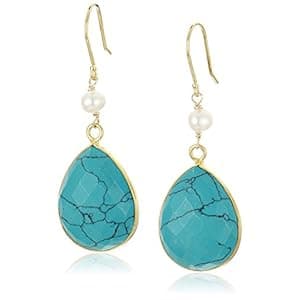 B00DPI5AHW Availability: Currently unavailable Score: 1000.000 Category: Clothing Rating: 3.4 Votes: 15 Find similar productsAmazon Collection Faceted Gemstone Pear-Shape Bezel with White Freshwater Cultured Pearl and Gold over Silver Drop Earring. The Amazon Curated Collection Discover the Amazon Curated Collection of fine and fashion jewelry. The expansive selection of high-quality jewelry featured in the Amazon Curated Collection offers everyday values that range from precious gemstone and diamond pieces to the latest fashion designs. This hand-selected assortment features an array of diamond, gemstone, and precious metal designs that receive a quality inspection, including from Amazon’s staff graduate gemologist, to ensure they meet Amazon’s high standards. All diamonds featured in the Amazon Curated Collection are certified by our suppliers to be conflict free, and IGI, GIA, or AGS certifications are provided on white diamonds of .75 carats or larger on all stud earrings, rings, and pendant necklaces. Pieces from the Amazon Curated Collection come packaged in a custom box, making them wonderful gifts. In addition, we offer free one-day shipping within the continental U.S. on items over $500. International shipping options for friends and family overseas are available for an additional fee. The Amazon Curated Collection offers a specialized customer service team that is available seven days a week to answer any product questions before, during or after the purchase. If you’re not satisfied for any reason, you will receive a full refund and free return shipping within the U.S. if you return your purchase within 30 days. Find a special gift for a loved one or a beautiful piece that complements your personal style with jewelry from the Amazon Curated Collection. Turquoise History The word “turquoise” was derived from the French term “pierre turquoise,” meaning “stone of Turkey.” This was after a 16th century European misconception that the stones originated in Turkey, when in fact they were first discovered in Persia. Turquoise is formed over millions of years with a chemical reaction when water leaks into rocks containing copper and aluminum minerals. Experts believe turquoise was first mined in 6000 B.C., by ancient Egyptians. Today, it is mined in countries all around the world, including, China, Iran, the United States, and Tibet. Turquoise jewelry was first discovered within Egyptian tombs that date back to 3500 B.C. Cultures around the world have embraced the tradition of turquoise jewelry in the belief that it possesses healing and protective powers. While turquoise jewelry continues to be worn by many who believe it will attract money, luck, and love, today, it is also a prevalent fashion accessory and serves as a December birthstone, as well as the stone for the fifth and eleventh wedding anniversaries. Types of Turquoise Turquoise may range in color from light blue to green. It may contain a variety of natural definitions, from white to black, which adds a one-of-a-kind look to each stone. While the variances in color and matrix do not affect the value of the stone, there are properties that make some turquoise more expensive than others, most likely color uniformity and vividness. Turquoise jewelry is often treated in order to bring out the vibrant color and radiance of each stone. Caring for Your Turquoise Jewelry Like all natural gemstones, turquoise can be damaged if not cared for properly. Clean with warm, soapy water and a soft cloth, drying after washing. Avoid scratches by storing separately from other jewelry. Avoid exposure to oils, perfumes, and chemicals that may affect the stone’s vivid color. Freshwater Cultured Pearls These pearls are gathered from freshwater lake and river mollusks. Most Freshwater pearls come from China and they can be mostly round to off-round, or rice-shaped to baroque. They look similar to Akoya pearls, but are the perfect gift when on a budget. They might be slightly less symmetrical, smaller, or not as easily matched, but these minor differences provide a major value for the price. Cultivation Pearls are produced naturally in the body of salt and freshwater mollusks, such as oysters and mussels. When these animals sense an irritant, such as a grain of sand, they produce a soft coating of calcium carbonate substance around it. The result is a pearl. Because perfectly round, naturally produced pearls are so rare, a process known as cultivation was developed by Kokichi Mikimoto in the early 1900s. A small bead of polished shell, the nucleus, is used as an irritant and delicately inserted into the mantle of a mollusk. It takes approximately 20-24 months of intensive husbandry to cultivate a saltwater pearl and somewhat less time to cultivate freshwater pearls. The harvest usually takes place during the months of June and September. Color Mollusks produce pearls in a variety of colors, accommodating most personal preferences and budgets. The general color of a pearl is also known as the body color. Pearls typically range from white, cream, and yellow to pink, silver, or black. An overtone of secondary color is sometimes seen. For instance, a pearl may appear to be white, but upon closer inspection a rosy hue is detected. The body color would then be termed white-rosé. Color variation does not affect the quality of the pearl, though it should be noted that color matching is important when choosing pearls for some necklaces, earrings, or bracelets. In fashion jewelry, pearls can sometimes be dyed to achieve the desired color, which should be mentioned in the product description or specifications. Lustre The appealing, deep shine of a pearl is often what defines its beauty. This shine is produced by multiple layers of semi-opaque calcium carbonate crystals, called nacre. The nacre reflects light on the surface of the pearl, producing brilliance and sheen. Lustre is an integral feature in determining the quality of a pearl. Large pearls have a thicker nacre and, therefore, a higher lustre. When comparing a small Freshwater pearl to a large South Sea pearl, the difference is clearly visible to the untrained eye and should be considered when purchasing pearls. Shape While pearls come in many different shapes, the rarest and highest-quality are round. Akoya, Tahitian, and South Sea oysters tend to produce the roundest pearls, while those of Freshwater mollusks can be oval to slightly off-round. When considering a pearl purchase, whether it be a necklace, bracelet, or earrings, look for consistency in the shapes of the pearls. Many of the less symmetrical shapes are used in stylish jewelry which can be quite beautiful: the drop pearl's shape lends well to earrings, and the baroque pearl features irregular shapes that work well as necklace accents. In addition, a half sphere pearl called a mabe is often used in earrings, necklaces, and bracelets. Size An oyster's particular type and size has a direct effect on how large the pearl it produces will be, and pearls do come in a wide range of sizes. Round pearls are measured according to their diameter, while baroque pearls are measured by their length and width. A pearl's size does not necessarily affect its quality, but it does affect its price. Large, round pearls are rare and their lustre is usually high--this beautiful combination of traits is often reflected in the cost of such pearls. Average pearl sizes (in diameter): Akoya: 6-8mm Freshwater: 5-6.5mm South Sea: 11-13mm Tahitian: 11-12mm Keshi: 4-10mm Surface Markings Often when an oyster creates a pearl, the nacre does not develop smoothly. The surface of a pearl is judged by how many marks are visible in the nacre. These imperfections can be small and unnoticeable or quite large and distinct. Like diamonds, pearls are rarely flawless. However, high lustre or the way pearls are strung and set can help conceal surface markings. Care Proper care of pearls is not difficult if you remember that they are organic and produced by a living thing. Pearls are soft and delicate, but when cared for with common sense, they will maintain their lustre for centuries. The pearls should not come in contact with cosmetics, hairspray, perfume, chlorinated water, or other harsh chemicals. To keep them clean, let them be the last item put on when dressing, and the first item taken off at the end of an evening. The best way to maintain their lustre is to wear the pearls often, and wipe them down with a soft cloth afterward--pearls absorb the oils from skin, which helps keep them moist. Pearls should be stored in a cloth pouch or jewelry bag, separated from other jewelry to prevent nicks or chipping. Periodically, pearl strands should be restrung since the silk thread used to tie the pearls together breaks down over time. | 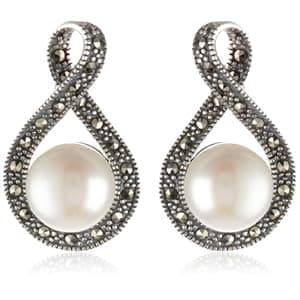 B008CY2TGO Availability: Currently unavailable Score: 10.638 Category: Clothing Rating: 4 Votes: 1 Find similar productsAmazon Collection Sterling Silver Marcasite with Freshwater Cultured Pearl Teardrop Earrings. The Amazon Curated Collection Discover the Amazon Curated Collection of fine and fashion jewelry. The expansive selection of high-quality jewelry featured in the Amazon Curated Collection offers everyday values that range from precious gemstone and diamond pieces to the latest fashion designs. This hand-selected assortment features an array of diamond, gemstone, and precious metal designs that receive a quality inspection, including from Amazon’s staff graduate gemologist, to ensure they meet Amazon’s high standards. All diamonds featured in the Amazon Curated Collection are certified by our suppliers to be conflict free, and IGI, GIA, or AGS certifications are provided on white diamonds of .75 carats or larger on all stud earrings, rings, and pendant necklaces. Pieces from the Amazon Curated Collection come packaged in a custom box, making them wonderful gifts. In addition, we offer free one-day shipping within the continental U.S. on items over $500. International shipping options for friends and family overseas are available for an additional fee. The Amazon Curated Collection offers a specialized customer service team that is available seven days a week to answer any product questions before, during or after the purchase. If you’re not satisfied for any reason, you will receive a full refund and free return shipping within the U.S. if you return your purchase within 30 days. Find a special gift for a loved one or a beautiful piece that complements your personal style with jewelry from the Amazon Curated Collection. Marcasite The marcasite used in fashion and fine jewelry pieces today is a unique form of the iron pyrite. Often shaped with a faceted finish, it gives off a metallic luster which often distinguishes it as Fool’s Gold. Caring For Your Marcasite Jewelry As marcasite is most commonly set in silver jewelry, use a soft, damp cloth to remove any tarnish and keep your stones clean. Wearing the jewelry frequently will help to keep to tarnish away. Freshwater Cultured Pearls These pearls are gathered from freshwater lake and river mollusks. Most Freshwater pearls come from China and they can be mostly round to off-round, or rice-shaped to baroque. They look similar to Akoya pearls, but are the perfect gift when on a budget. They might be slightly less symmetrical, smaller, or not as easily matched, but these minor differences provide a major value for the price. Cultivation Pearls are produced naturally in the body of salt and freshwater mollusks, such as oysters and mussels. When these animals sense an irritant, such as a grain of sand, they produce a soft coating of calcium carbonate substance around it. The result is a pearl. Because perfectly round, naturally produced pearls are so rare, a process known as cultivation was developed by Kokichi Mikimoto in the early 1900s. A small bead of polished shell, the nucleus, is used as an irritant and delicately inserted into the mantle of a mollusk. It takes approximately 20-24 months of intensive husbandry to cultivate a saltwater pearl and somewhat less time to cultivate freshwater pearls. The harvest usually takes place during the months of June and September. Color Mollusks produce pearls in a variety of colors, accommodating most personal preferences and budgets. The general color of a pearl is also known as the body color. Pearls typically range from white, cream, and yellow to pink, silver, or black. An overtone of secondary color is sometimes seen. For instance, a pearl may appear to be white, but upon closer inspection a rosy hue is detected. The body color would then be termed white-rosé. Color variation does not affect the quality of the pearl, though it should be noted that color matching is important when choosing pearls for some necklaces, earrings, or bracelets. In fashion jewelry, pearls can sometimes be dyed to achieve the desired color, which should be mentioned in the product description or specifications. Lustre The appealing, deep shine of a pearl is often what defines its beauty. This shine is produced by multiple layers of semi-opaque calcium carbonate crystals, called nacre. The nacre reflects light on the surface of the pearl, producing brilliance and sheen. Lustre is an integral feature in determining the quality of a pearl. Large pearls have a thicker nacre and, therefore, a higher lustre. When comparing a small Freshwater pearl to a large South Sea pearl, the difference is clearly visible to the untrained eye and should be considered when purchasing pearls. Shape While pearls come in many different shapes, the rarest and highest-quality are round. Akoya, Tahitian, and South Sea oysters tend to produce the roundest pearls, while those of Freshwater mollusks can be oval to slightly off-round. When considering a pearl purchase, whether it be a necklace, bracelet, or earrings, look for consistency in the shapes of the pearls. Many of the less symmetrical shapes are used in stylish jewelry which can be quite beautiful: the drop pearl's shape lends well to earrings, and the baroque pearl features irregular shapes that work well as necklace accents. In addition, a half sphere pearl called a mabe is often used in earrings, necklaces, and bracelets. Size An oyster's particular type and size has a direct effect on how large the pearl it produces will be, and pearls do come in a wide range of sizes. Round pearls are measured according to their diameter, while baroque pearls are measured by their length and width. A pearl's size does not necessarily affect its quality, but it does affect its price. Large, round pearls are rare and their lustre is usually high--this beautiful combination of traits is often reflected in the cost of such pearls. Average pearl sizes (in diameter): Akoya: 6-8mm Freshwater: 5-6.5mm South Sea: 11-13mm Tahitian: 11-12mm Keshi: 4-10mm Surface Markings Often when an oyster creates a pearl, the nacre does not develop smoothly. The surface of a pearl is judged by how many marks are visible in the nacre. These imperfections can be small and unnoticeable or quite large and distinct. Like diamonds, pearls are rarely flawless. However, high lustre or the way pearls are strung and set can help conceal surface markings. Care Proper care of pearls is not difficult if you remember that they are organic and produced by a living thing. Pearls are soft and delicate, but when cared for with common sense, they will maintain their lustre for centuries. The pearls should not come in contact with cosmetics, hairspray, perfume, chlorinated water, or other harsh chemicals. To keep them clean, let them be the last item put on when dressing, and the first item taken off at the end of an evening. The best way to maintain their lustre is to wear the pearls often, and wipe them down with a soft cloth afterward--pearls absorb the oils from skin, which helps keep them moist. Pearls should be stored in a cloth pouch or jewelry bag, separated from other jewelry to prevent nicks or chipping. Periodically, pearl strands should be restrung since the silk thread used to tie the pearls together breaks down over time. |
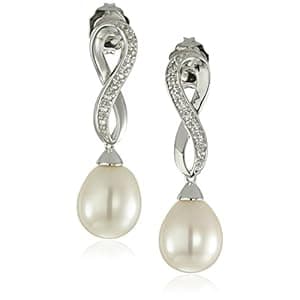 B00JXONY3E Availability: Currently unavailable Score: 10.417 Category: Clothing Rating: 4.6 Votes: 13 Find similar productsSterling Silver Freshwater Cultured Pearl and White Topaz Infinity Design Drop Earrings. The Amazon Curated Collection Discover the Amazon Curated Collection of fine and fashion jewelry. The expansive selection of high-quality jewelry featured in the Amazon Curated Collection offers everyday values that range from precious gemstone and diamond pieces to the latest fashion designs. This hand-selected assortment features an array of diamond, gemstone, and precious metal designs that receive a quality inspection, including from Amazon’s staff graduate gemologist, to ensure they meet Amazon’s high standards. All diamonds featured in the Amazon Curated Collection are certified by our suppliers to be conflict free, and IGI, GIA, or AGS certifications are provided on white diamonds of .75 carats or larger on all stud earrings, rings, and pendant necklaces. Pieces from the Amazon Curated Collection come packaged in a custom box, making them wonderful gifts. In addition, we offer free one-day shipping within the continental U.S. on items over $500. International shipping options for friends and family overseas are available for an additional fee. The Amazon Curated Collection offers a specialized customer service team that is available seven days a week to answer any product questions before, during or after the purchase. If you’re not satisfied for any reason, you will receive a full refund and free return shipping within the U.S. if you return your purchase within 30 days. Find a special gift for a loved one or a beautiful piece that complements your personal style with jewelry from the Amazon Curated Collection. Freshwater Cultured Pearls These pearls are gathered from freshwater lake and river mollusks. Most Freshwater pearls come from China and they can be mostly round to off-round, or rice-shaped to baroque. They look similar to Akoya pearls, but are the perfect gift when on a budget. They might be slightly less symmetrical, smaller, or not as easily matched, but these minor differences provide a major value for the price. Cultivation Pearls are produced naturally in the body of salt and freshwater mollusks, such as oysters and mussels. When these animals sense an irritant, such as a grain of sand, they produce a soft coating of calcium carbonate substance around it. The result is a pearl. Because perfectly round, naturally produced pearls are so rare, a process known as cultivation was developed by Kokichi Mikimoto in the early 1900s. A small bead of polished shell, the nucleus, is used as an irritant and delicately inserted into the mantle of a mollusk. It takes approximately 20-24 months of intensive husbandry to cultivate a saltwater pearl and somewhat less time to cultivate freshwater pearls. The harvest usually takes place during the months of June and September. Color Mollusks produce pearls in a variety of colors, accommodating most personal preferences and budgets. The general color of a pearl is also known as the body color. Pearls typically range from white, cream, and yellow to pink, silver, or black. An overtone of secondary color is sometimes seen. For instance, a pearl may appear to be white, but upon closer inspection a rosy hue is detected. The body color would then be termed white-rosé. Color variation does not affect the quality of the pearl, though it should be noted that color matching is important when choosing pearls for some necklaces, earrings, or bracelets. In fashion jewelry, pearls can sometimes be dyed to achieve the desired color, which should be mentioned in the product description or specifications. Lustre The appealing, deep shine of a pearl is often what defines its beauty. This shine is produced by multiple layers of semi-opaque calcium carbonate crystals, called nacre. The nacre reflects light on the surface of the pearl, producing brilliance and sheen. Lustre is an integral feature in determining the quality of a pearl. Large pearls have a thicker nacre and, therefore, a higher lustre. When comparing a small Freshwater pearl to a large South Sea pearl, the difference is clearly visible to the untrained eye and should be considered when purchasing pearls. Shape While pearls come in many different shapes, the rarest and highest-quality are round. Akoya, Tahitian, and South Sea oysters tend to produce the roundest pearls, while those of Freshwater mollusks can be oval to slightly off-round. When considering a pearl purchase, whether it be a necklace, bracelet, or earrings, look for consistency in the shapes of the pearls. Many of the less symmetrical shapes are used in stylish jewelry which can be quite beautiful: the drop pearl's shape lends well to earrings, and the baroque pearl features irregular shapes that work well as necklace accents. In addition, a half sphere pearl called a mabe is often used in earrings, necklaces, and bracelets. Size An oyster's particular type and size has a direct effect on how large the pearl it produces will be, and pearls do come in a wide range of sizes. Round pearls are measured according to their diameter, while baroque pearls are measured by their length and width. A pearl's size does not necessarily affect its quality, but it does affect its price. Large, round pearls are rare and their lustre is usually high--this beautiful combination of traits is often reflected in the cost of such pearls. Average pearl sizes (in diameter): Akoya: 6-8mm Freshwater: 5-6.5mm South Sea: 11-13mm Tahitian: 11-12mm Keshi: 4-10mm Surface Markings Often when an oyster creates a pearl, the nacre does not develop smoothly. The surface of a pearl is judged by how many marks are visible in the nacre. These imperfections can be small and unnoticeable or quite large and distinct. Like diamonds, pearls are rarely flawless. However, high lustre or the way pearls are strung and set can help conceal surface markings. Care Proper care of pearls is not difficult if you remember that they are organic and produced by a living thing. Pearls are soft and delicate, but when cared for with common sense, they will maintain their lustre for centuries. The pearls should not come in contact with cosmetics, hairspray, perfume, chlorinated water, or other harsh chemicals. To keep them clean, let them be the last item put on when dressing, and the first item taken off at the end of an evening. The best way to maintain their lustre is to wear the pearls often, and wipe them down with a soft cloth afterward--pearls absorb the oils from skin, which helps keep them moist. Pearls should be stored in a cloth pouch or jewelry bag, separated from other jewelry to prevent nicks or chipping. Periodically, pearl strands should be restrung since the silk thread used to tie the pearls together breaks down over time. | 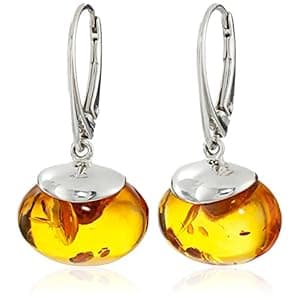 B000VZOHOY Availability: Currently unavailable Score: 10.309 Category: Clothing Rating: 3.1 Votes: 25 Find similar productsSterling Silver Cognac Amber Drop Earrings. Honey Amber Collection: The most recognizable color of amber, it can be found in almost every key location where amber is mined: Africa, South America, New Zealand and Eurasia. Depending on location, the age of honey amber ranges from 1-90 millions years old. In essence, honey amber is a time capsule preserving compressed organic matter, such as insects, and even little animals. Known as the Window to the Past, honey amber tells many fantastic stories from long, long ago. Cognac (or Honey) is the color most commonly associated with the amber gemstone. When people think of “the color amber”, it is the stone of cognac, or honey, amber that is described. If you were to mix together all the colors of amber on the same palette, you will produce a nice cognac shade. It is a hue often found in golden sunsets of the summer. Inclusions show up very nicely in this shade of amber. Often times, stones are selected merely on how the inclusions reflect light as the jewelry is worn. Amber is a conductor of heat, and provides healing energy if worn close to the skin. The Amazon Curated Collection Discover the Amazon Curated Collection of fine and fashion jewelry. The expansive selection of high-quality jewelry featured in the Amazon Curated Collection offers everyday values that range from precious gemstone and diamond pieces to the latest fashion designs. This hand-selected assortment features an array of diamond, gemstone, and precious metal designs that receive a quality inspection, including from Amazon’s staff graduate gemologist, to ensure they meet Amazon’s high standards. All diamonds featured in the Amazon Curated Collection are certified by our suppliers to be conflict free, and IGI, GIA, or AGS certifications are provided on white diamonds of .75 carats or larger on all stud earrings, rings, and pendant necklaces. Pieces from the Amazon Curated Collection come packaged in a custom box, making them wonderful gifts. In addition, we offer free one-day shipping within the continental U.S. on items over $500. International shipping options for friends and family overseas are available for an additional fee. The Amazon Curated Collection offers a specialized customer service team that is available seven days a week to answer any product questions before, during or after the purchase. If you’re not satisfied for any reason, you will receive a full refund and free return shipping within the U.S. if you return your purchase within 30 days. Find a special gift for a loved one or a beautiful piece that complements your personal style with jewelry from the Amazon Curated Collection. |
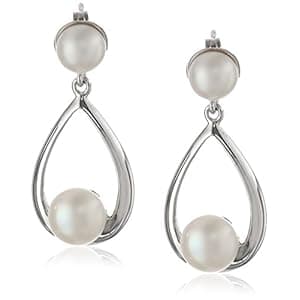 B00B16BQN2 Availability: Currently unavailable Score: 9.709 Category: Clothing Rating: 5 Votes: 3 Find similar productsAmazon Collection Sterling Silver Freshwater Cultured Pearl Tear Drop Earrings. The Amazon Curated Collection Discover the Amazon Curated Collection of fine and fashion jewelry. The expansive selection of high-quality jewelry featured in the Amazon Curated Collection offers everyday values that range from precious gemstone and diamond pieces to the latest fashion designs. This hand-selected assortment features an array of diamond, gemstone, and precious metal designs that receive a quality inspection, including from Amazon’s staff graduate gemologist, to ensure they meet Amazon’s high standards. All diamonds featured in the Amazon Curated Collection are certified by our suppliers to be conflict free, and IGI, GIA, or AGS certifications are provided on white diamonds of .75 carats or larger on all stud earrings, rings, and pendant necklaces. Pieces from the Amazon Curated Collection come packaged in a custom box, making them wonderful gifts. In addition, we offer free one-day shipping within the continental U.S. on items over $500. International shipping options for friends and family overseas are available for an additional fee. The Amazon Curated Collection offers a specialized customer service team that is available seven days a week to answer any product questions before, during or after the purchase. If you’re not satisfied for any reason, you will receive a full refund and free return shipping within the U.S. if you return your purchase within 30 days. Find a special gift for a loved one or a beautiful piece that complements your personal style with jewelry from the Amazon Curated Collection. Freshwater Cultured Pearls These pearls are gathered from freshwater lake and river mollusks. Most Freshwater pearls come from China and they can be mostly round to off-round, or rice-shaped to baroque. They look similar to Akoya pearls, but are the perfect gift when on a budget. They might be slightly less symmetrical, smaller, or not as easily matched, but these minor differences provide a major value for the price. Cultivation Pearls are produced naturally in the body of salt and freshwater mollusks, such as oysters and mussels. When these animals sense an irritant, such as a grain of sand, they produce a soft coating of calcium carbonate substance around it. The result is a pearl. Because perfectly round, naturally produced pearls are so rare, a process known as cultivation was developed by Kokichi Mikimoto in the early 1900s. A small bead of polished shell, the nucleus, is used as an irritant and delicately inserted into the mantle of a mollusk. It takes approximately 20-24 months of intensive husbandry to cultivate a saltwater pearl and somewhat less time to cultivate freshwater pearls. The harvest usually takes place during the months of June and September. Color Mollusks produce pearls in a variety of colors, accommodating most personal preferences and budgets. The general color of a pearl is also known as the body color. Pearls typically range from white, cream, and yellow to pink, silver, or black. An overtone of secondary color is sometimes seen. For instance, a pearl may appear to be white, but upon closer inspection a rosy hue is detected. The body color would then be termed white-rosé. Color variation does not affect the quality of the pearl, though it should be noted that color matching is important when choosing pearls for some necklaces, earrings, or bracelets. In fashion jewelry, pearls can sometimes be dyed to achieve the desired color, which should be mentioned in the product description or specifications. Lustre The appealing, deep shine of a pearl is often what defines its beauty. This shine is produced by multiple layers of semi-opaque calcium carbonate crystals, called nacre. The nacre reflects light on the surface of the pearl, producing brilliance and sheen. Lustre is an integral feature in determining the quality of a pearl. Large pearls have a thicker nacre and, therefore, a higher lustre. When comparing a small Freshwater pearl to a large South Sea pearl, the difference is clearly visible to the untrained eye and should be considered when purchasing pearls. Shape While pearls come in many different shapes, the rarest and highest-quality are round. Akoya, Tahitian, and South Sea oysters tend to produce the roundest pearls, while those of Freshwater mollusks can be oval to slightly off-round. When considering a pearl purchase, whether it be a necklace, bracelet, or earrings, look for consistency in the shapes of the pearls. Many of the less symmetrical shapes are used in stylish jewelry which can be quite beautiful: the drop pearl's shape lends well to earrings, and the baroque pearl features irregular shapes that work well as necklace accents. In addition, a half sphere pearl called a mabe is often used in earrings, necklaces, and bracelets. Size An oyster's particular type and size has a direct effect on how large the pearl it produces will be, and pearls do come in a wide range of sizes. Round pearls are measured according to their diameter, while baroque pearls are measured by their length and width. A pearl's size does not necessarily affect its quality, but it does affect its price. Large, round pearls are rare and their lustre is usually high--this beautiful combination of traits is often reflected in the cost of such pearls. Average pearl sizes (in diameter): Akoya: 6-8mm Freshwater: 5-6.5mm South Sea: 11-13mm Tahitian: 11-12mm Keshi: 4-10mm Surface Markings Often when an oyster creates a pearl, the nacre does not develop smoothly. The surface of a pearl is judged by how many marks are visible in the nacre. These imperfections can be small and unnoticeable or quite large and distinct. Like diamonds, pearls are rarely flawless. However, high lustre or the way pearls are strung and set can help conceal surface markings. Care Proper care of pearls is not difficult if you remember that they are organic and produced by a living thing. Pearls are soft and delicate, but when cared for with common sense, they will maintain their lustre for centuries. The pearls should not come in contact with cosmetics, hairspray, perfume, chlorinated water, or other harsh chemicals. To keep them clean, let them be the last item put on when dressing, and the first item taken off at the end of an evening. The best way to maintain their lustre is to wear the pearls often, and wipe them down with a soft cloth afterward--pearls absorb the oils from skin, which helps keep them moist. Pearls should be stored in a cloth pouch or jewelry bag, separated from other jewelry to prevent nicks or chipping. Periodically, pearl strands should be restrung since the silk thread used to tie the pearls together breaks down over time. | 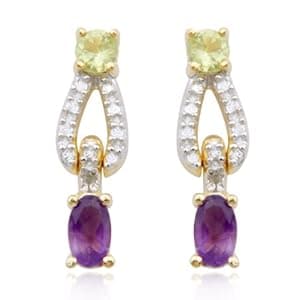 B003AVNMME Availability: Currently unavailable Score: 9.434 Category: Clothing Rating: 5 Votes: 1 Find similar productsAmazon Collection 18k Yellow Gold Plated Sterling Silver Genuine Amethyst and Peridot with Diamond Accent Drop Earrings. Light green peridot and purple amethyst are a beautiful combination in these dainty gemstone earrings made from gold-dipped sterling silver. Peridot rounds mark the posts and amethyst ovals tip the ends, while pave texturing and single diamond accents add a luxury look. The Amazon Curated Collection Discover the Amazon Curated Collection of fine and fashion jewelry. The expansive selection of high-quality jewelry featured in the Amazon Curated Collection offers everyday values that range from precious gemstone and diamond pieces to the latest fashion designs. This hand-selected assortment features an array of diamond, gemstone, and precious metal designs that receive a quality inspection, including from Amazon’s staff graduate gemologist, to ensure they meet Amazon’s high standards. All diamonds featured in the Amazon Curated Collection are certified by our suppliers to be conflict free, and IGI, GIA, or AGS certifications are provided on white diamonds of .75 carats or larger on all stud earrings, rings, and pendant necklaces. Pieces from the Amazon Curated Collection come packaged in a custom box, making them wonderful gifts. In addition, we offer free one-day shipping within the continental U.S. on items over $500. International shipping options for friends and family overseas are available for an additional fee. The Amazon Curated Collection offers a specialized customer service team that is available seven days a week to answer any product questions before, during or after the purchase. If you’re not satisfied for any reason, you will receive a full refund and free return shipping within the U.S. if you return your purchase within 30 days. Find a special gift for a loved one or a beautiful piece that complements your personal style with jewelry from the Amazon Curated Collection. Gemstones Color Jewelers describe the color of a gemstone in terms of three characteristics: hue, saturation, and tone. A gemstone's basic color is its hue, and those with purer hues (for emeralds, green; for sapphires, blue; and for rubies, red) are generally considered more valuable. Often, however, a hint of another color can be detected. Saturation is a measure of the intensity or purity of a gem's hue and is determined by the degree to which gray or brown hues mute its defining color. Value tends to increase with saturation, so a fully saturated purplish blue sapphire may well be more expensive than a muted pure blue one. The tone of a gemstone, a measurement of its lightness or darkness, is usually given as light, medium-light, medium, medium-dark, or dark. Clarity A flawless gemstone is rare and expensive. As with diamonds, most gemstones have inclusions, or tiny mineral flaws, that can be seen under magnification or by the careful eye. Make sure that any inclusions in the stone do not penetrate deeply into the gem, as this may cause it to break or crack. Clarity grades range from VVS (very, very slightly included) to I3, in which inclusions are prominent and severely affect the gemstone's beauty. Cut A gemstone's cut refers to its proportions and symmetry. In making a gemstone look appealing--the stone should be symmetrical in all dimensions so that it will appear balanced, and that its facets will reflect light evenly. Color should also be taken into account when cutting for optical efficiency. If a stone's color is highly saturated, a shallow cut will allow it to pass more light, while a deeper cut may increase the vividness of a less saturated gem. There is no generally accepted grading system for gemstone cut. Size Though a gemstone's weight is usually given in carats, this may not give an accurate idea of its size, because different types of stone have different densities. Therefore, a one-carat sapphire or ruby will be smaller than a one-carat emerald, though they have the same weight, because sapphires and rubies (both a form of the mineral corundum) are more dense than emeralds. Gemstones can also be measured in dimensions (diameter, length, and width). It is important to know the dimensions to ensure that the gemstone weight will be visible and well-proportioned in the setting. Gemstone Treatment Gemstones are often treated to enhance color and fill cracks. Please note: if a gemstone has been treated, this information will be provided in the specifications on the stone's product detail page. There are various accepted techniques, depending on the type of stone: Oils and resins are frequently used to fill surface-reaching fissures in emeralds and rubies. This process is not permanent; however, if a treated ruby or emerald is subjected to high heat, the filler may leak out of the stone. Sapphires and rubies are often heated in a kiln or furnace to enhance their color. Such heat treatment, which is considered permanent, has been used for centuries. Lightly colored sapphires may also undergo diffusion treatment. This is done by heating a stone in the presence of coloring elements such as titanium or iron, which causes a thin layer of color to be diffused into the stone's surface. Because this color layer is so thin, a diffusion-treated sapphire should not be re-polished. Gemstone Care To clean gemstone jewelry, first wipe it with a soft cloth to remove any dirt. Emeralds require only the use of a soft cloth, as cleaners may damage these soft gems. Sapphires and rubies can be cleaned with either an ultrasonic cleaner or a solution of one part ammonia to six parts water, with a soft brush. Store your gemstone jewelry in a soft cloth pouch or jewelry case so it does not touch other pieces in your collection. As with all jewelry, normal wear and tear can loosen prongs and settings, so it is a good idea to have it checked by a professional jeweler who can make repairs as needed. |
 B01HRVVX5A Availability: Currently unavailable Score: 9.346 Category: Clothing Rating: 3.7 Votes: 4 Find similar productsSterling Silver Multi-Colored Butterfly Leverback Earrings Made with Swarovski Crystal. The Amazon Curated Collection Discover the Amazon Curated Collection of fine and fashion jewelry. The expansive selection of high-quality jewelry featured in the Amazon Curated Collection offers everyday values that range from precious gemstone and diamond pieces to the latest fashion designs. This hand-selected assortment features an array of diamond, gemstone, and precious metal designs that receive a quality inspection, including from Amazon’s staff graduate gemologist, to ensure they meet Amazon’s high standards. All diamonds featured in the Amazon Curated Collection are certified by our suppliers to be conflict free, and IGI, GIA, or AGS certifications are provided on white diamonds of .75 carats or larger on all stud earrings, rings, and pendant necklaces. Pieces from the Amazon Curated Collection come packaged in a custom box, making them wonderful gifts. In addition, we offer free one-day shipping within the continental U.S. on items over $500. International shipping options for friends and family overseas are available for an additional fee. The Amazon Curated Collection offers a specialized customer service team that is available seven days a week to answer any product questions before, during or after the purchase. If you’re not satisfied for any reason, you will receive a full refund and free return shipping within the U.S. if you return your purchase within 30 days. Find a special gift for a loved one or a beautiful piece that complements your personal style with jewelry from the Amazon Curated Collection. About Sterling Silver Jewelry Sterling Silver History Experts believe that silver alloy, used today as sterling silver, originated in continental Europe in the 12th century. Pure silver was found to be a soft and easily damageable material. When combined with other metals, most commonly cooper, it produced a tougher material that could be heavily relied on. Throughout the next few centuries, sterling silver was used as currency and for household items. It was often used as silverware and became the material used in a proper table setting between 1840 and 1940 throughout the United States and Europe. Because of this popularity, silver companies began to grow. During this craze, companies began to experiment using sterling silver compositions in jewelry, as it was a material that was easy to mold into intricate designs and gave a luxurious look with its metallic finish. Today, sterling silver is widely used in all kinds of jewelry styles and shines as beautifully as other precious metals, with the benefit of affordable pricing. Sterling Silver Composition While pure silver can be combined with many different types of metals, sterling silver is created when combining pure silver with copper. Sterling silver jewelry can be composed with different amounts of copper but is most often seen with the .925 stamp, meaning that the composition is of 92.5 percent silver and 7.5 percent copper. This has been found to be a good combination for maintaining the silver's durability without harming its sparkle. Caring for Your Sterling Silver Jewelry Silver should not come into contact with harsh household chemicals such as bleach, ammonia, or chlorine. To avoid scratches, store silver in a lined jewelry box or pouch, as it is prone to tarnish as it naturally reacts with sulfur or hydrogen sulfide in the air. Cleaning and wearing silver jewelry regularly will prevent this and help maintain its shine. Immediately upon noticing any discoloration, use a gentle polish made specifically for removing tarnish. | 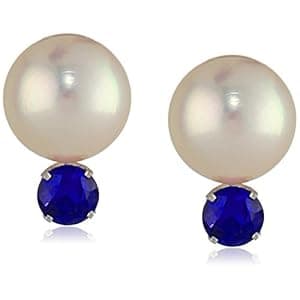 B008ATU9UO Availability: Currently unavailable Score: 9.259 Category: Clothing Rating: 3.7 Votes: 28 Find similar productsAmazon Collection Sterling Silver 10-10.5mm White Freshwater Cultured Button Pearl and Round 5mm Created Blue Sapphire Stud Earrings. A rounded gemstone adds color to this classic pair of freshwater cultured pearl stud earrings. Choose from created sapphire, created emerald or created ruby accents. The Amazon Curated Collection Discover the Amazon Curated Collection of fine and fashion jewelry. The expansive selection of high-quality jewelry featured in the Amazon Curated Collection offers everyday values that range from precious gemstone and diamond pieces to the latest fashion designs. This hand-selected assortment features an array of diamond, gemstone, and precious metal designs that receive a quality inspection, including from Amazon’s staff graduate gemologist, to ensure they meet Amazon’s high standards. All diamonds featured in the Amazon Curated Collection are certified by our suppliers to be conflict free, and IGI, GIA, or AGS certifications are provided on white diamonds of .75 carats or larger on all stud earrings, rings, and pendant necklaces. Pieces from the Amazon Curated Collection come packaged in a custom box, making them wonderful gifts. In addition, we offer free one-day shipping within the continental U.S. on items over $500. International shipping options for friends and family overseas are available for an additional fee. The Amazon Curated Collection offers a specialized customer service team that is available seven days a week to answer any product questions before, during or after the purchase. If you’re not satisfied for any reason, you will receive a full refund and free return shipping within the U.S. if you return your purchase within 30 days. Find a special gift for a loved one or a beautiful piece that complements your personal style with jewelry from the Amazon Curated Collection. Freshwater Cultured Pearls These pearls are gathered from freshwater lake and river mollusks. Most Freshwater pearls come from China and they can be mostly round to off-round, or rice-shaped to baroque. They look similar to Akoya pearls, but are the perfect gift when on a budget. They might be slightly less symmetrical, smaller, or not as easily matched, but these minor differences provide a major value for the price. Cultivation Pearls are produced naturally in the body of salt and freshwater mollusks, such as oysters and mussels. When these animals sense an irritant, such as a grain of sand, they produce a soft coating of calcium carbonate substance around it. The result is a pearl. Because perfectly round, naturally produced pearls are so rare, a process known as cultivation was developed by Kokichi Mikimoto in the early 1900s. A small bead of polished shell, the nucleus, is used as an irritant and delicately inserted into the mantle of a mollusk. It takes approximately 20-24 months of intensive husbandry to cultivate a saltwater pearl and somewhat less time to cultivate freshwater pearls. The harvest usually takes place during the months of June and September. Color Mollusks produce pearls in a variety of colors, accommodating most personal preferences and budgets. The general color of a pearl is also known as the body color. Pearls typically range from white, cream, and yellow to pink, silver, or black. An overtone of secondary color is sometimes seen. For instance, a pearl may appear to be white, but upon closer inspection a rosy hue is detected. The body color would then be termed white-rosé. Color variation does not affect the quality of the pearl, though it should be noted that color matching is important when choosing pearls for some necklaces, earrings, or bracelets. In fashion jewelry, pearls can sometimes be dyed to achieve the desired color, which should be mentioned in the product description or specifications. Lustre The appealing, deep shine of a pearl is often what defines its beauty. This shine is produced by multiple layers of semi-opaque calcium carbonate crystals, called nacre. The nacre reflects light on the surface of the pearl, producing brilliance and sheen. Lustre is an integral feature in determining the quality of a pearl. Large pearls have a thicker nacre and, therefore, a higher lustre. When comparing a small Freshwater pearl to a large South Sea pearl, the difference is clearly visible to the untrained eye and should be considered when purchasing pearls. Shape While pearls come in many different shapes, the rarest and highest-quality are round. Akoya, Tahitian, and South Sea oysters tend to produce the roundest pearls, while those of Freshwater mollusks can be oval to slightly off-round. When considering a pearl purchase, whether it be a necklace, bracelet, or earrings, look for consistency in the shapes of the pearls. Many of the less symmetrical shapes are used in stylish jewelry which can be quite beautiful: the drop pearl's shape lends well to earrings, and the baroque pearl features irregular shapes that work well as necklace accents. In addition, a half sphere pearl called a mabe is often used in earrings, necklaces, and bracelets. Size An oyster's particular type and size has a direct effect on how large the pearl it produces will be, and pearls do come in a wide range of sizes. Round pearls are measured according to their diameter, while baroque pearls are measured by their length and width. A pearl's size does not necessarily affect its quality, but it does affect its price. Large, round pearls are rare and their lustre is usually high--this beautiful combination of traits is often reflected in the cost of such pearls. Average pearl sizes (in diameter): Akoya: 6-8mm Freshwater: 5-6.5mm South Sea: 11-13mm Tahitian: 11-12mm Keshi: 4-10mm Surface Markings Often when an oyster creates a pearl, the nacre does not develop smoothly. The surface of a pearl is judged by how many marks are visible in the nacre. These imperfections can be small and unnoticeable or quite large and distinct. Like diamonds, pearls are rarely flawless. However, high lustre or the way pearls are strung and set can help conceal surface markings. Care Proper care of pearls is not difficult if you remember that they are organic and produced by a living thing. Pearls are soft and delicate, but when cared for with common sense, they will maintain their lustre for centuries. The pearls should not come in contact with cosmetics, hairspray, perfume, chlorinated water, or other harsh chemicals. To keep them clean, let them be the last item put on when dressing, and the first item taken off at the end of an evening. The best way to maintain their lustre is to wear the pearls often, and wipe them down with a soft cloth afterward--pearls absorb the oils from skin, which helps keep them moist. Pearls should be stored in a cloth pouch or jewelry bag, separated from other jewelry to prevent nicks or chipping. Periodically, pearl strands should be restrung since the silk thread used to tie the pearls together breaks down over time. |
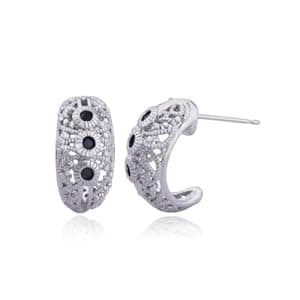 B00405RTAA Availability: Currently unavailable Score: 9.174 Category: Clothing Rating: 4 Votes: 1 Find similar productsAmazon Collection Sterling Silver Genuine Sapphire Filigree J-Hoop Earrings. It doesn't take a discerning eye to appreciate the remarkable beauty inherent to these Rhodium-Plated Sterling Silver Genuine Sapphire Filigree J-Hoop Earrings. Dotted throughout the intricate lattice work of each resilient rhodium-plated 925 sterling silver metal J-hoop is a series of three round blue sapphire gemstones weighing in at .46 carats. Fastened via a post with friction back, these 4.6 gram filigree earrings are a convenient way to class up your apparel, from casual street clothes to finer office wear. The Amazon Curated Collection Discover the Amazon Curated Collection of fine and fashion jewelry. The expansive selection of high-quality jewelry featured in the Amazon Curated Collection offers everyday values that range from precious gemstone and diamond pieces to the latest fashion designs. This hand-selected assortment features an array of diamond, gemstone, and precious metal designs that receive a quality inspection, including from Amazon’s staff graduate gemologist, to ensure they meet Amazon’s high standards. All diamonds featured in the Amazon Curated Collection are certified by our suppliers to be conflict free, and IGI, GIA, or AGS certifications are provided on white diamonds of .75 carats or larger on all stud earrings, rings, and pendant necklaces. Pieces from the Amazon Curated Collection come packaged in a custom box, making them wonderful gifts. In addition, we offer free one-day shipping within the continental U.S. on items over $500. International shipping options for friends and family overseas are available for an additional fee. The Amazon Curated Collection offers a specialized customer service team that is available seven days a week to answer any product questions before, during or after the purchase. If you’re not satisfied for any reason, you will receive a full refund and free return shipping within the U.S. if you return your purchase within 30 days. Find a special gift for a loved one or a beautiful piece that complements your personal style with jewelry from the Amazon Curated Collection. September Birthstone: Sapphire September's birthstone has been used by priests throughout the ages as a symbol of purity, and by kings as an emblem of wisdom. Those born in September are said to possess the qualities of the sapphire--truthfulness, sincerity, and steadfast loyalty. History of Birthstones Chances are you can name your birthstone, but have you ever wondered how certain stones came to be associated with particular months? Most gem scholars trace the tradition to the Old Testament story of Aaron, whose breastplate was decorated with twelve precious stones, one for each of the twelve tribes of Israel. Over time, these stones were linked with certain powers and tied to particular astrological signs, and later to calendar months. There are many variations of birthstone lists, including Mystical birthstones, which originate from Tibet and date back over a thousand years, and Ayurvedic birthstones, associated with ancient Indian medicine and beliefs. Birthstones have also been tied to ancient Pagan religions, and even to the collective wisdom of the legendary lost city of Atlantis. The modern birthstone list, perhaps the most universally known, was released by the American National Association of Jewelers and officially adopted in 1912. Whether you embrace birthstone lore, or look upon it with a skeptical eye, there is an undeniable appeal to collecting a beautiful gemstone that is reputed to hold special power, meaning, and good fortune just for you. | 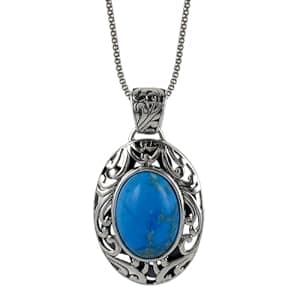 B00827JFVI Availability: Currently unavailable Score: 9.091 Category: Clothing Rating: 2 Votes: 2 Find similar productsAmazon Collection Sterling Silver Jade Genuine Stone Oval Pendant Necklace, 18. A richly-colored gemstone surrounded by an elegant frame of sterling silver creates this eye-catching pair of drop earrings. Choose from purple jade or blue turquoise stones. The Amazon Curated Collection Discover the Amazon Curated Collection of fine and fashion jewelry. The expansive selection of high-quality jewelry featured in the Amazon Curated Collection offers everyday values that range from precious gemstone and diamond pieces to the latest fashion designs. This hand-selected assortment features an array of diamond, gemstone, and precious metal designs that receive a quality inspection, including from Amazon’s staff graduate gemologist, to ensure they meet Amazon’s high standards. All diamonds featured in the Amazon Curated Collection are certified by our suppliers to be conflict free, and IGI, GIA, or AGS certifications are provided on white diamonds of .75 carats or larger on all stud earrings, rings, and pendant necklaces. Pieces from the Amazon Curated Collection come packaged in a custom box, making them wonderful gifts. In addition, we offer free one-day shipping within the continental U.S. on items over $500. International shipping options for friends and family overseas are available for an additional fee. The Amazon Curated Collection offers a specialized customer service team that is available seven days a week to answer any product questions before, during or after the purchase. If you’re not satisfied for any reason, you will receive a full refund and free return shipping within the U.S. if you return your purchase within 30 days. Find a special gift for a loved one or a beautiful piece that complements your personal style with jewelry from the Amazon Curated Collection. Turquoise History The word “turquoise” was derived from the French term “pierre turquoise,” meaning “stone of Turkey.” This was after a 16th century European misconception that the stones originated in Turkey, when in fact they were first discovered in Persia. Turquoise is formed over millions of years with a chemical reaction when water leaks into rocks containing copper and aluminum minerals. Experts believe turquoise was first mined in 6000 B.C., by ancient Egyptians. Today, it is mined in countries all around the world, including, China, Iran, the United States, and Tibet. Turquoise jewelry was first discovered within Egyptian tombs that date back to 3500 B.C. Cultures around the world have embraced the tradition of turquoise jewelry in the belief that it possesses healing and protective powers. While turquoise jewelry continues to be worn by many who believe it will attract money, luck, and love, today, it is also a prevalent fashion accessory and serves as a December birthstone, as well as the stone for the fifth and eleventh wedding anniversaries. Types of Turquoise Turquoise may range in color from light blue to green. It may contain a variety of natural definitions, from white to black, which adds a one-of-a-kind look to each stone. While the variances in color and matrix do not affect the value of the stone, there are properties that make some turquoise more expensive than others, most likely color uniformity and vividness. Turquoise jewelry is often treated in order to bring out the vibrant color and radiance of each stone. Caring for Your Turquoise Jewelry Like all natural gemstones, turquoise can be damaged if not cared for properly. Clean with warm, soapy water and a soft cloth, drying after washing. Avoid scratches by storing separately from other jewelry. Avoid exposure to oils, perfumes, and chemicals that may affect the stone’s vivid color. |