E-commerce Search Demo
AI Assisted Filters
Parameters
Query:
Category filters: All
AI Assist: ON
Page: 1
Products
Time taken: 3 Max score: 1000.000 Total hits: 100 Full time: 0.0 s
Showing 1-10 of 100 products
 B00DV22MDW Availability: Currently unavailable Score: 1000.000 Category: Electronics Rating: 4 Votes: 2 Find similar productsOnkyo AV Surround Processor Model ES-600 Pro. Onkyo AV Surround Processor Model ES-600 Pro. |  B004GV7NNG Availability: Currently unavailable Score: 5.917 Category: Electronics Rating: 4.4 Votes: 2 Find similar productsXeon QC W3550 Processor-BX80601W3550. QC W3550 Processor-BX80601W3550. |
 B00133TI38 Availability: Currently unavailable Score: 5.747 Category: Electronics Rating: 2.5 Votes: 2 Find similar productsAlpine PXE-H650 System Integration Audio Processor. . | 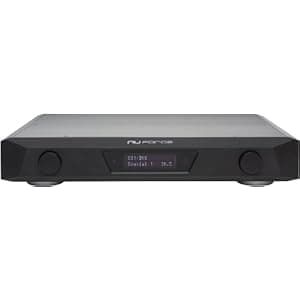 B00D3E576W Availability: Currently unavailable Score: 5.714 Category: Electronics Rating: 3 Votes: 8 Find similar productsNuForce - AVP-18 - Preamp/Processor. The NuForce AVP-18 all-digital HT preamp/processor offers dedicated AV enthusiasts true, 24/192 digital audio performance and superb HD video at an amazing price. With four HDMI inputs, two optical and two coaxial S/PDIF inputs, the AVP-18 easily accommodates the most complex system configurations. |
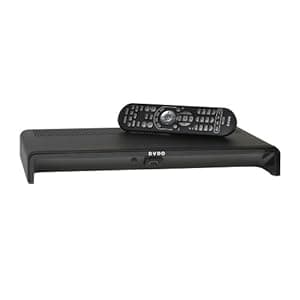 B001D4KWXM Availability: Currently unavailable Score: 5.376 Category: Electronics Rating: 3.9 Votes: 37 Find similar productsDVDO EDGE High-Definition Video Processor. Product Description The DVDO EDGE is an affordable high quality video processor and A/V hub that converts standard definition, high definition and PC signals from up to ten sources (including six HDMI) to any HDTV resolution up to 1080p. EDGE has a very intuitive user interface which makes installation a breeze. EDGE has two HDMI outputs, one with audio and video and one with audio only to facilitate connections to an HDMI/DVI equipped display and HDMI AV Receiver. An optical audio output is available for older AV Receivers. A backlit universal remote control with a luxurious ¿soft-touch¿ finish is also included. Video Inputs: 6 HDMI 1.3, 2 Component, 1 S-Video, 1 Composite Audio Inputs: 3 Optical, 1 Coaxial, 1 analog (stereo) Video Output: 1 HDMI 1.3 (A/V) Audio Outputs: 1 HDMI 1.3 (audio only), 1 Optical Output Formats: 480p, 576p, 720p, 1080i, 1080p, and 1080p-24 Processor: Anchor Bay¿s ABT2010 with VRS technologies Technologies: Precision Deinterlacing (480i/576i/1080i) PReP¿, Progressive ReProcessing Precision Video Scaling II Progressive Cadence Detection Mosquito Noise Reduction (SD/HD) Fine Detail Enhancement (SD/HD) Edge Enhancement (SD/HD) RightRate Framerate Conversion Precision AV LipSync From the Manufacturer Manufacturer's Description -- July 22, 2008 The DVDO EDGE is a video processor and A/V hub that gives you the bestHD quality from standard video sources like standard DVD and standard cable, satellite or broadcast television signals. The secret is in the outboard video processor's computer processing capabilities, which provide deinterlacing and scaling far superior to that included in most HDTVs or upconverting DVD players. Perhaps the most amazing thing about the EDGE is that it provides the kind of technology that previously cost 5-15 times the retail price of the EDGE. The EDGE converts standard definition, high definition and PC signals from up to ten sources (including six HDMI 1.3 compatible devices) at any source resolution up to 1080p. EDGE has a very intuitive user interface which makes installation a breeze. EDGE has two HDMI 1.3 outputs, one with audio and video and one with audio only to facilitate connections to an HDMI/DVI equipped display and HDMI AV Receiver. An optical audio output is available for older AV Receivers. A back lit universal remote control with a luxurious soft-touch finish is also included. Features New -- Sleek New Product Design with luxurious soft-touch finish New -- Sleek New Product Design with luxurious soft-touch finish New -- Intuitive Display/Source Setup Wizards make installation a breeze and on-sreen hints area available for all controls and user-definable names for all inputs using keyboard entry New -- Intuitive Display/Source Setup Wizards make installation a breeze and on-sreen hints area available for all controls and user-definable names for all inputs using keyboard entry New -- Rear Panel IR Input (mini-jack) for use with existing automation systems. New -- Rear Panel IR Input (mini-jack) for use with existing automation systems. New -- Back Lit Learning Universal Remote Control with luxurious soft-touch finish and Discrete Input selection. New -- Back Lit Learning Universal Remote Control with luxurious soft-touch finish and Discrete Input selection. New -- Internal Universal Power Supply New -- Internal Universal Power Supply Dedicated HDMI Audio Only Output for connections to AV Receivers and Processors Dedicated HDMI Audio Only Output for connections to AV Receivers and Processors 6 HDMI 1.3 Inputs with increased spacing between connectors for cables with large overmoulding, including a new hidden front-panel HDMI input, all of which process 480i/p, 576i/p, 720p-50/60, 1080i-50/60, 1080p-24/25/50/60, and VGA-SXGA@60Hz signals (Learn more) 6 HDMI 1.3 Inputs with increased spacing between connectors for cables with large overmoulding, including a new hidden front-panel HDMI input, all of which process 480i/p, 576i/p, 720p-50/60, 1080i-50/60, 1080p-24/25/50/60, and VGA-SXGA@60Hz signals ( Learn more ) Incorporates All of Anchor Bay’s acclaimed Video Reference Series (VRS) technologies: Precision Deinterlacing – 480i/576i/1080i 10-bit Motion, Edge & Source Adaptive Deinterlacer eliminates many of the artifacts found in common deinterlacers to produce a smooth image, free of artifacts such as jagged edges and combing (Learn more) Precision Deinterlacing – 480i/576i/1080i 10-bit Motion, Edge & Source Adaptive Deinterlacer eliminates many of the artifacts found in common deinterlacers to produce a smooth image, free of artifacts such as jagged edges and combing ( Learn more ) PReP - Progressive ReProcessing of 480p, 576p and 1080p input signals allows poor deinterlacing of any source to be undone and done correctly using Precision Deinterlacing (Learn more) PReP - Progressive ReProcessing of 480p, 576p and 1080p input signals allows poor deinterlacing of any source to be undone and done correctly using Precision Deinterlacing ( Learn more ) Mosquito Noise Reduction - Reduces random noise which appears along the edges of compressed images in SD and HD content (Learn more) Mosquito Noise Reduction - Reduces random noise which appears along the edges of compressed images in SD and HD content ( Learn more ) Fine Detail Enhancement – Extracts fine detail in low resolution or compressed SD or HD content (Learn more) Fine Detail Enhancement – Extracts fine detail in low resolution or compressed SD or HD content ( Learn more ) Edge Enhancement – Sharpens edges without adding ringing (Learn more) Edge Enhancement – Sharpens edges without adding ringing ( Learn more ) Precision Video Scaling II - 10-bit Scaling up to 1080p (Learn more) Precision Video Scaling II - 10-bit Scaling up to 1080p ( Learn more ) Progressive Cadence Detection of 480p, 576p, 720p and 1080p input signals – Allows source-locked framerate output of film-based content (24/25Hz) (Learn more) Progressive Cadence Detection of 480p, 576p, 720p and 1080p input signals – Allows source-locked framerate output of film-based content (24/25Hz) ( Learn more ) Rightrate – High-Performance Framerate Conversion which enables 1080p-24Hz output of film-based content (Learn more) Rightrate – High-Performance Framerate Conversion which enables 1080p-24Hz output of film-based content ( Learn more ) Precision A/V Lipsync - Intelligent digital audio delay technology to match Audio and Video timing (Learn more) Precision A/V Lipsync - Intelligent digital audio delay technology to match Audio and Video timing ( Learn more ) AutoCUE-C – Automatic Chroma Upsampling Error detection and correction (Learn more) AutoCUE-C – Automatic Chroma Upsampling Error detection and correction ( Learn more ) Aspect Ratio Controls (Learn more) Aspect Ratio Controls ( Learn more ) Mosquito Noise Reduction Without Reduction Video compression is a commonly used technique to squeeze more video content onto a disc, or beam down more channels via satellite, or transmit more channels over a cable. By using video compression content providers can achieve better economies of scale and offer the consumer more video content - e.g. more channels, bonus materials, etc. The problem with nearly all video compression methods is that too much of it causes compression artifacts. These artifacts are often seen by the viewer as ugly ringing around text letters or noise - often called mosquito noise. To counter this Anchor Bay has developed a proprietary method of selectively removing mosquito noise. Unlike some methods of noise reduction that often makes the image worse by removing too much detail or causing blurring during motion, Anchor Bay's Mosquito Noise Reduction is designed to isolate the most objectionable of artifacts without removing detail or causing motion blur. To do this Anchor Bay had to devise a proprietary method of both isolating and predicting areas in the image where this noise is likely to occur. The end result is a highly effective noise reduction method that is impervious to motion, yet, largely maintains the integrity of the detail in the image through our conservative approach in removing video compression artifacts. With Reduction Fine Detail & Edge Enhancement Sharpness controls are not new in the world of video - nearly every TV sold in the last 20 years features a sharpness control. However, sharpening controls merely accentuate medium detail at the expense of fine detail and often add horrible halos around the edges and lines. While this trick was a reasonable approach for standard definition TV, when screen sizes were well under 30 inches, today's large screen TVs and HDTVs have made traditional sharpness controls highly undesirable since the damage they cause is now magnified with such larger screens. In addition, traditional sharpening controls tend to exaggerate any noise in the image by making it more pronounced so noise becomes even more pronounced when viewed on a large screen HDTV. Anchor Bay has designed Fine Detail & Edge Enhancement with large screen HDTVs in mind. Using patent pending technology, Fine Detail & Edge Enhancement is able to isolate areas of the image where hard edges are prevalent and increase fine details without adding halos or ringing. The net effect is quite extraordinary - images have more pop and fine detail such as blades of grass or even the pores on an actor's face are drawn out making your large screen HDTV even more enjoyable. Moreover, Mosquito Noise Reduction can be used to remove objectionable ringing and noise in the image before using Fine Detail & Edge Enhancement to draw out the fine details in the image. No Processing Detail Enhancement Edge Enhancement Precision Deinterlacing Anchor Bay's 10-bit Precision Deinterlacing of standard and high definition delivers the image quality demanded by today's large-screen, high-resolution displays. It eliminates many of the artifacts found in common deinterlacers to produce a smooth image, free of artifacts such as jagged edges and combing. All processing is performed at full 10-bit resolution to preserve all the detail and subtle nuances in the video source. Edge-adaptive processing uses an adaptive, continuous-angle detection algorithm to accurately identify and smooth image edges. Unique, any-cadence processing automatically locks to the wide variety of film and animation cadences found in current video sources, including non-standard cadences, and will track right through many types of bad edits and cadence changes. Five-field motion adaptive deinterlacing for video sources Five-field motion adaptive deinterlacing for video sources Advanced cadence detection for film and animation sources Advanced cadence detection for film and animation sources Game Mode with very low latency (sub-1 frame delay) for maximum playability Game Mode with very low latency (sub-1 frame delay) for maximum playability Edge adaptive processing to produce smooth diagonal edges Edge adaptive processing to produce smooth diagonal edges Three frame video processing delay (Max) Three frame video processing delay (Max) Arbitrary cadence detection (any:any) to detect non-standard cadences in input signals. Arbitrary cadence detection (any:any) to detect non-standard cadences in input signals. Reliable 2:2 pull-down detection for 50Hz countriesDetection of 2:2 ↔ 3:2 crossfades and out of phase 3:2 crossfadesDetection of multiple source types within a frame Bad edit detection and compensation to minimize artifacts caused by sequence breaks in film content Reliable 2:2 pull-down detection for 50Hz countries Reliable 2:2 pull-down detection for 50Hz countries Detection of 2:2 ↔ 3:2 crossfades and out of phase 3:2 crossfades Detection of 2:2 ↔ 3:2 crossfades and out of phase 3:2 crossfades Detection of multiple source types within a frame Detection of multiple source types within a frame Bad edit detection and compensation to minimize artifacts caused by sequence breaks in film content Bad edit detection and compensation to minimize artifacts caused by sequence breaks in film content Precision Video Scaling Anchor Bay's 10-bit Precision Video Scaling technology is based on Anchor Bay's proprietary video scaling engine that can independently scale an image horizontally and vertically to achieve an outstanding picture quality for today's high resolution video displays. The scaling engine is completely flexible, accepting standard definition (480p, 576p) and high definition (720p, 1080i and 1080p) inputs and outputting the most popular resolutions from VGA (640x480) to 1080p (1920x1080). Since the scaling engine is completely flexible, other image manipulation features are also supported including zoom and pan. PReP, Progressive ReProcessing Anchor Bay's Progressive ReProcessing (PReP) is the video processing industry's first processing method that significantly improves progressive video signals and removes artifacts caused by inferior interlaced-to-progressive conversion. Video signals that originate in an interlaced format are often degraded by artifacts incurred when the signal is converted from interlaced to progressive formats by general purpose chips in DVD players, AV receivers, and set-top boxes. Until now, there has been no way to improve these signals to optimize images on high-resolution displays. Poor interlaced-to-progressive conversion is especially problematic with large-screen HDTVs, as upscaling to higher resolutions often amplifies artifacts created in the conversion process, making them more noticeable. As a solution to this problem, Anchor Bay introduces PReP, an advanced video processing technology that reverts the progressive video signal output from source equipment to its original interlaced format. PReP then converts the interlaced signal to progressive format, this time applying the source, edge, and motion adaptive algorithms in its Precision Deinterlacing technology to eliminate jaggies, combing, and other degrading effects. PReP technology allows 480p, 576p, 1080p/50, 1080p/60, and other formats to be processed by this method. Progressive Cadence Detection Film-based content, which originated at 24 frames per second, is broadcast at 50 or 60Hz. Anchor Bay's Progressive Cadence Detection can lock on to the original 3:2 cadence in the broadcast, reacquiring the original 24 frames per second. This signal can then be output at a source-locked 24Hz eliminating the judder that existed in the original broadcast signal. Progressive Cadence Detection can be used with 480p, 576p, 720p and 1080p input signals. RightRate Anchor Bay's RightRate technology converts the input frame rate to the optimal display frame rate without causing 'tearing' in the output frame. Anchor Bay's high performance frame rate conversion also supports converting film sources from 24 frames per second to 60 frames per second for NTSC format and from 25 frames per second to 50 frames per second for PAL/SECAM format. AutoCUE-C Anchor Bay's AutoCUE-C technology automatically detects and removes chroma artifacts that are caused by incorrect upsampling of the chroma (color) signals by MPEG decoders in DVD players and satellite receivers. These artifacts are especially noticeable as horizontal streaks in images with highly saturated colors. When the artifacts are removed, the resulting picture quality is significantly improved, providing a much clearer and true-to-life image. Precision AV Lip-Sync Anchor Bay's Precision AV Lip-Sync technology is designed to automatically delay the audio signal to match the video processing delay in other Anchor Bay products. As a result, the AV Lip-Sync problem that is caused by video processing delay is eliminated. If required, the audio delay can also be further adjusted (up to 200 milliseconds) to correct any AV Lip-Sync problem that may be already be present in the AV source. Game Mode Game Mode can reduce the amount of video delay to less than a single frame. In many competitive processors the effects of applying complex algorithms to the video image results in upwards of a seven frame delay. This can inhibit the real-time performance for gamers who want instantaneous response to react to stimuli and to realize peak performance from their application. The VRS Precision Deinterlacing Game Mode will reduce frame delay down to slightly less than one frame of video. Aspect Ratio Control Input Aspect Ratio Controls Presets: 4:3 full frame, 4:3 letterbox, 16:9 full frame, Panorama (non linear stretch) Presets: 4:3 full frame, 4:3 letterbox, 16:9 full frame, Panorama (non linear stretch) Flexible Horizontal and Vertical Zooming & Panning controls: If you would like to zoom in on the image to remove the small black letterbox bars found with a 1.85:1 source on a 16:9 display, then you can simply do this with the direct access ‘Zoom -/+’ controls on the remote control or via the graphical user interface, GUI. You may also use the zoom and pan controls to customize the input aspect ratio to your tastes. This allows the user to reformat the image in any way desired, so the EDGE doesn't enforce a set of fixed aspect ratios. Flexible Horizontal and Vertical Zooming & Panning controls: If you would like to zoom in on the image to remove the small black letterbox bars found with a 1.85:1 source on a 16:9 display, then you can simply do this with the direct access ‘Zoom -/+’ controls on the remote control or via the graphical user interface, GUI. You may also use the zoom and pan controls to customize the input aspect ratio to your tastes. This allows the user to reformat the image in any way desired, so the EDGE doesn't enforce a set of fixed aspect ratios. Overscan Adjustment per input with separate memories for SD and HD Overscan Adjustment per input with separate memories for SD and HD Output Aspect Ratio Controls Underscan Adjustment to eliminate Overscan inherent in a display Underscan Adjustment to eliminate Overscan inherent in a display Advanced time base correction (TBC) with frame synchronization Advanced time base correction (TBC) with frame synchronization High performance, multi-standard video decoder, 10-bit high dynamic range, deep color processing and 3D noise reduction (DNR) High performance, multi-standard video decoder, 10-bit high dynamic range, deep color processing and 3D noise reduction (DNR) NTSC/PAL 3D comb filter NTSC/PAL 3D comb filter 10 Preset output resolutions: 10 Preset output resolutions: Connectivity Flexible Digital and Analog Audio switching and routing – 6 HDMI audio/video inputs, 5 assignable audio inputs (3 optical/1 coaxial/1 analog) with 1 HDMI audio/video output, 1 HDMI ‘Audio Only’ output, and 1 optical audio output. HDMI There are six HDMI inputs on EDGE (five on the back panel and one on the front). The HDMI inputs on EDGE can process 480i/p-60, 576i/p-50, 720p-50/60, 1080i-50/60, 1080p-24/25/50/60 and VGA/SVGA/XGA/SXGA@60Hz. The HDMI input and output connectors on the EDGE are backwards compatible with DVI-D inputs and outputs when used with an HDMI-to-DVI adapter or cable. EDGE can automatically determine and output the ‘preferred’ format of the display by reading the EDID of the connected display. Some displays do not report the correct information in which case, the user can select one of the available output formats including VGA, 480p, 576p, 720p, 1080i, 1080p and 1080p-24. Audio EDGE has three audio outputs: the HDMI audio/video output, the dedicated HDMI 1.3 audio only output and the optical digital output. If a source connected using HDMI is outputting high bit-rate audio, Dolby TrueHD or DTS Master Audio, and EDGE is connected to an AV Receiver or Processor that supports these formats they will be passed through with the proper amount of delay to be in sync with the processed video. If the optical output is used with a source that supports high bit-rate audio, EDGE will communicate with the source to output an audio format that the optical connection is capable of carrying, stereo PCM or Dolby Digital/DTS. Audio that is input via the analog inputs can be output over HDMI or optical. The second HDMI output only carries audio, with blank 720p video, which is intended to carry audio to a connected Audio/Video Receiver. If your source has a DVI output (and no HDMI output), a DVI-to-HDMI adapter or cable will be needed to connect this source to the EDGE. The same is true, if your display does not have an HDMI input, but does have a DVI input. DVI does not carry audio, so for DVI sources/displays an alternative method of connecting audio must be used. There are some HDMI sources that do not output the correct audio signal when connected to an HDMI repeater, like an AV receiver or video processor. In these instances, we recommend that use an alternative method of sending audio, like the optical or coaxial digital audio outputs. The audio section of EDGE supports S/PDIF and PCM formatted audio with sample rates ranging from 24kHz to 192kHz. It will likely handle sample rates beyond this range, but is only guaranteed to support sample rates within this range. The EDGE will pass digital audio having any bit-depth resolution up to 24 bits, at all supported sample rates. EDGE will also pass compressed digital audio (e.g. Dolby Digital or DTS) provided the audio bitstream has been properly formatted for S/PDIF (IEC60958 or EIAJ-CP1201 standard) transmission by the digital audio source (according to international standard IEC61937). The EDGE does not alter the sample rate, format, or content of the digital audio whatsoever; it merely inserts a programmable delay into the transmission path. Users should take care to use proper digital audio cables in order to guarantee valid audio reception and re-transmission. Both coax and optical cables should have high-quality, positive mating connectors at both ends. Coax cables should have a 75-ohm characteristic impedance. The use of couplers or other types of adapters to extend the digital audio cabling is not recommended. Will the EDGE improve the picture quality of standard definition channels from my satellite system (DSS)? Picture improvement of heavily compressed standard, and even high, definition satellite channels is often very subjective, and depends to a great deal on exactly which aspects of the image are objectionable. The EDGE does incorporate three new technologies that do specifically address this issue: Mosquito Noise Reduction, Fine Detail Enhancement and Edge Enhancement. One artifact of compression is mosquito noise. This kind of compression noise is apparent along the edges of compressed images, especially text. Anchor Bay's Mosquito Noise Reduction can significantly reduce this noise providing an appreciably better picture. Additionally, Anchor Bay's Fine Detail Enhancement can extract fine details in the image that were masked by this compression. Finally, Anchor Bay's Edge Enhancement can improve the perceived sharpness of the image without adding additional ringing. Technical Specifications Ten Video Inputs One Composite (NTSC/PAL/SECAM) One Composite (NTSC/PAL/SECAM) One S-Video (NTSC/PAL/SECAM) One S-Video (NTSC/PAL/SECAM) One Component (YPbPr or RGB/S) processes 480i/p-60, 576i/p-50, 720p-50/60, 1080i-50/60, 1080p-60 One Component (YPbPr or RGB/S) processes 480i/p-60, 576i/p-50, 720p-50/60, 1080i-50/60, 1080p-60 One Component/RGBHV (YPbPr/RGBS/RGBHV) processes 480i/p-60, 576i/p-50, 720p-50/60, 1080i-50/60, 1080p-60, VGA/SVGA/XGA/SXGA@60Hz One Component/RGBHV (YPbPr/RGBS/RGBHV) processes 480i/p-60, 576i/p-50, 720p-50/60, 1080i-50/60, 1080p-60, VGA/SVGA/XGA/SXGA@60Hz Six HDMI 1.3 processes 480i/p, 576 i/p, 720p, 1080i, 1080p- 24/25/50/60, VGA/SVGA/XGA/SXGA@60Hz Six HDMI 1.3 processes 480i/p, 576 i/p, 720p, 1080i, 1080p- 24/25/50/60, VGA/SVGA/XGA/SXGA@60Hz Eleven Audio Inputs Six HDMI (HDMI v1.3) Six HDMI (HDMI v1.3) One Coaxial Digital (assignable) One Coaxial Digital (assignable) Three Optical Digital (assignable) Three Optical Digital (assignable) One Analog Left/Right (assignable) One Analog Left/Right (assignable) One HDMI Audio/Video Output (For Display Connection) Backwards compatible with DVI displays Backwards compatible with DVI displays Configurable for YCbCr or RGB Configurable for YCbCr or RGB Also carries audio (HDMI v1.3) Also carries audio (HDMI v1.3) Two Digital Audio Outputs One HDMI 1.3 ‘Audio Only’ output for receivers with HDMI One HDMI 1.3 ‘Audio Only’ output for receivers with HDMI One Optical Digital for receivers without HDMI One Optical Digital for receivers without HDMI Controls Backlit Universal IR remote control with direct input access codes and rear panel IR connector for RF-to-IR remote controls(mini-jack) Backlit Universal IR remote control with direct input access codes and rear panel IR connector for RF-to-IR remote controls(mini-jack) Functions accessible via On Screen Display (OSD) Functions accessible via On Screen Display (OSD) USB port for service updates (not intended for new features) USB port for service updates (not intended for new features) Fully programmable controls for each separate video input with non-volatile memories: Fully programmable controls for each separate video input with non-volatile memories: Automatic input source detection & input priority selection Automatic input source detection & input priority selection Picture controls with memory for each input: Fine Detail, Edge Enhancement, Brightness, Contrast, Saturation, Hue Picture controls with memory for each input: Fine Detail, Edge Enhancement, Brightness, Contrast, Saturation, Hue Output Controls: Format/Resolution Output Controls: Format/Resolution Preset Output Resolutions Preset Output Resolutions 480p-60 (720x480@60Hz)720p-60 (1280x720@60Hz)1080i-60 (1920x1080@60Hz)1080p-60 (1920x1080@60Hz)576p-50 (720x576@50Hz)720p-50 (1280x720@50Hz)1080i-50 (1920x1080@50Hz)1080p-50 (1920x1080@50Hz)1080p-24 (1920x1080@24Hz)VGA (640x480@60Hz) 480p-60 (720x480@60Hz) 480p-60 (720x480@60Hz) 720p-60 (1280x720@60Hz) 720p-60 (1280x720@60Hz) 1080i-60 (1920x1080@60Hz) 1080i-60 (1920x1080@60Hz) 1080p-60 (1920x1080@60Hz) 1080p-60 (1920x1080@60Hz) 576p-50 (720x576@50Hz) 576p-50 (720x576@50Hz) 720p-50 (1280x720@50Hz) 720p-50 (1280x720@50Hz) 1080i-50 (1920x1080@50Hz) 1080i-50 (1920x1080@50Hz) 1080p-50 (1920x1080@50Hz) 1080p-50 (1920x1080@50Hz) 1080p-24 (1920x1080@24Hz) 1080p-24 (1920x1080@24Hz) VGA (640x480@60Hz) VGA (640x480@60Hz) Internal Universal Power Supply: 100-240 VAC at 50/60Hz. Physical Dimensions (height x width x depth): 2.2 x 17 x 10.4 (26.3cm x 43.4cm x 5.5cm). |  B0007LUSPE Availability: Currently unavailable Score: 5.376 Category: Electronics Rating: 4 Votes: 1 Find similar productsGRANDTEC MAG-4000 Magic Guard III Color Quad Processor. GRAND MAGIC GUARD III 4PORT 4/1 VIDEO MONITOR OUTPUT TV VGA. |
 B00XI427F6 Price: $19.95 Score: 5.319 Category: Electronics Rating: 5 Votes: 3 Find similar productsAMD AD4000OKHLBOX - FM2 A4-4000 3.20 GHz Processor. . |  B0055ZCXUK Price: $24.59 Score: 5.128 Category: Electronics Rating: 4.2 Votes: 29 Find similar productsAMD A6-3650 APU with AMD Radeon 6530 HD Graphics 2.6GHz Socket FM1 100W Quad-Core Processor - Retail AD3650WNGXBOX. Product Description The new AMD A-Series APU joins world-class, discrete-level graphics technology and responsive processing power on a single chip, elevating the visual experience to stunning new HD heights. Discrete-level graphics with full DirectX 11 support lets you enjoy lifelike detail and realistic effects in games. Edit HD photos and videos with ease and responsiveness thanks to quad-core power. And surf the Web, stream video and work in everyday applications at blazing-fast speeds with accelerated application support. All this in a compact, energy-efficient design that’s as affordable as it is stunning. This new design requires an FM1 socket and is not backwards compatible with the AM3 socket. From the Manufacturer Product Description Amazon.com Product Description B0055ZCXUK: AMD A6-3650 APU with AMD Radeon 6530 HD Graphics Delivering powerful serial and parallel computing capabilities for HD video, 3D rendering, and data-intensive workloads in a single-die processor, AMD's A-Series APUs offer unprecedented power and potential in an ever smaller package. Experience brilliant desktop performance with AMD's A-Series APU. This 2.6 GHz AMD A6-3650 APU combines four x86 CPU cores with an AMD Radeon HD 6530D graphics processor featuring dedicated HD video processing and DirectX 11 support--all on a single chip. AMD A-Series APUs also allow for advanced capabilities such as gestural interfaces, multi-monitor support, 3D entertainment and real-time image stabilization (additional hardware may be required). Additionally, AMD's dynamic switchable graphics capabilities optimize power consumption on PCs featuring AMD dual-graphics solutions by intelligently managing power states on the APU and a separate discrete AMD Radeon GPU. Build or upgrade your desktop with this AMD A6-3650 APU and a compatible FM1 socket-compatible motherboard (sold separately; see a range of options below ). What is an APU? Personal computers have traditionally been built with a central processing unit (CPU) that handled the bulk of the system processing and was linked to a graphics processing unit (GPU), which was used for rendering 2D and 3D images. Traditional PC architecture with separate central and graphics processing units. The accelerated processing unit (APU) combines the CPU and GPU on a single chip. An accelerated processing unit (APU) combines a powerful AMD processor and a discrete-class, DirectX 11-capable GPU on a single chip. The APU can quickly offload demanding tasks and applications from your CPU to the GPU, enabling you to do more with your computer in less time. AMD's A-Series APUs accelerate daily applications while also delivering lower power consumption than previous AMD processor-based desktop platforms. For example, enhanced hardware acceleration delivers smooth online streaming of HD content and web browsing that's up to 3 times faster. Some of the over 50 applications that benefit from accelerated processing include Windows Internet Explorer 9, Firefox 4, Microsoft Office, and Adobe Flash Player. Faster, more vivid and lifelike gaming. Brilliant HD: Every Pixel Matters Complementing the quad-core processing power of the AMD A6-3650 APU is an AMD Radeon HD 6530D graphics processing unit and the cutting-edge AMD VISION Engine, which combine to provide powerful DirectX 11-capable discrete-level graphics and dedicated HD video processing on a single chip. A key feature of AMD's VISION Engine is the Radeon Core (also called a GPU shader processor), which calculate rendering effects with a high degree of flexibility for customized effects. The AMD Radeon HD 6530D contains 320 Radeon Cores, which compares to 80 Radeon Cores found on the AMD E-350 accelerated processor. You'll enjoy crystal clear HD video playback and dynamic post-processing, and web sites will render faster with accelerated HTML5 and Direct2D performance. Editing, transferring and viewing HD content is fast and easy with support for advanced connection standards, including HDMI 1.4a, DisplayPort 1.1, and USB 3.0, along with native support for multiple monitors. And AMD's A-Series APUs include a new feature called AMD Steady Video, which is designed to stabilize videos during playback--making unsteady, jumpy content look steady and smooth. DirectX 11 is the very latest in high-speed, high-fidelity gaming and computing. Featuring technologies like Compute Shaders, Direct2D, Multithreaded Rendering and Tessellation, DirectX 11 can enable not just more visually stunning games, but significant performance improvements in some of your favorite websites and everyday applications. AMD A6-3650 APU CPU Clock 2.6 GHz 2.6 GHz Cores 4 4 AMD Radeon Graphics HD 6530D HD 6530D Thermal Design Power (TDP) 100W 100W L2 Cache 4 MB 4 MB Max DDR3 Speed 1866 MHz 1866 MHz Socket Type FM1 FM1 AMD Radeon HD 6530DGraphics Specifications Radeon Cores 320 320 GPU Clock Speed 443 MHz 443 MHz GPU Peak Compute 284 GFLOPS 284 GFLOPS SIMDs 4 4 Texture Units 16 16 Render Back Ends 2 2 ROPs (Raster Operations) 32 Z/Stencil, 8 Color 32 Z/Stencil, 8 Color Compatible Motherboards AMD's A-Series APUs sport a new socket--the FM1 socket--that requires a compatible motherboard. Here's a sampling of available FM1 socket-compatible motherboards. Gigabyte GA-A75M-UD2H Supports up to 32 GB DDR3 (1866 MHz) Supports up to 32 GB DDR3 (1866 MHz) 1 HDMI; 1 DVI; 1 DisplayPort; 1 VGA 1 HDMI; 1 DVI; 1 DisplayPort; 1 VGA Up to 8 USB 2.0; up to 4 USB 3.0; 1 eSATA Up to 8 USB 2.0; up to 4 USB 3.0; 1 eSATA See larger image See larger image ASUS F1A75-M Pro Supports up to 64 GB DDR3 (1866 MHz) Supports up to 64 GB DDR3 (1866 MHz) 1 HDMI; 1 DVI; 1 VGA 1 HDMI; 1 DVI; 1 VGA Up to 10 USB 2.0; up to 6 USB 3.0 Up to 10 USB 2.0; up to 6 USB 3.0 See larger image See larger image Gigabyte GA-A75-UD4H Supports up to 32 GB DDR3 (1866 MHz) Supports up to 32 GB DDR3 (1866 MHz) 1 HDMI; 1 DVI; 1 DisplayPort; 1 VGA 1 HDMI; 1 DVI; 1 DisplayPort; 1 VGA Up to 10 USB 2.0 ports; up to 4 USB 3.0; 1 eSATA Up to 10 USB 2.0 ports; up to 4 USB 3.0; 1 eSATA See larger image See larger image ASUS F1A75-V Pro Supports up to 64 GB DDR3 (1866 MHz) Supports up to 64 GB DDR3 (1866 MHz) 1 HDMI; 1 DVI; 1 DisplayPort; 1 VGA 1 HDMI; 1 DVI; 1 DisplayPort; 1 VGA Up to 10 USB 2.0; up to 6 USB 3.0; 1 eSATA Up to 10 USB 2.0; up to 6 USB 3.0; 1 eSATA See larger image See larger image Gigabyte GA-A75M-D2H Supports up to 16 GB DDR3 (1866 MHz) Supports up to 16 GB DDR3 (1866 MHz) 1 HDMI; 1 DVI; 1 VGA 1 HDMI; 1 DVI; 1 VGA Up to 6 USB 2.0 ports; up to 4 USB 3.0; 1 eSATA Up to 6 USB 2.0 ports; up to 4 USB 3.0; 1 eSATA See larger image See larger image ASUS F1A75-M Supports up to 64 GB DDR3 (1866 MHz) Supports up to 64 GB DDR3 (1866 MHz) 1 HDMI; 1 DVI; 1 VGA 1 HDMI; 1 DVI; 1 VGA Up to 10 USB 2.0; up to 4 USB 3.0 Up to 10 USB 2.0; up to 4 USB 3.0 See larger image See larger image AMD Store AMD is an innovative technology company dedicated to collaborating with customers and partners to ignite the next generation of computing and graphics solutions for work and home. Learn more at the AMD Store at Amazon.com . |
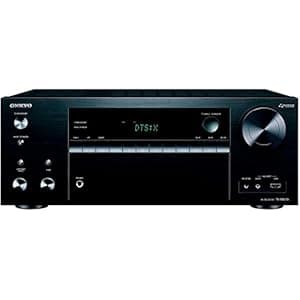 B07JHVRCYJ Availability: Currently unavailable Score: 5.128 Category: Electronics Rating: 3.8 Votes: 14 Find similar productsOnkyo TX-NR676 7.2 Channel Network A/V Receiver (Renewed). Dynamic Audio Amplification Backed by 70 years of experience building high–grade audio components, the TX–NR676 amplifies accurate, noise–free signal processing with high–current power for dynamic speaker control. The result is pure, rich and authentic sound. Smooth Analog Signal Onkyo developed Vector Linear Shaping Circuitry (VLSC) to reassemble the audio signal to its original form following processing. Unlike conventional filters, VLSC removes pulse noise generated in D/A conversion, allowing the sound wave to be reproduced with extremely high fidelity for a smooth analog signal. Powered Zone 2 and Zone 2 Lineouts Powered Zone 2 speaker outputs let you send amplified network, S/PDIF, or analog audio sourced to a pair of speakers in another room. Line outputs can connect your home theater sources to a separate hi–fi system. Manage playback using Onkyo Controller. Unlock Dolby Atmos and DTS:X Playback Object–based soundtracks allow independently mixed sound to play through any speaker in your system. Effects move all around as they do in real life, so you experience 5.2.2–channel Dolby Atmos or DTS:X formats as the director intended. DTS Neural:X identifies spatial effects in multichannel soundtracks and upmixes for 3D playback, while DTS:X offers independent dialog volume control for movies. 4K HDR, BT.2020, 4K/60 Hz, and HDCP 2.2 Support Six rear HDMI inputs support pass–through of 4K HDR in both HDR10 and Dolby Vision formats; the BT.2020 4K Video Standard, 4K/60 Hz video playback; and HDCP 2.2 for premium content. Additional Features: FireConnect Multi–room Audio FireConnect Multi–room Audio Airplay Airplay Google Chromecast built–in Google Chromecast built–in AccuEQ Room Calibration AccuEQ Room Calibration ONKYO GAME Surround Modes: Rock, Sports, Action, RPG ONKYO GAME Surround Modes: Rock, Sports, Action, RPG Hi–Res Streaming Audio Formats Hi–Res Streaming Audio Formats This product is is 110 Volts and intended for sale and use in North America. |  B00TVBBO1S Price: $198.68 Score: 5.102 Category: Electronics Rating: 5 Votes: 2 Find similar productsIntel Core i7 i7-4770K Quad-core (4 Core) 3.50 GHz Processor - Socket H3 LGA-1150OEM Pack - 1 MB - 8 MB Cache - Yes - 3.90 GHz Overclocking Speed - 22 nm - 3 Number of Monitors Supported - Intel HD 4600 Graphics - 84 W - CM8064601464206. Amazing performance and stunning visuals at their best. Get top-of-the-line performance for your most demanding tasks with a 4th generation Intel® Core™ i7 processor. For a difference you can see and feel in HD and 3D, multitasking and multimedia, the 4th generation Intel Core i7 processor is perfect for all your most demanding tasks. Brand Name : Intel Clock Speed : 3.50 GHz Graphics Controller Manufacturer : Intel Graphics Controller Model : HD 4600 L3 Cache : 8 MB Processor Core : Quad-core (4 Core) Processor Manufacturer : Intel Processor Socket : Socket H3 LGA-1150 Product Family : Core i7 i7-4000 Product Type : Processor Thermal Design Power : 84 W Display & Graphics Graphics Controller Manufacturer: IntelGraphics Controller Model: HD 4600Number of Monitors Supported: 3 General Information Brand Name: IntelManufacturer Part Number: CM8064601464206Manufacturer: Intel CorporationMarketing Information: Amazing performance and stunning visuals at their best. Get top-of-the-line performance for your most demanding tasks with a 4th generation Intel® Core™ i7 processor. For a difference you can see and feel in HD and 3D, multitasking and multimedia, the 4th generation Intel Core i7 processor is perfect for all your most demanding tasks.Package Type:. |