E-commerce Search Demo
AI Assisted Filters
Parameters
Query:
Category filters: All
AI Assist: ON
Page: 1
Products
Time taken: 4 Max score: 1000.000 Total hits: 100 Full time: 0.0 s
Showing 1-10 of 100 products
 B00N75878M Availability: Currently unavailable Score: 1000.000 Category: Home Rating: 5 Votes: 1 Find similar productsJOZEFINA ATELIER 05D Swing Vase. The Jozefina Factory was founded in 1982 by Jozef Jankowski, a well-known artist and glass blower. His daughter-Ella Jankowska Fishman has emerged as a leading glass designer. Her designs bring a breath of freshness to the art glass world. Jozefina Art Glass Atelier is recognized worldwide as a leading European manufacturer of hand blown art glass combining sophisticated, classical and contemporary design with highly skilled craftsmanship. Inspired design, expressive style, beautiful and elegant shapes make our art glass unusual and innovative. Each piece is hand blown and hand finished which makes every item artistic and unique. At Jozefina we value the old, traditional techniques of glass blowing dated back as far as the 10th century. We are located in Krosno-Poland, the oldest glass and crystal producing area in Europe. The artistic skill of fine art glass blowing has been passed down through the family generations. Our masters glass blowers create art rarely found today. We are delighted to introduce a wide variety of shapes and vibrant colors. | 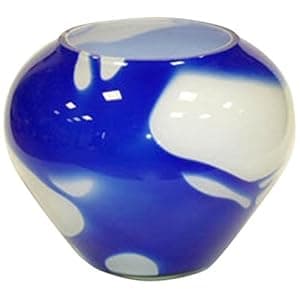 B00N66H9DQ Availability: Currently unavailable Score: 13.889 Category: Home Rating: 5 Votes: 1 Find similar productsJOZEFINA ATELIER Sweet Vase, Blue. The Jozefina Factory was founded in 1982 by Jozef Jankowski, a well-known artist and glass blower. His daughter-Ella Jankowska Fishman has emerged as a leading glass designer. Her designs bring a breath of freshness to the art glass world. Jozefina Art Glass Atelier is recognized worldwide as a leading European manufacturer of hand blown art glass combining sophisticated, classical and contemporary design with highly skilled craftsmanship. Inspired design, expressive style, beautiful and elegant shapes make our art glass unusual and innovative. Each piece is hand blown and hand finished which makes every item artistic and unique. At Jozefina we value the old, traditional techniques of glass blowing dated back as far as the 10th century. We are located in Krosno-Poland, the oldest glass and crystal producing area in Europe. The artistic skill of fine art glass blowing has been passed down through the family generations. Our masters glass blowers create art rarely found today. We are delighted to introduce a wide variety of shapes and vibrant colors. |
 B0006A5JKA Availability: Currently unavailable Score: 9.709 Category: Home Rating: 3.7 Votes: 4 Find similar productsKosta Boda Atoll 8-1/4-Inch Vase, Jade. Amazon.com The Atoll series from Kosta Boda takes its name from the coral reef that surrounds a lagoon, and the oceanic inspiration is clear in the beautiful, flowing forms. Designed by Anna Ehrner and created by master glassmakers in Sweden, this Atoll vase features Ehrner's trademark veils of color within walls of clear glass for stunning dimension and fluidity. Its sides are sure and deep, and the opening is smoothly curved for a seamless transition from the exterior to the interior. Made by hand for unique variations on each piece, the vase complements the Atoll bowl series and measures 8-1/4 inches high. It looks lovely filled with blooms or as a standalone objet d'art. Kosta Boda recommends gently washing it by hand to maintain the glass color and integrity. --Emily Bedard From the Manufacturer About the Designer Born in 1948, Anna Ehrner has been retained by Kosta Boda since 1974 and maintains a studio at Kosta glassworks. Our life blood, says Ehrner, is the creative process that takes place in the blowing room. Experimental in style, Ehrner's work is distinguished by simple yet powerful shapes and an ability to achieve shimmering displays by using color in subtle ways. For her, the final objective is almost always a synthesis between practical utility and elegant design, even though the final piece may be years in the making. Ehrner takes inspiration from nature--the lagoons of the Pacific, the Northern lights--and veils of color inside the crystal have also become something of a trademark in her art glass. She is the originator of sales successes such as the Line glasses and the Atoll series of bowls. About Kosta Boda With characteristic craftsmanship and good design, Kosta Boda has become one of the leading glasshouses in the world. The company's three glassworks in the villages of Kosta, Boda, and Åfors each have exciting individual stories of their own yet stand together under the common brand name Kosta Boda. The corps of designers currently on retainer at Kosta Boda works with both utilitarian and art glass. Glass results from a great many meetings between people--artists, craftspeople, and lovers of glass. The artists of Kosta Boda have a decisive role to play in all the creative stages of the process. The cooperation between the designers and the skilled craftspeople is very close; indeed, it is essential if the designers are to transfer their intentions to the glass. The History of Kosta Boda Kosta, the parent glassworks of Kosta Boda and the oldest glassworks in Sweden still in operation, has a fascinating history that forms a valuable part of Swedish cultural heritage. The glassworks was founded in 1742 by the governors of the counties of Kronoberg and Kalmar, Anders Koskull and Georg Bogislaus Stael von Holstein, both former generals in the army of Karl XII and distinguished veterans of the battle of Narva, among others. The two county governors founded the glassworks upon the instructions of Fredrik I and modeled it on Continental glassworks. The works was situated deep in the spruce forests of Småland, on a site midway between the two country towns, and near a village that was then known as Dåfvedshult. The main reason for choosing this location was the unlimited availability of wood. Enormous quantities of wood were naturally required to keep the glassmaking furnaces burning day and night. Both of the founders wanted their names to be remembered, so the works was christened Kosta, from the initial letters-- Ko and Sta --of the surnames of both the Carolinian generals. After a time the entire community was renamed after the growing glassworks. During the first 150 years, the glassworks in Kosta produced only utility glass, including window glass for the building of Tessin's Royal Palace, bottles and glass for the royal household, and chandeliers for churches. The first glassblowers were immigrant glass masters from Böhmen. They became the founding fathers of the glassblowing families, which passed down craft skills from generation to generation. Swedish sand was used to manufacture crystal glass, but nowadays pure silica sand is imported from Belgium, since the Swedish sand contains iron oxide that gives the glass a green tinge. Under the management of glass masters from Kosta, a succession of glassworks sprang up in the forests of Småland in the regions around Växjö and Kalmar. Kosta therefore has good reason to call itself the parent works of the entire Swedish Kingdom of Crystal. Until the end of the 19th century, the glass from Kosta was designed by the glassblowers themselves. At the Stockholm exhibition in 1897, the glassworks was criticized for the uniformity of its glass, which led to the idea of enlisting designers and artists in production. The first designer to be employed by Kosta was Gunnar Wennerberg. The year was 1898. Ever since then a large number of artists and designers have enriched the glassmaking tradition of the works with their artistic talents. Today, Kosta Boda has a unique right to describe itself as an art industry, in which designers and craftspeople work closely together in the ongoing development of handmade utility glass and art glass. This diversity of individual artistic expression and the free and uninhibited creative process have become the distinguishing characteristics of the Kosta Boda brand. In addition to the parent works in Kosta, Kosta Boda today includes the two daughter works of Boda (founded in 1864) and Åfors (founded in 1876), a partnership that was formed in 1964. Both Boda and Åfors were originally relatively simple glassworks that manufactured utility glass. Boda experienced a period of glory in the 1960s and 1970s, under the innovative and dynamic artistic leadership of Erik Höglund, a heritage carried on by Kjell Engman and Monica Backström. Åfors has been the home of the designer couple Ulrica Hydman-Vallien and Bertil Vallien, who, together with Gunnel Sahlin and Olle Brozén, brought a renaissance to the small glassworks and local community. In 1990 Kosta was acquired by its former competitor Orrefors. Orrefors/Kosta Boda was in turn acquired by the Danish company Royal Copenhagen in 1997, and the design group Royal Scandinavia was formed. The group also includes Georg Jensen, Royal Copenhagen, and Holmegaard. Colorful, handmade art glass from the works in Kosta, Boda, and Åfors have made Kosta Boda one of Sweden's strongest brands and one of the world's leading glass companies. Glass from Kosta Boda is sold all over the world. Roughly 50 percent of production is sold outside Scandinavia, with some of the biggest markets in the U.S., Japan, Germany, and Australia. The origins of this glass, the living tradition of craftsmanship developed in the glassworks in Kosta, Boda, and Åfors, is a heritage that every Swede has a right to feel proud of. Taking Care of Kosta Boda Pieces Handmade and hand-painted glass (especially the latter) does not do well in the dishwasher. Wash by hand in hot water--though not too hot--with a little washing-up liquid. Washing in very hot water will eventually destroy the luster of the glass. Rinse in water of about the same temperature as you washed it in. To avoid cracking the glass, make sure you do not expose it to excessive temperature differences. To avoid lines, dry with a soft cloth that won't shed lint. The edge of the glass is its most fragile part. When you put the glass back in the cupboard, stand it on its foot and make sure the edge does not come into contact with other glasses or objects. The Mark or Signature on Kosta Boda Pieces Products are marked with the words Kosta Boda , the name of the artist, and the article number (seven digits). Painted pieces are signed with a painted signature with the designer's and the painter's initials. Engraved pieces also have the engraver's signature near the designer's name. Besides designing glass for the regular Kosta Boda collection, our artists are also free to work with art glass--limited-edition, specially signed pieces that are often much sought after by collectors. Kosta Boda art glass is divided into two categories: unique pieces and limited editions. Unique pieces are, of course, just that. No more than one piece is made of any particular item. Limited editions are manufactured in runs of between 25 and 1,000 pieces. All art glass is marked with the product number, the name of the artist, and the size of the edition so that the purchaser will know exactly how many pieces there are in that particular series. Editions comprising less than 60 pieces are individually numbered, e.g. 25/60. | 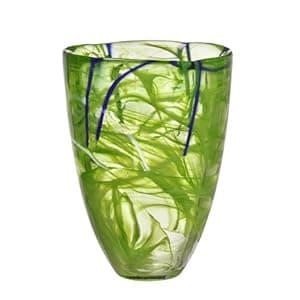 B003ZV5GBE Availability: Currently unavailable Score: 7.752 Category: Home Rating: 5 Votes: 11 Find similar productsKosta Boda Contrast Vase, Lime. Designed by Anna Ehrner. With hand-applied decoration of swirls of color and contrasting calligraphic lines, each Contrast vase is a unique work of art. The pure forms are crystal arenas for the drama of free-flowing patterns that bring out the inner nature of the glass. This dramatic vase works into any interior design scheme functionally or purely for display and will be prized as a gift. |
 B00N758RWI Availability: Currently unavailable Score: 7.576 Category: Home Rating: 5 Votes: 3 Find similar productsJOZEFINA ATELIER 902 Shell Glass Work, 20-Inch. The Jozefina Factory was founded in 1982 by Jozef Jankowski, a well-known artist and glass blower. His daughter-Ella Jankowska Fishman has emerged as a leading glass designer. Her designs bring a breath of freshness to the art glass world. Jozefina Art Glass Atelier is recognized worldwide as a leading European manufacturer of hand blown art glass combining sophisticated, classical and contemporary design with highly skilled craftsmanship. Inspired design, expressive style, beautiful and elegant shapes make our art glass unusual and innovative. Each piece is hand blown and hand finished which makes every item artistic and unique. At Jozefina we value the old, traditional techniques of glass blowing dated back as far as the 10th century. We are located in Krosno-Poland, the oldest glass and crystal producing area in Europe. The artistic skill of fine art glass blowing has been passed down through the family generations. Our masters glass blowers create art rarely found today. We are delighted to introduce a wide variety of shapes and vibrant colors. |  B09V9KFQMX Price: $79.99 Score: 7.299 Category: Home Rating: 5 Votes: 1 Find similar productsEuropean Collection. 16 Height Glass Vase Bottle. Hand-Blown. Home Decor. Gift for All Occasion. This unusual design vase is the great addition to your home decoration stuff. It presents an amazing hand-blown peace of art that will please you with its superior quality and functionality for many years. Artistically designed to coordinate beautifully with any tabletop decor. Rest assured this vase will make a statement of elegance, thereby changing the ambiance from the simplest affair to an upscale event. Perfect to give as a gift or for personal use. |
 B016D37CN0 Availability: Currently unavailable Score: 7.246 Category: Home Rating: 5 Votes: 1 Find similar productsJOZEFINA ATELIER Fuji Fire Vase, Big, Red/Black. The Jozefina factory was founded in 1982 by Jozef Jankowski, a well-known artist and glass blower. His daughter-Ella Jankowska Fishman has emerged as a leading glass designer. Her designs bring a breath of freshness to the art glass world. Jozefina art glass Atelier is recognized worldwide as a leading European manufacturer of hand blown art glass combining sophisticated, classical and contemporary design with highly skilled craftsmanship. Inspired design, expressive style, beautiful and elegant shapes make our art glass unusual and innovative. Each piece is hand blown and hand finished which makes every item artistic and unique. At Jozefina we value the old, traditional techniques of glass blowing dated back as far as the 10th century. We are located in Krosno-Poland, the oldest glass and crystal producing area in Europe. The artistic skill of fine art glass blowing has been passed down through the family generations. Our Masters glass blowers create art rarely found today. We are delighted to introduce a wide variety of shapes and vibrant colors. |  B00074PA1S Availability: Currently unavailable Score: 7.246 Category: Home Rating: 5 Votes: 3 Find similar productsKosta Boda Catwalk 6.75Vase. Product Description Catwalk models in glass are the theme of Kjell Engman's new fashion-inspired vase series, appropriately named Catwalk. The vases, which come in five different sizes, are equally stylish when brought together in a group, where form and décor bring unity to the lightness and fluid movement of the individual pieces. Amazon.com In his Catwalk line, Swedish designer Kjell Engman transfers both his wit and his interest in the fashion world onto a series of sculptural glass vases. The shortest of the collection at 6-5/8 inches, this freeform white vase is just wide enough to hold candies or nuts as a bowl as well as a bouquet of short-stemmed tulips. On the side of the vase you'll see a pair of female legs, depicted from dress hem to jauntily pointed shoes. A conversation starter if ever there was one. Kjell Engman often produces lighthearted pieces that relate to folktales, storytelling, or the world of entertainment. In fact, he is well-known in Sweden for his larger installations involving light and sound. His collectible Catwalk pieces are handcrafted in Sweden and arrive in a Kosta Boda box, signifying the highest artistry in both design and implementation. --Ann Bieri From the Manufacturer About the Designer: Kosta Boda since 1978 and has a studio at Boda glassworks. A tirelessly productive visual artist with unbounded imagination and a passion for narrative, Engman finds free expression through both utility glass and art glass. He gets his inspiration from the most diverse sources, not least from the animal kingdom and the world of music and entertainment. He often works on large installations in which he also combines elements of sound and light. Frequently commissioned for public works both in Sweden and abroad, he is personally responsible for one fifth of Kosta Boda's catalog range. About the Kosta Boda: With characteristic craftsmanship and good design, Kosta Boda has become one of the leading glasshouses in the world. The company's three glassworks in the villages of Kosta, Boda, and Åfors each have exciting individual stories of their own yet stand together under the common brand name Kosta Boda. The corps of designers currently on retainer at Kosta Boda works with both utilitarian and art glass. Glass results from a great many meetings between people--artists, craftspeople, and lovers of glass. The artists of Kosta Boda have a decisive role to play in all the creative stages of the process. The cooperation between the designers and the skilled craftspeople is very close; indeed, it is essential if the designers are to transfer their intentions to the glass. The History of Kosta Boda: Kosta, the parent glassworks of Kosta Boda and the oldest glassworks in Sweden still in operation, has a fascinating history that forms a valuable part of Swedish cultural heritage. The glassworks was founded in 1742 by the governors of the counties of Kronoberg and Kalmar, Anders Koskull and Georg Bogislaus Stael von Holstein, both former generals in the army of Karl XII and distinguished veterans of the battle of Narva, among others. The two county governors founded the glassworks upon the instructions of Fredrik I and modeled it on Continental glassworks. The works was situated deep in the spruce forests of Småland, on a site midway between the two country towns, and near a village that was then known as Dåfvedshult. The main reason for choosing this location was the unlimited availability of wood. Enormous quantities of wood were naturally required to keep the glassmaking furnaces burning day and night. Both of the founders wanted their names to be remembered, so the works was christened Kosta, from the initial letters--Ko and Sta--of the surnames of both the Carolinian generals. After a time the entire community was renamed after the growing glassworks. During the first 150 years, the glassworks in Kosta produced only utility glass, including window glass for the building of Tessin's Royal Palace, bottles and glass for the royal household, and chandeliers for churches. The first glassblowers were immigrant glass masters from Böhmen. They became the founding fathers of the glassblowing families, which passed down craft skills from generation to generation. Swedish sand was used to manufacture crystal glass, but nowadays pure silica sand is imported from Belgium, since the Swedish sand contains iron oxide that gives the glass a green tinge. Under the management of glass masters from Kosta, a succession of glassworks sprang up in the forests of Småland in the regions around Växjö and Kalmar. Kosta therefore has good reason to call itself the parent works of the entire Swedish Kingdom of Crystal. Until the end of the 19th century, the glass from Kosta was designed by the glassblowers themselves. At the Stockholm exhibition in 1897, the glassworks was criticized for the uniformity of its glass, which led to the idea of enlisting designers and artists in production. The first designer to be employed by Kosta was Gunnar Wennerberg. The year was 1898. Ever since then a large number of artists and designers have enriched the glassmaking tradition of the works with their artistic talents. Today Kosta Boda has a unique right to describe itself as an art industry, in which designers and craftspeople work closely together in the ongoing development of handmade utility glass and art glass. This diversity of individual artistic expression and the free and uninhibited creative process have become the distinguishing characteristics of the Kosta Boda brand. In addition to the parent works in Kosta, Kosta Boda today includes the two daughter works of Boda (founded in 1864) and Åfors (founded in 1876), a partnership that was formed in 1964. Both Boda and Åfors were originally relatively simple glassworks that manufactured utility glass. Boda experienced a period of glory in the 1960s and 1970s, under the innovative and dynamic artistic leadership of Erik Höglund, a heritage carried on by Kjell Engman and Monica Backström. Åfors has been the home of the designer couple Ulrica Hydman-Vallien and Bertil Vallien, who, together with Gunnel Sahlin and Olle Brozén, brought a renaissance to the small glassworks and local community. In 1990 Kosta was acquired by its former competitor Orrefors. Orrefors/Kosta Boda was in turn acquired by the Danish company Royal Copenhagen in 1997, and the design group Royal Scandinavia was formed. The group also includes Georg Jensen, Royal Copenhagen, and Holmegaard. Colorful, handmade art glass from the works in Kosta, Boda, and Åfors have made Kosta Boda one of Sweden's strongest brands and one of the world's leading glass companies. Glass from Kosta Boda is sold all over the world. Roughly 50 percent of production is sold outside Scandinavia, with some of the biggest markets in the U.S., Japan, Germany, and Australia. The origins of this glass, the living tradition of craftsmanship developed in the glassworks in Kosta, Boda, and Åfors, is a heritage that every Swede has a right to feel proud of. Taking Care of Kosta Boda Pieces: Handmade and hand-painted glass (especially the latter) does not do well in the dishwasher. Wash by hand in hot water--though not too hot--with a little washing-up liquid. Washing in very hot water will eventually destroy the luster of the glass. Rinse in water of about the same temperature as you washed it in. To avoid cracking the glass, make sure you do not expose it to excessive temperature differences. To avoid lines, dry with a soft cloth that won't shed lint. The edge of the glass is its most fragile part. When you put the glass back in the cupboard, stand it on its foot and make sure the edge does not come into contact with other glasses or objects. The Mark or Signature on Kosta Boda Pieces: Products are marked with the words Kosta Boda , the name of the artist, and the article number (seven digits). Painted pieces are signed with a painted signature with the designer's and the painter's initials. Engraved pieces also have the engraver's signature near the designer's name. Besides designing glass for the regular Kosta Boda collection, our artists are also free to work with art glass--limited-edition, specially signed pieces that are often much sought after by collectors. Kosta Boda art glass is divided into two categories: unique pieces and limited editions. Unique pieces are, of course, just that. No more than one piece is made of any particular item. Limited editions are manufactured in runs of between 25 and 1,000 pieces. All art glass is marked with the product number, the name of the artist, and the size of the edition so that the purchaser will know exactly how many pieces there are in that particular series. Editions comprising less than 60 pieces are individually numbered, e.g. 25/60. |
 B085CMHFD6 Price: $95 Score: 7.143 Category: Home Rating: 4.8 Votes: 11 Find similar productsCzech Vase 12 Crystal Glass,Bohemia Crystal,Flower Vase,Home Decor, Centerpiece Blue Bud vase, Bohemia Crystal Glass, Wedding Gift. Absolutely brand new Gorgeous Crystal Glass Flower Vase packaged in presentable box will be best gift for any celebration. Details H - 12 D - 7 Made in Czech Republic in Bohemia region. At present the company holds a major position in the Czech glass industry. Bohemia Aurum Crystal produces hand-blown and hand-cut Bohemian crystal. Throughout the production process the company maintains the traditional technological procedures that were developed by Czech glass-making masters many years ago. In addition to this the company places great emphasis on the highest quality for all its products belonging to the category of luxurious hand-blown crystal bearing the Bohemia Aurum Crystal brand. |  B00YY87D7M Availability: Currently unavailable Score: 7.092 Category: Home Rating: 5 Votes: 1 Find similar productsMikasa Serenity Platinum 10-Inch Teardrop Glass Vase. Mikasa serenity giftware is a timeless classic collection with thick metallic banding on the rim of these high quality, european-made gift pieces. This small teardrop glass Vase will make the perfect display on your window sill, mantle or desk. Hand wash recommended. Teardrop Vase measures 10-1/4 inch high. |