E-commerce Search Demo
AI Assisted Filters
Parameters
Query:
Category filters: All
AI Assist: ON
Page: 1
Products
Time taken: 2 Max score: 1000.000 Total hits: 200 Full time: 0.0 s
Showing 1-10 of 200 products
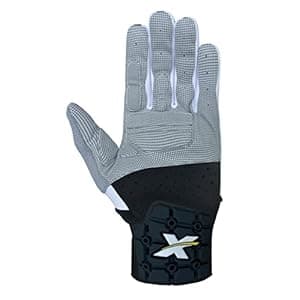 B00VSYB3E4 Availability: Currently unavailable Score: 1000.000 Category: Sports Rating: 4 Votes: 29 Find similar productsXprotex 15 REAKTR Protective Glove. The REAKTR is an in-mitt fielding glove. It keeps your hand protected, dry, and connected to your mitt. This fielding glove cushions your hand against bone bruises while enhancing the fit and comfort of your catcher's and/or fielder's glove. Plus, the Advanced Impact Composite shields your wrist from bad hops. And as a bonus, the REAKTR has a built-in terrycloth perspiration wiper on the back of the hand. |  B002MTEK3A Availability: Currently unavailable Score: 8.475 Category: Sports Rating: 5 Votes: 1 Find similar productsWilson A2000 12 Reinforced Dual-Post Web Superskin Baseball Glove. Product Description In 1957,Wilson engineers went to Spring training to find out what players wanted in a glove. That year the first player designed glove, the Wilson A2000 was born. The A2000 featured a deeper pocket, wider web and a stiffer thumb, revolutionary designs that changed the game. Five decades later the A2000 continues to evolve featuring Pro Stock leather, known for its rugged durability and consistent performance and dual-welting for a stable, long lasting pocket. Wilson-The Official Ball Glove of Major League Baseball. For generations, established veterans and future stars alike have joined the Wilson Advisory Staff to represent the brand and advise Wilson R & D in product development. This partnership with the game's best players has made Wilson the most coveted brand in baseball as well as a true American icon. Which is why Major League Baseball's brightest stars, from Ernie Banks to David Wright, have always trusted their game to Wilson. Over 50 years ago, Wilson forever changed baseball with the creation of the first glove designed to meet the pplayer's needs-the A2000. Dedicated to innovation, Wilson continues to create ball gloves that help turn players into pros. Wilson is the most trusted name among legendary players and futrue All Stars. Buying Guide Amazon.com Baseball and Softball Glove Guide Playing the Field Baseball and softball gloves are specially designed to suit the needs of a given field position, with each style of glove boasting unique features to improve a player's performance at his or her position. The following is a brief summary of each glove's characteristics: Catcher: No finger channels, with heavy palm padding and overall reinforcements to reduce the sting of repeatedly catching pitchers' throws Catcher: No finger channels, with heavy palm padding and overall reinforcements to reduce the sting of repeatedly catching pitchers' throws First Base: Also lacks finger channels, but with less padding that a catcher's mitt, with added length to help catch infield throws and shallow pocket, enabling quick ball retrieval First Base: Also lacks finger channels, but with less padding that a catcher's mitt, with added length to help catch infield throws and shallow pocket, enabling quick ball retrieval Infield: Five-fingered glove has shallow pocket for fast ball retrieval, with nine- to 10-inch youth sizes and 10.5- to 11.5-inch adult sizes, and softball infield gloves having a deeper pocket to accept the larger ball Second base players require smaller gloves to balance control with the need to make quick throws Shortstops use a mid-sized glove for ground balls and quick throws Third base players need a larger glove for maximum catching power Outfield: Glove is longer to provide extended reach, with a deep pocket to handle high-lofting balls, and sizes range from 12 inches and up for adults and 11 inches for youth players Softball Gloves: The characteristics, by position, of softball gloves are typically similar to their baseball counterparts, with softball gloves having more length and deeper pockets to handle the larger ball Anatomy of a Glove Gloves are designed to perform a relatively simple task--catch a ball. The quality of materials and craftsmanship that can go into a building a glove, however, can be surprising. Below is an overview of a glove's components and how each helps optimize your defensive game: Pocket: Pocket depth is determined by player position, with shallower pockets helping infielders quickly retrieve and throw the ball, and outfielders' pocket depth aiding in capturing a ball on the fly. Softball players also need deeper pockets to catch the larger ball. Webbing: The preferred webbing pattern is partly determined by field position and partly by player preference. Generally, open webbing helps infielders quickly retrieve the ball, closed or tightly woven webbing gives outfielders and third basemen extra support, and closed webbing allows pitchers to hide the ball from the batter. Backs: The back of a glove, or the part that goes across the top of your hand, can either be closed or open, which is largely a matter of player preference. Some infielders find an open back to be more flexible and forgiving, while outfielders may like a closed back with finger hole for added support. Wrist Adjustment: Some gloves include fit systems, or wrist adjustments, to help keep the glove tightly affixed to a player's hand. The most popular closures are buckles, D-rings, lacing, and Velcro. Padding: How padded a glove's pocket is depends on position, with catcher being the most heavily padded. In recent years, many manufacturers have begun to add padding to other position gloves to reduce palm shock. Materials: By and large, gloves are constructed using one of three materials--leather, treated leather, or synthetic--with the differences relating to feel and durability. Leather: Most high-end gloves are made of leather, which offers optimal feel and durability, with leather quality being a significant cost driver Treated Leather: Leather material is softened and strengthened during production for quicker break-in, better durability, and lower maintenance Synthetic: A lower-cost alternative to leather that offers reduced durability and responsiveness, and is a good option for beginning players Fits Like a... As mentioned above, age and position are the most significant factors in selecting a proper glove size. Outfielders need larger gloves with deeper pockets for maximum catchability, while infield gloves are smaller and have shallower pockets for optimal control and speedy ball removal. Some pitchers opt for infield gloves that are slightly larger than standard, yet small and shallow enough for rapid fielding and throwing. Most younger players will benefit from youth-sized gloves that help with control, and it's a good idea to resist the temptation to buy a larger glove the child will grow into. The tables below offer a general guideline for proper glove size by sport, position, and age. Baseball Glove Size Age Position Glove Size Under 8 Infield 9 Under 8 Outfield 11 9-13 Infield 9-10 9-13 Outfield 11-12 13 and older Infield 10.5-11.5 13 and older Outfield 12-12.75 Softball Glove Size Age Position Glove Size 6 and under All 9-10 7-9 All 10-11.5 10-14 Infield 11.5-12.5 10-14 Outfield 12-13 15 and older Infield 12-13 15 and older Outfield 12.5-14 Infield: Five-fingered glove has shallow pocket for fast ball retrieval, with nine- to 10-inch youth sizes and 10.5- to 11.5-inch adult sizes, and softball infield gloves having a deeper pocket to accept the larger ball Second base players require smaller gloves to balance control with the need to make quick throws Second base players require smaller gloves to balance control with the need to make quick throws Shortstops use a mid-sized glove for ground balls and quick throws Shortstops use a mid-sized glove for ground balls and quick throws Third base players need a larger glove for maximum catching power Third base players need a larger glove for maximum catching power Outfield: Glove is longer to provide extended reach, with a deep pocket to handle high-lofting balls, and sizes range from 12 inches and up for adults and 11 inches for youth players Outfield: Glove is longer to provide extended reach, with a deep pocket to handle high-lofting balls, and sizes range from 12 inches and up for adults and 11 inches for youth players Softball Gloves: The characteristics, by position, of softball gloves are typically similar to their baseball counterparts, with softball gloves having more length and deeper pockets to handle the larger ball Anatomy of a Glove Gloves are designed to perform a relatively simple task--catch a ball. The quality of materials and craftsmanship that can go into a building a glove, however, can be surprising. Below is an overview of a glove's components and how each helps optimize your defensive game: Pocket: Pocket depth is determined by player position, with shallower pockets helping infielders quickly retrieve and throw the ball, and outfielders' pocket depth aiding in capturing a ball on the fly. Softball players also need deeper pockets to catch the larger ball. Webbing: The preferred webbing pattern is partly determined by field position and partly by player preference. Generally, open webbing helps infielders quickly retrieve the ball, closed or tightly woven webbing gives outfielders and third basemen extra support, and closed webbing allows pitchers to hide the ball from the batter. Backs: The back of a glove, or the part that goes across the top of your hand, can either be closed or open, which is largely a matter of player preference. Some infielders find an open back to be more flexible and forgiving, while outfielders may like a closed back with finger hole for added support. Wrist Adjustment: Some gloves include fit systems, or wrist adjustments, to help keep the glove tightly affixed to a player's hand. The most popular closures are buckles, D-rings, lacing, and Velcro. Padding: How padded a glove's pocket is depends on position, with catcher being the most heavily padded. In recent years, many manufacturers have begun to add padding to other position gloves to reduce palm shock. Materials: By and large, gloves are constructed using one of three materials--leather, treated leather, or synthetic--with the differences relating to feel and durability. Leather: Most high-end gloves are made of leather, which offers optimal feel and durability, with leather quality being a significant cost driver Treated Leather: Leather material is softened and strengthened during production for quicker break-in, better durability, and lower maintenance Synthetic: A lower-cost alternative to leather that offers reduced durability and responsiveness, and is a good option for beginning players Fits Like a... As mentioned above, age and position are the most significant factors in selecting a proper glove size. Outfielders need larger gloves with deeper pockets for maximum catchability, while infield gloves are smaller and have shallower pockets for optimal control and speedy ball removal. Some pitchers opt for infield gloves that are slightly larger than standard, yet small and shallow enough for rapid fielding and throwing. Most younger players will benefit from youth-sized gloves that help with control, and it's a good idea to resist the temptation to buy a larger glove the child will grow into. The tables below offer a general guideline for proper glove size by sport, position, and age. Baseball Glove Size Age Position Glove Size Under 8 Infield 9 Under 8 Outfield 11 9-13 Infield 9-10 9-13 Outfield 11-12 13 and older Infield 10.5-11.5 13 and older Outfield 12-12.75 Softball Glove Size Age Position Glove Size 6 and under All 9-10 7-9 All 10-11.5 10-14 Infield 11.5-12.5 10-14 Outfield 12-13 15 and older Infield 12-13 15 and older Outfield 12.5-14 Softball Gloves: The characteristics, by position, of softball gloves are typically similar to their baseball counterparts, with softball gloves having more length and deeper pockets to handle the larger ball Anatomy of a Glove Gloves are designed to perform a relatively simple task--catch a ball. The quality of materials and craftsmanship that can go into a building a glove, however, can be surprising. Below is an overview of a glove's components and how each helps optimize your defensive game: Pocket: Pocket depth is determined by player position, with shallower pockets helping infielders quickly retrieve and throw the ball, and outfielders' pocket depth aiding in capturing a ball on the fly. Softball players also need deeper pockets to catch the larger ball. Pocket: Pocket depth is determined by player position, with shallower pockets helping infielders quickly retrieve and throw the ball, and outfielders' pocket depth aiding in capturing a ball on the fly. Softball players also need deeper pockets to catch the larger ball. Webbing: The preferred webbing pattern is partly determined by field position and partly by player preference. Generally, open webbing helps infielders quickly retrieve the ball, closed or tightly woven webbing gives outfielders and third basemen extra support, and closed webbing allows pitchers to hide the ball from the batter. Webbing: The preferred webbing pattern is partly determined by field position and partly by player preference. Generally, open webbing helps infielders quickly retrieve the ball, closed or tightly woven webbing gives outfielders and third basemen extra support, and closed webbing allows pitchers to hide the ball from the batter. Backs: The back of a glove, or the part that goes across the top of your hand, can either be closed or open, which is largely a matter of player preference. Some infielders find an open back to be more flexible and forgiving, while outfielders may like a closed back with finger hole for added support. Backs: The back of a glove, or the part that goes across the top of your hand, can either be closed or open, which is largely a matter of player preference. Some infielders find an open back to be more flexible and forgiving, while outfielders may like a closed back with finger hole for added support. Wrist Adjustment: Some gloves include fit systems, or wrist adjustments, to help keep the glove tightly affixed to a player's hand. The most popular closures are buckles, D-rings, lacing, and Velcro. Wrist Adjustment: Some gloves include fit systems, or wrist adjustments, to help keep the glove tightly affixed to a player's hand. The most popular closures are buckles, D-rings, lacing, and Velcro. Padding: How padded a glove's pocket is depends on position, with catcher being the most heavily padded. In recent years, many manufacturers have begun to add padding to other position gloves to reduce palm shock. Padding: How padded a glove's pocket is depends on position, with catcher being the most heavily padded. In recent years, many manufacturers have begun to add padding to other position gloves to reduce palm shock. Materials: By and large, gloves are constructed using one of three materials--leather, treated leather, or synthetic--with the differences relating to feel and durability. Leather: Most high-end gloves are made of leather, which offers optimal feel and durability, with leather quality being a significant cost driver Treated Leather: Leather material is softened and strengthened during production for quicker break-in, better durability, and lower maintenance Synthetic: A lower-cost alternative to leather that offers reduced durability and responsiveness, and is a good option for beginning players Fits Like a... As mentioned above, age and position are the most significant factors in selecting a proper glove size. Outfielders need larger gloves with deeper pockets for maximum catchability, while infield gloves are smaller and have shallower pockets for optimal control and speedy ball removal. Some pitchers opt for infield gloves that are slightly larger than standard, yet small and shallow enough for rapid fielding and throwing. Most younger players will benefit from youth-sized gloves that help with control, and it's a good idea to resist the temptation to buy a larger glove the child will grow into. The tables below offer a general guideline for proper glove size by sport, position, and age. Baseball Glove Size Age Position Glove Size Under 8 Infield 9 Under 8 Outfield 11 9-13 Infield 9-10 9-13 Outfield 11-12 13 and older Infield 10.5-11.5 13 and older Outfield 12-12.75 Softball Glove Size Age Position Glove Size 6 and under All 9-10 7-9 All 10-11.5 10-14 Infield 11.5-12.5 10-14 Outfield 12-13 15 and older Infield 12-13 15 and older Outfield 12.5-14 Materials: By and large, gloves are constructed using one of three materials--leather, treated leather, or synthetic--with the differences relating to feel and durability. Leather: Most high-end gloves are made of leather, which offers optimal feel and durability, with leather quality being a significant cost driver Leather: Most high-end gloves are made of leather, which offers optimal feel and durability, with leather quality being a significant cost driver Treated Leather: Leather material is softened and strengthened during production for quicker break-in, better durability, and lower maintenance Treated Leather: Leather material is softened and strengthened during production for quicker break-in, better durability, and lower maintenance Synthetic: A lower-cost alternative to leather that offers reduced durability and responsiveness, and is a good option for beginning players Fits Like a... As mentioned above, age and position are the most significant factors in selecting a proper glove size. Outfielders need larger gloves with deeper pockets for maximum catchability, while infield gloves are smaller and have shallower pockets for optimal control and speedy ball removal. Some pitchers opt for infield gloves that are slightly larger than standard, yet small and shallow enough for rapid fielding and throwing. Most younger players will benefit from youth-sized gloves that help with control, and it's a good idea to resist the temptation to buy a larger glove the child will grow into. The tables below offer a general guideline for proper glove size by sport, position, and age. Baseball Glove Size Age Position Glove Size Under 8 Infield 9 Under 8 Outfield 11 9-13 Infield 9-10 9-13 Outfield 11-12 13 and older Infield 10.5-11.5 13 and older Outfield 12-12.75 Softball Glove Size Age Position Glove Size 6 and under All 9-10 7-9 All 10-11.5 10-14 Infield 11.5-12.5 10-14 Outfield 12-13 15 and older Infield 12-13 15 and older Outfield 12.5-14 Synthetic: A lower-cost alternative to leather that offers reduced durability and responsiveness, and is a good option for beginning players Fits Like a... As mentioned above, age and position are the most significant factors in selecting a proper glove size. Outfielders need larger gloves with deeper pockets for maximum catchability, while infield gloves are smaller and have shallower pockets for optimal control and speedy ball removal. Some pitchers opt for infield gloves that are slightly larger than standard, yet small and shallow enough for rapid fielding and throwing. Most younger players will benefit from youth-sized gloves that help with control, and it's a good idea to resist the temptation to buy a larger glove the child will grow into. The tables below offer a general guideline for proper glove size by sport, position, and age. Baseball Glove Size Age Position Glove Size Under 8 Infield 9 Under 8 Outfield 11 9-13 Infield 9-10 9-13 Outfield 11-12 13 and older Infield 10.5-11.5 13 and older Outfield 12-12.75 Softball Glove Size Age Position Glove Size 6 and under All 9-10 7-9 All 10-11.5 10-14 Infield 11.5-12.5 10-14 Outfield 12-13 15 and older Infield 12-13 15 and older Outfield 12.5-14. |
 B004VMVF7K Availability: Currently unavailable Score: 8.403 Category: Sports Rating: 4 Votes: 5 Find similar productsLouisville Slugger 11.75-Inch TPX HD9 Hybrid Defense Ball Glove (Orange/Gray). The XH1175GO is an 11.75 infield model with a conventional open back and an H-web. The HD9 Hybrid Defense series is an elite line of fielding gloves from Louisville Slugger that utilizes a zero-gravity performance mesh back that provides a quick break-in and ultra lightweight feel. This glove is orange/gray. This glove is for a right-handed thrower. | 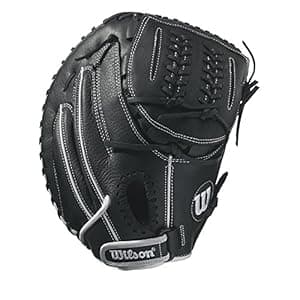 B01I5D6MZK Availability: Currently unavailable Score: 8.130 Category: Sports Rating: 5 Votes: 12 Find similar productsWilson Onyx Fastpitch Catcher's Mitt, 33, Black/White, Left Hand. Travel fastpitch players love this glove because it breaks in fast and feels good. The Onyx glove is Diamond ready (no break-in period!) while its double palm construction provides the durability it needs to last the season. |
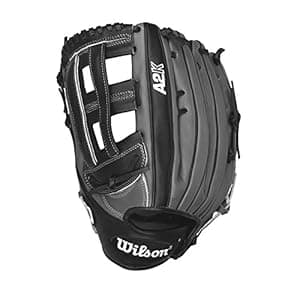 B00KU4HG08 Availability: Currently unavailable Score: 8.065 Category: Sports Rating: 4.5 Votes: 5 Find similar productsWilson A2K Outfield Baseball Glove. Baseball is a game all about determination. At Wilson we're determined to create gloves that break all the limits and to do that, we work with the top MLB players, From Ernie Banks to Dustin Pedroia, we've filled the Wilson Advisory Staff with the top name in baseball to give you a glove that performs inning after inning. As the Official Glove of Major League Baseball, Wilson works with the best to give every ball player - from the major leaguers to the travel ball warriors - exactly what they need. | 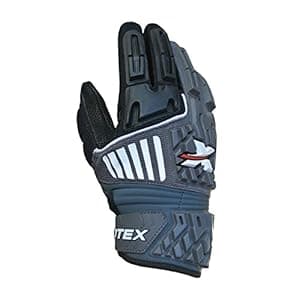 B01G2378GC Availability: Currently unavailable Score: 8.065 Category: Sports Rating: 4 Votes: 7 Find similar productsXprotex 17 Krushr Batting Gloves. The krushr is xprotex's most protective batting glove, giving you maximum coverage of the wrist, knuckles, and four fingers on each hand. The synthetic palm is durable and has unmatched grip and feel. Sold in pairs. |
 B01IRVWZDI Availability: Currently unavailable Score: 7.813 Category: Sports Rating: 4.4 Votes: 44 Find similar productsEaston Z10 Hyperskin Batting Gloves. Easton z-series batting gloves are the zero compromise way to get a grip on the game. The Z10 hyperskin batting gloves are the ultimate in performance and comfort, thanks to a one-piece Pittards laser Cabretta sheepskin palm and 37.5 active particle technology - which captures and releases moisture to keep you in the sweet spot of comfort and performance. The z10's back of hand is constructed using flexible hyperskin lycra with reinforced silicone, while COOLMAX mesh finger gussets add ventilation. Easton lock down strap provides extra support with a 40mm neoprene wrist band and an eye-catching easton-branded pull tab. Keep your hands cool and dry when the heat is on with Easton z-series batting gloves. |  B017ETOCRQ Availability: Currently unavailable Score: 7.752 Category: Sports Rating: 4 Votes: 9 Find similar productsSpiderz Adult ENDITE Batting Glove Premium Textured 1 Piece Leather Palm. If you’re an avid baseball or softball player, the Spiderz ENDITE Batting Gloves are ideal for you. You can perform like the professionals on your favorite MLB team while maintaining a fun and sporty style. The Spiderz design lets your competition know that you’re serious while giving you the professional quality you need to win the game. The ENDITE batting glove is geared for the player looking to get the best of both worlds, grip and feel. We use a one piece premium leather palm, giving the glove a soft, tacky feel, for a great grip. That means that you get the best handle on your bat for ultimate accuracy and swing. Hit a home run every time. These are the batting gloves that you’ll love to wear, providing excellent comfort and fabulous fit, like a second skin. The ENDITE batting gloves are designed to keep the leather as thin as possible while maximizing the feel, while maintaining the grip. They feature a neoprene wrist strap for additional comfort with a better fit. Because you’ll love these gloves so much, they’re designed to give you the maximum use, even with maximum wear. They feature a durable, triple reinforced wrist strap so you never have to worry about loose gloves or unwanted movement. Leather, neoprene, and lycra come together to form a reliable glove with excellent grip. Package contains (1) Pair of Spiderz Adult ENDITE Batting Glove with Premium Textured 1 Piece Leather Palm and Top Hand Design with Raised Spider. |
 B00DI6JIJM Availability: Currently unavailable Score: 7.692 Category: Sports Rating: 4.1 Votes: 44 Find similar productsMizuno Youth Franchise Batting Glove. Product Description The Mizuno Youth Franchise batting glove features Mizuno's embossed Digi-Grip Palm for an enhanced grip. From the Manufacturer The Mizuno Youth Franchise batting glove features Mizuno's embossed Digi-Grip Palm for an enhanced grip. | 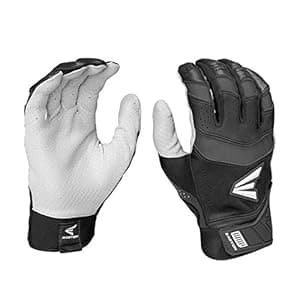 B07YYYQKRN Price: $40.29 Score: 7.692 Category: Sports Rating: 4.3 Votes: 51 Find similar productsEASTON PRO X Batting Gloves, Pair, Adult, Baseball Softball, Pittards Laser Cabretta Sheepskin Palm For Ultimate Feel And Grip, Molded Wrist Protection, Neoprene Wrist Band. Easton Pro X Batting Gloves: A12100 Step up to the plate like a Pro with Easton?s new PRO-X? Batting Gloves. Constructed with one-piece Pittards laser Cabretta sheepskin palm for ultimate feel and grip. Combination of flex and structure on back of hand for reinforced fit and durability. Molded wrist protection strap with 40 mm neoprene wrist band. Molded Easton Screamin? E logo. One-piece Pittards laser Cabretta sheepskin palm for ultimate feel and grip One-piece Pittards laser Cabretta sheepskin palm for ultimate feel and grip Combination of flex and structure on back of hand for reinforced fit and durability Combination of flex and structure on back of hand for reinforced fit and durability Molded wrist protection strap with 40 mm neoprene wrist band Molded wrist protection strap with 40 mm neoprene wrist band Molded Easton Screamin? E Emblem Molded Easton Screamin? E Emblem. |