E-commerce Search Demo
AI Assisted Filters
Parameters
Query:
Category filters: All
AI Assist: ON
Page: 1
Products
Time taken: 3 Max score: 1000.000 Total hits: 200 Full time: 0.0 s
Showing 1-10 of 200 products
 B019ZRO8Z6 Availability: Currently unavailable Score: 1000.000 Category: Sports Rating: 5 Votes: 1 Find similar productsNEMO Women's Rhumba 30 Degree Down Sleeping Bag. Unlike traditional mummy bags that sacrifice movement for warmth, the NEMO Rhumba 3-season is designed to give you a solid night's sleep, no matter how you lie. Perfect for side sleeping, granting the freedom to curl and sprawl, the Rhumba's unique Spoon shape adds room at the elbows and knees. Its stretch stitching lends greater flexibility and InsoTect vertical baffling keeps you toasty from head to toe. The Ripstop Nylon fabric and 650-fill Nikwax Hydrophobic Down insulation are water resistant, so you can enjoy the morning without dew dampening your day. The waterproof / breathable footbox protects against tent wall condensation to keep your feet warm and dry. Since NEMO uses Responsible Down Standard Certified down, you can feel good inside and out. With the Rhumba's integrated pillow sleeve, cuddly NEMO Blanket Fold, and trustworthy rating to 30F (-1C), you'll be so comfy, you just might sleep through the sunrise. |  B00C02YD3G Availability: Currently unavailable Score: 10.000 Category: Sports Rating: 4.6 Votes: 5 Find similar productsNemo Nocturne 30L Sleeping Bag. The designers at Nemo had a simple revelation: few people sleep like a mummy. The Nocturne +30 Down Sleeping Bag is the result. With extra width in the elbows and knees, you can bend and shift naturally through the night but a gentle taper at the hips preserves the bag's thermal efficiency and maintains low weight. High-lofting 700-fill down traps precious body heat while a DownTek treatment repels moisture to help that down fill keep its loft. A tuckable Blanket Fold and a waterproof and breathable footbox raise your comfort and protection on any adventure. |
 B00NFCFAWI Availability: Currently unavailable Score: 9.259 Category: Sports Rating: 4.1 Votes: 108 Find similar productsCosmic Down 20 Degree Sleeping Bag. This bag is hotter than ever. Seriously. The restyled Cosmic Down 21°F sleeping bag now has the exceptional warmth of 550-fill hydrophobic DriDown™ for higher performance. That means more moisture defense and quicker drying in the cold and wet. Versatile enough to use in 3 seasons, with great features like a thermal comfort hood and top draft collar, it’s a no-brainer for backpackers who love to be outside in rain, snow or shine.Shape: MummyEN Comfort Limit: 21oF / -6oC Size Short: Fits to: 5 ft 6 in / 168 cmFill weight: 19 oz. / .53 kgTotal weight: 2 lbs 6 oz. / 1.06 kgStuffed size: 8 x 13 in / 20 x 33 cm Size Regular: Fits to: 6 ft / 183 cmFill weight: 21 oz. / .59 kgTotal weight: 2 lbs 9 oz. / 1.15 kgStuffed size: 8 x 14 in / 20 x 36 cm Size Long: Fits to: 6 ft 6 in / 198 cmFill weight: 25 oz. / .70 kgTotal weight: 2 lbs 13 oz. / 1.26 kg. |  B0009J1F10 Availability: Currently unavailable Score: 8.547 Category: Sports Rating: 3.7 Votes: 4 Find similar productsSlumberjack Aurora 20 Degree Mummy Sleeping Bag (Regular, Right Zip). Amazon.com Sleep comfortably and warmly with the three-season Slumberjack Aurora mummy-style sleeping bag, which is temperature rated to 20 degrees Fahrenheit. The full-length draft tube keeps cold air from penetrating through the full-length, anti-snag zipper. It offers a double-layer offset construction with a differential cut that allows insulation to loft fully for maximum warmth. The flip-over hood allows you to turn the hood inside out, giving you the option for a flat hood or a fully contoured hood, while the trapezoid foot box provides space in which the feet remain in a natural position for better comfort. Other features include an adjustable storm collar and easy-grab pull tabs. The regular bag has a maximum user height of 5 foot, 11 inches; the long bag has a maximum height of 6 foot, 5 inches. It's filled with Polarguard 3D, which has a finer filament denier than standard Polarguard, making it softer and more compressible for added warmth. Unlike cut staple insulation, Polarguard 3D will not mat, clump or pull apart, eliminating the chances of thin or cold spots developing in the insulation. In an independent study of sleeping bags, comparing Polarguard 3D, down, and a premium cut staple insulation, down lost the most insulation. In testing wet sleeping bags, Polarguard 3D proved to be 12 percent warmer than cut staple, and 28 percent warmer than wet down. Why a Mummy Bag? Mummy-style sleeping bags take up less room and weigh the least. They're also smaller in size than rectangular bags, thus decreasing the amount of space around the body. The less space that needs to be warmed by body heat, the warmer the bag will be. Specifications--Regular: Size: 32 by 82 inches Size: 32 by 82 inches Carry size: 9 by 20 inches Carry size: 9 by 20 inches Fill weight: 2 pounds Fill weight: 2 pounds Carry weight: 3 pounds, 4 ounces Carry weight: 3 pounds, 4 ounces Shell: Polyester Honeycomb Ripstop Shell: Polyester Honeycomb Ripstop Liner: Polyester Taffeta Specifications--Long:Size: 34 by 86 inches Carry size: 9 by 20 inches Fill weight: 2 pounds, 9 ounces Carry weight: 3 pounds, 9 ounces Shell: Polyester Honeycomb Ripstop Liner: Polyester Taffeta About Slumberjack Slumberjack has been known as the outdoor sleep expert or for more than 50 years. They have built this reputation for being the best by building the finest quality sleeping systems in the world, while addressing the needs of virtually all market segments from backpacking and trekking to family camping and hunting and fishing. With over five decades of experience in the industry, Slumberjack has taught everyone that roughing it doesn't have to mean being uncomfortable. That's why their selection of sleeping bags, self-inflating mats, self-inflating chairs, camp furniture, bivy shelters, and accessories offers a choice for every season and a fit for nearly every size and shape.Amazon.com Sleeping Bag Guide Sleep Well: Finding the Right Sleeping Bag Sleeping bag technology has come a long way from the days of cowboy bedrolls. These days, there are a number of high-tech materials and designs available to keep you warm during the coldest outings. Here's a short list of things to keep in mind when you're shopping for a bag:Buy for Cold It's a safe bet that on at least one of your adventures, the nighttime temperature will drop unexpectedly. That's why it's smart to buy a bag that's rated for the lowest possible temperature you expect to face on your camping and backpacking trips. For summer trips, a bag rated at +35 degrees or higher will likely do the trick. If you like to camp in higher elevations in the summer, or if spring and fall outings are in your future, consider bags rated from +10 to +35. Winter adventurers should look for bags in the -10 to +10 range, while those on serious winter alpine climbs and expeditions will want a bag rated lower than -10. Keep in mind that sleeping bag manufacturers' temperature ratings only estimate the minimum temperature at which the bag will provide warmth. Take these numbers with a grain of salt, as different folks generate different amounts of heat when they sleep. If you're the type who likes to pile on the covers even on warmer nights, go for a bag that's rated ten degrees colder. The opposite is true for warm sleepers--a 35-degree bag will probably work for you on a 25-degree night.Goose or No Goose? The most important component of any sleeping bag is its insulating material. Modern sleeping bags offer two choices: goose down or synthetic. While both materials have advantages and disadvantages, down bags are considered superior because of their phenomenal warmth-to-weight and warmth-to-bulk ratios. While providing great insulation, down is extremely compressible and light. There's a reason why geese can fly and stay warm through the winter! Down also boasts great long-term durability and will typically retain its insulating properties after years of use. All of that said, there are many high-quality synthetic bags on the market and synthetic materials are getting better all the time. While a synthetic bag will weigh somewhat more than a down bag at an equivalent temperature rating, synthetic bags perform better when wet. (Yes, the Achilles heel of down is that it loses all insulating properties when wet.) If your trips take you to wet climates, you may want to consider a synthetic bag for this reason alone. Keep in mind, too, that many people are allergic to down--synthetic bags are non-allergenic. Finally, down is considerably more expensive than synthetic, which might tip the balance for adventurers on a budget.Bags for All Shapes Sleeping bags come in two basic shapes that reflect their intended use. Mummy-shaped bags offer the best warmth because they conform to the body's contours. This minimizes the amount of body heat the body must put out to maintain a constant temperature. Many mummy bags are offered in women-specific shapes and sizes, as well. Rectangular bags, while they do offer more room to toss and turn, are less thermally efficient because they contain more open air space. Also, they are typically heavier than mummy bags, and are generally not offered with down insulation, making them best suited for car camping or short backpacking trips.Pad Yourself No matter what kind of bag you choose, a sleeping pad is a required accessory. Not only do they provide much-needed comfort when sleeping on the ground, pads also offer crucial warmth for your backside, as the weight of your body compresses--and renders virtually useless--the sleeping bag insulation that lies beneath you. Liner: Polyester Taffeta Specifications--Long: Size: 34 by 86 inches Size: 34 by 86 inches Carry size: 9 by 20 inches Carry size: 9 by 20 inches Fill weight: 2 pounds, 9 ounces Fill weight: 2 pounds, 9 ounces Carry weight: 3 pounds, 9 ounces Carry weight: 3 pounds, 9 ounces Shell: Polyester Honeycomb Ripstop Shell: Polyester Honeycomb Ripstop Liner: Polyester Taffeta About Slumberjack Slumberjack has been known as the outdoor sleep expert or for more than 50 years. They have built this reputation for being the best by building the finest quality sleeping systems in the world, while addressing the needs of virtually all market segments from backpacking and trekking to family camping and hunting and fishing. With over five decades of experience in the industry, Slumberjack has taught everyone that roughing it doesn't have to mean being uncomfortable. That's why their selection of sleeping bags, self-inflating mats, self-inflating chairs, camp furniture, bivy shelters, and accessories offers a choice for every season and a fit for nearly every size and shape.Amazon.com Sleeping Bag Guide Sleep Well: Finding the Right Sleeping Bag Sleeping bag technology has come a long way from the days of cowboy bedrolls. These days, there are a number of high-tech materials and designs available to keep you warm during the coldest outings. Here's a short list of things to keep in mind when you're shopping for a bag:Buy for Cold It's a safe bet that on at least one of your adventures, the nighttime temperature will drop unexpectedly. That's why it's smart to buy a bag that's rated for the lowest possible temperature you expect to face on your camping and backpacking trips. For summer trips, a bag rated at +35 degrees or higher will likely do the trick. If you like to camp in higher elevations in the summer, or if spring and fall outings are in your future, consider bags rated from +10 to +35. Winter adventurers should look for bags in the -10 to +10 range, while those on serious winter alpine climbs and expeditions will want a bag rated lower than -10. Keep in mind that sleeping bag manufacturers' temperature ratings only estimate the minimum temperature at which the bag will provide warmth. Take these numbers with a grain of salt, as different folks generate different amounts of heat when they sleep. If you're the type who likes to pile on the covers even on warmer nights, go for a bag that's rated ten degrees colder. The opposite is true for warm sleepers--a 35-degree bag will probably work for you on a 25-degree night.Goose or No Goose? The most important component of any sleeping bag is its insulating material. Modern sleeping bags offer two choices: goose down or synthetic. While both materials have advantages and disadvantages, down bags are considered superior because of their phenomenal warmth-to-weight and warmth-to-bulk ratios. While providing great insulation, down is extremely compressible and light. There's a reason why geese can fly and stay warm through the winter! Down also boasts great long-term durability and will typically retain its insulating properties after years of use. All of that said, there are many high-quality synthetic bags on the market and synthetic materials are getting better all the time. While a synthetic bag will weigh somewhat more than a down bag at an equivalent temperature rating, synthetic bags perform better when wet. (Yes, the Achilles heel of down is that it loses all insulating properties when wet.) If your trips take you to wet climates, you may want to consider a synthetic bag for this reason alone. Keep in mind, too, that many people are allergic to down--synthetic bags are non-allergenic. Finally, down is considerably more expensive than synthetic, which might tip the balance for adventurers on a budget.Bags for All Shapes Sleeping bags come in two basic shapes that reflect their intended use. Mummy-shaped bags offer the best warmth because they conform to the body's contours. This minimizes the amount of body heat the body must put out to maintain a constant temperature. Many mummy bags are offered in women-specific shapes and sizes, as well. Rectangular bags, while they do offer more room to toss and turn, are less thermally efficient because they contain more open air space. Also, they are typically heavier than mummy bags, and are generally not offered with down insulation, making them best suited for car camping or short backpacking trips.Pad Yourself No matter what kind of bag you choose, a sleeping pad is a required accessory. Not only do they provide much-needed comfort when sleeping on the ground, pads also offer crucial warmth for your backside, as the weight of your body compresses--and renders virtually useless--the sleeping bag insulation that lies beneath you. Liner: Polyester Taffeta About Slumberjack Slumberjack has been known as the outdoor sleep expert or for more than 50 years. They have built this reputation for being the best by building the finest quality sleeping systems in the world, while addressing the needs of virtually all market segments from backpacking and trekking to family camping and hunting and fishing. With over five decades of experience in the industry, Slumberjack has taught everyone that roughing it doesn't have to mean being uncomfortable. That's why their selection of sleeping bags, self-inflating mats, self-inflating chairs, camp furniture, bivy shelters, and accessories offers a choice for every season and a fit for nearly every size and shape. Amazon.com Sleeping Bag Guide Sleep Well: Finding the Right Sleeping Bag Sleeping bag technology has come a long way from the days of cowboy bedrolls. These days, there are a number of high-tech materials and designs available to keep you warm during the coldest outings. Here's a short list of things to keep in mind when you're shopping for a bag: Buy for Cold It's a safe bet that on at least one of your adventures, the nighttime temperature will drop unexpectedly. That's why it's smart to buy a bag that's rated for the lowest possible temperature you expect to face on your camping and backpacking trips. For summer trips, a bag rated at +35 degrees or higher will likely do the trick. If you like to camp in higher elevations in the summer, or if spring and fall outings are in your future, consider bags rated from +10 to +35. Winter adventurers should look for bags in the -10 to +10 range, while those on serious winter alpine climbs and expeditions will want a bag rated lower than -10. Keep in mind that sleeping bag manufacturers' temperature ratings only estimate the minimum temperature at which the bag will provide warmth. Take these numbers with a grain of salt, as different folks generate different amounts of heat when they sleep. If you're the type who likes to pile on the covers even on warmer nights, go for a bag that's rated ten degrees colder. The opposite is true for warm sleepers--a 35-degree bag will probably work for you on a 25-degree night. Goose or No Goose? The most important component of any sleeping bag is its insulating material. Modern sleeping bags offer two choices: goose down or synthetic. While both materials have advantages and disadvantages, down bags are considered superior because of their phenomenal warmth-to-weight and warmth-to-bulk ratios. While providing great insulation, down is extremely compressible and light. There's a reason why geese can fly and stay warm through the winter! Down also boasts great long-term durability and will typically retain its insulating properties after years of use. All of that said, there are many high-quality synthetic bags on the market and synthetic materials are getting better all the time. While a synthetic bag will weigh somewhat more than a down bag at an equivalent temperature rating, synthetic bags perform better when wet. (Yes, the Achilles heel of down is that it loses all insulating properties when wet.) If your trips take you to wet climates, you may want to consider a synthetic bag for this reason alone. Keep in mind, too, that many people are allergic to down--synthetic bags are non-allergenic. Finally, down is considerably more expensive than synthetic, which might tip the balance for adventurers on a budget. Bags for All Shapes Sleeping bags come in two basic shapes that reflect their intended use. Mummy-shaped bags offer the best warmth because they conform to the body's contours. This minimizes the amount of body heat the body must put out to maintain a constant temperature. Many mummy bags are offered in women-specific shapes and sizes, as well. Rectangular bags, while they do offer more room to toss and turn, are less thermally efficient because they contain more open air space. Also, they are typically heavier than mummy bags, and are generally not offered with down insulation, making them best suited for car camping or short backpacking trips. Pad Yourself No matter what kind of bag you choose, a sleeping pad is a required accessory. Not only do they provide much-needed comfort when sleeping on the ground, pads also offer crucial warmth for your backside, as the weight of your body compresses--and renders virtually useless--the sleeping bag insulation that lies beneath you. |
 B004GDEW0G Availability: Currently unavailable Score: 8.547 Category: Sports Rating: 4 Votes: 7 Find similar productsKelty Summer-Sleeping-Bags Kelty Cosmic Sleeping Bag - Womens. The lightweight Cosmic 35° with a 3/4-length zipper is the mummy bag of choice for summer backpacking adventures. Value-minded adventurers in all climates will appreciate how comfortable and stylish this synthetic bag is. |  B0009J1F8I Availability: Currently unavailable Score: 8.547 Category: Sports Rating: 3.3 Votes: 3 Find similar productsSlumberjack Talon 40F Long Right Sleeping Bag. Single layer construction. Easy Access Drawcords with Barrel Lock Closures permit closure of drawcords on collar. The cords are either flat or round, allowing users to easily adjust collars in low light situations. Hook and Loop Closures provide firm closure of the bag and prevent zippers from separating or opening. Anti-Snag Zipper Protection is sewn along the draft tube and zipper to ensure reliable zipper operation. Draft Tubes are baffles sewn adjacent to the zipper to keep cold air out and prevent heat loss through the zipper coils. Zip Together feature allows two rectangular sleeping bags to form a double size bag. Weather Wedge is a small piece of triangular fabric that is sewn at the base of the zipper to prevent heat loss at the zipper's bottom. This also reduces stress at the point where the zipper is sewn for greater durability. Compression stuff sack included. |
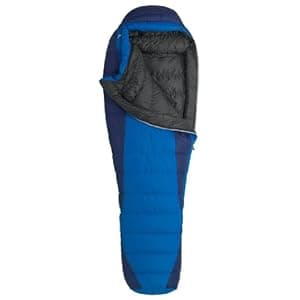 B006YQ0QHG Availability: Currently unavailable Score: 8.475 Category: Sports Rating: 4.5 Votes: 4 Find similar productsMarmot Sawtooth Long Down Sleeping Bag. The ultimate all-arounder, the Sawtooth blends just the right down warmth with just the right weight and a healthy measure of durability for an industry-leading bag. This season, we’ve made improvements to the shape, baffle height and liner fabric for increased comfort and coziness. | 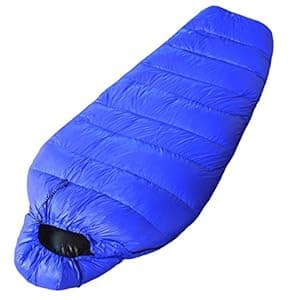 B01N5SGCEC Availability: Currently unavailable Score: 8.333 Category: Sports Rating: 5 Votes: 4 Find similar productsGoBackTrail MUMMY SLEEPING BAG – Stuffed with Duck Down for Cold Weather - 20 degree – Ultralight for Adults Men & Women – Black Fast Dry Liner - Includes Stuff Bag – Sized Regular and Tall (XL). GoBackTrail Engineered our Sleeping Bag with superior warmth and lightweight comfort! Our ultimate sleeping bag comes in 2 sizes that fit men and women. The regular size is 74” long and weighs 2.15lbs. The large is 86” long and weighs just 3.0lbs. Both are 30” wide at the shoulder and 19” wide in the footbox. Use the regular size for people up to 6” and the large size for up to 6'6”! Our sleeping bags may be light but are generously filled with duck down allowing you to survive in conditions down to 20 degrees. We only use the best duck down making each night on the trail as comfortable as possible. Our Mummy Bag helps insulate body heat while: Hiking Camping Exploring Snowboarding Mountain Climbing Ice Fishing & Hunting Our Mummy Sleeping Bag only weighs 2.15– 3.0 lbs, depending on the size, but will keep you warm in conditions down to 20 degrees. We designed it for the rigorous terrains of the trail, but it is also a great sleeping bag for: - Vehicles - Dorm Room Floors - at the Cabin - in your RV & Extra Bedding Anywhere it gets Cold! Buy yours now Risk-Free with our 100% Satisfaction Guarantee! If you aren’t completely satisfied, simply return it within the first 30 days for a full refund! Don't delay, order yours now!. |
 B01GL85L12 Availability: Currently unavailable Score: 8.333 Category: Sports Rating: 4.6 Votes: 10 Find similar productsErgaLogik Nomad Classic Warm Weather UltraLight Compression Envelope Sleeping Bag - 58º Comfort - 48º Survival Rating (Vibrant Red). . | 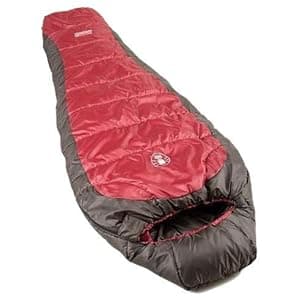 B0001BW0PQ Availability: Currently unavailable Score: 8.197 Category: Sports Rating: 3.7 Votes: 143 Find similar productsColeman Taos Extreme-Weather Mummy Bag. Product Description The Coleman Taos Extreme-Weather Mummy Bag is a great choice for cold-weather sleeping. Featuring 38 ounces of Coletherm insulation, the Taos keeps you comfortable down to 25°F. The double-batt, offset quilt construction eliminates potential cold spots, while the bag's semi-sculpted hood surrounds your head with warmth. The full-length draft tube locks out chilly drafts, while a 2-way zipper provides maximum ventilation when you want it. The Taos bag is designed with a box-foot silhouette to give your feet extra wiggle room. Stuff sack included. Commercial machine washable. 5-year limited warranty. Amazon.com Stay warm and comfortable on a chilly fall evening with the Coleman Taos mummy sleeping bag. The Taos, which offers a temperature rating down to 25 degrees F, is filled with 38 ounces of Coletherm insulation. This allows for a greater loft--a measure of the amount of space the insulation occupies and the amount of air the insulation can trap. The bag also offers several other features to fight the chill, including a double-batt, offset quilt construction that eliminates potential cold spots, a semi-sculpted hood that surrounds the head with warmth, and a full-length, insulated draft tube that locks out drafts. And to help the bag last through the years, Coleman added a durable polyester and diamond ripstop cover that resists tears. Coleman's ComfortSmart technology includes such features as a ThermoLock zipper, FiberLocked insulation, and a ZipPlow tool. Coleman's ComfortSmart Technology The best way to relax after a big day of camping adventures is to wrap up in a warm sleeping bag and drift off to peaceful sleep. Coleman is so committed to making sure you have reliable and cozy bedding that it backs its Taos sleeping bag with its ComfortSmart guarantee--a promise that the bag will deliver all-night comfort. Coleman can make this promise thanks to its third-party, scientifically tested temperature ratings; engineering features that promote thermal efficiency and durability; and the creation of different bag sizes to ensure a comfortable fit. Coleman developed a number of warmth-enhancing features for its ComfortSmart system. The FiberLock insulation tailoring, for example, is designed to prevent insulation from shifting in the bag and developing thin or cold spots. By keeping the insulation in place, Coleman also lengthens the life of the bag. The ThermoLock feature contributes by reducing heat loss (and cold seepage) through zipper coils. This sets up an additional insulating barrier to stand guard along the length of the zipper, ensuring that the snug feeling campers get when zipping up the bag stays with them through the night. Coleman also added such features as a ZipPlow zipper tool, which prevents zipper snags by channeling fabric away from the zipper coils, and Zipper Glide tailoring, which makes it silky smooth to zip the bag at the corners. Sizing The Taos is a tall sleeping bag, with dimensions of 82 by 32 inches. As a result, the bag fits most people up to 6 feet 2 inches tall. And despite the mummy bag construction, Coleman added a box-foot silhouette to give your feet extra wiggle room. Also equipped with a two-way zipper for maximum ventilation, the Taos comes with a stuff sack and carries a five-year warranty. About Coleman More than 100 years ago, a young man with an entrepreneurial spirit and a better idea began manufacturing lanterns in Wichita, Kansas. His name was W.C. Coleman, and the company he founded would change life in America. A man plagued with such poor vision he sometimes had to ask classmates to read aloud to him, Coleman saw a brilliant light in 1900 in a drugstore window that stopped him in his tracks. He inquired about the light inside and discovered he was able to read even the small print on a medicine bottle by the illumination. The lamps had mantles, not wicks, and were fueled by gasoline under pressure instead of coal oil. Soon afterward, Coleman started a lighting service that offered a no light, no pay clause--a big step forward for merchants who were burned by inferior products that rarely worked--and drew substantial interest from businesses that wanted to keep their lights on after dark. In the ensuing years, Coleman expanded its product line well beyond lanterns. The company's current catalog is thick with products that make spending time outdoors a pleasure. There are coolers that keep food and drinks cold for days on end, comfortable airbeds that won't deflate during the night, a complete line of LED lights that last for years, powerful portable grills that cook with an authentic open-grill flame, and much, much more. Coleman has truly fashioned much of our outdoor camping experience, and expects to do so for generations to come. Amazon.com Sleeping Bag Guide Sleep Well: Finding the Right Sleeping Bag Sleeping bag technology has come a long way from the days of cowboy bedrolls. These days, there are a number of high-tech materials and designs available to keep you warm during the coldest outings. Here's a short list of things to keep in mind when you're shopping for a bag: Buy for Cold It's a safe bet that on at least one of your adventures, the nighttime temperature will drop unexpectedly. That's why it's smart to buy a bag that's rated for the lowest possible temperature you expect to face on your camping and backpacking trips. For summer trips, a bag rated at +35 degrees F or higher will likely do the trick. If you like to camp in higher elevations in the summer, or if spring and fall outings are in your future, consider bags rated from +10 to +35 degrees F. Winter adventurers should look for bags in the -10 to +10 degrees F range, while those on serious winter alpine climbs and expeditions will want a bag rated lower than -10 degrees F. Keep in mind that sleeping bag manufacturers' temperature ratings only estimate the minimum temperature at which the bag will provide warmth. Take these numbers with a grain of salt, as different folks generate different amounts of heat when they sleep. If you're the type who likes to pile on the covers even on warmer nights, go for a bag that's rated 10 degrees colder. The opposite is true for warm sleepers--a 35-degree bag will probably work for you on a 25-degree night. Goose or No Goose? The most important component of any sleeping bag is its insulating material. Modern sleeping bags offer two choices: goose down or synthetic. While both materials have advantages and disadvantages, down bags are considered superior because of their phenomenal warmth-to-weight and warmth-to-bulk ratios. While providing great insulation, down is extremely compressible and light. There's a reason why geese can fly and stay warm through the winter. Down also boasts great long-term durability and will typically retain its insulating properties after years of use. All of that said, there are many high-quality synthetic bags on the market, and synthetic materials are getting better all the time. While a synthetic bag will weigh somewhat more than a down bag at an equivalent temperature rating, synthetic bags perform better when wet. (Yes, the Achilles heel of down is that it loses all insulating properties when wet.) If your trips take you to wet climates, you may want to consider a synthetic bag for this reason alone. Keep in mind, too, that many people are allergic to down, while synthetic bags are non-allergenic. Finally, down is considerably more expensive than synthetic, which might tip the balance for adventurers on a budget. Bags for All Shapes Sleeping bags come in two basic shapes that reflect their intended use. Mummy-shaped bags offer the best warmth because they conform to the body's contours. This minimizes the amount of body heat the body must put out to maintain a constant temperature. Many mummy bags are offered in women-specific shapes and sizes, as well. Rectangular bags, while they do offer more room to toss and turn, are less thermally efficient because they contain more open air space. Also, they are typically heavier than mummy bags, and are generally not offered with down insulation, making them best suited for car camping or short backpacking trips. Pad Yourself No matter what kind of bag you choose, a sleeping pad is a required accessory. Not only do they provide much-needed comfort when sleeping on the ground, pads also offer crucial warmth for your backside, as the weight of your body compresses--and renders virtually useless--the sleeping bag insulation that lies beneath you. |