E-commerce Search Demo
AI Assisted Filters
Parameters
Query:
Category filters: All
AI Assist: ON
Page: 1
Products
Time taken: 6 Max score: 1000.000 Total hits: 100 Full time: 0.0 s
Showing 1-10 of 100 products
 0375503757 Price: $42.61 Score: 1000.000 Category: Electronics Rating: 3.3 Votes: 120 Find similar productsWhat She Saw...: A Novel. Amazon.com Review Sometimes in a moment of limbo or confusion, it's advisable to make a list. An inventory of accomplishments, a chart of pros and cons. Lucinda Rosenfeld's first novel takes as its form a list of past boyfriends. Each section finishes the sentence begun in its title, What She Saw... in Roger Mancuso, or 'The Stink Bomb King of Fifth Grade.' Later, in college, it's Humphrey Fung, or 'The Anarchist Feminist.' The book's shape and humor come from the gathering logic of this catalog, how our heroine is repeatedly fooled by the illusions of lust, always looking for something new, someone who can eclipse the failed romances of the past. Rosenfeld's protagonist, Phoebe Fine, is a sharp-tongued brainiac with rotten self-esteem. Born and raised in suburban New Jersey, she's the daughter of professional classical musicians, hippie theater types who embarrass their kids; they are always going into geeky raptures on the subject of chamber music or obscure lost arts. Phoebe wishes she could be considered normal. She wishes she had blond hair and perfect teeth, but instead she's painfully ordinary: in the chapter Jason Barry Gold, or 'The Varsity Lacrosse Stud' Rosenfeld riffs expertly on the subject of Phoebe's ordinariness: That's how ugly she was--ugly by virtue of the fact that she was unmemorable, a slab of alabaster awaiting a sculptor who never arrived, a nothing burger if there ever was one. Take her nose: it just kind of ended, and her forehead just kind of began--kind of like the weeks in a year and the years in a life. It was the same with her waist and her hips, and her neck and her shoulders. There was nothing definitive about her. She was just this filet of human flesh--just this blah girl running laps behind the gym until she thought her legs would snap, her heart explode. The search for true love keeps Phoebe in a state of high anxiety. It's a wonder she ever gets any sleep. When the right guy gives her the right kind of attention, she's queen for a day. Alone, without the prospect of a lover, she starves herself, drinks too much, occasionally stares into the mystery of her past. What did she see in those men? What did they see in her? At once erotic and awkward, lightweight and troubling, Rosenfeld's debut possesses a powerful charm. Readers who grew up in the '70s and '80s will recognize the landmarks: Farah Fawcett posters, boring social studies classes explaining glasnost. Rosenfeld's a former New York Post nightlife columnist, and What She Saw... has the quick pace, twittering freshness, and panicked hipness of a club-hopper. Deadpan and stylish, it's a novel whose author is out to prove herself. And prove herself she does, in spades. --Emily White From Publishers Weekly Both breaking up and growing up are hard to do, learns Phoebe Fine, the protagonist of Rosenfeld's engaging, nostalgic and sometimes frustrating first novel. Each chapter is devoted to a man who has captured Phoebe's attention, affection and occasionally her heart, between the ages of 10 and 25, starting with Robert Mancuso, or 'The Stink Bomb King of Fifth Grade.' Young Phoebe, the intellectuallyAif not sociallyAprecocious daughter of two professional classical musicians, is sassy and sympathetic in the amusing early chapters. But once she enters college, romance shows its darker sides, and Phoebe's desire to be loved takes its toll on her self-esteem. She develops eating disorders and suffers lapses of judgment in her amorous encounters; she has an affair with a married professor, and succumbs emotionally to a number of cads. At the age of 20, Rosenfeld writes, men had become the centerpiece of her life. After graduation, Phoebe moves to New York and dabbles in promiscuity to prove the power of her beauty, only to learn that being beautiful wasn't nearly enough. Her search for self, fulfillment and true love goes on, though she's far too cynical to find anything but moments of clarity and fleeting bliss. Rosenfeld's style is direct and often witty, and the plot device is intriguing. The reader gets to know Phoebe as she interacts with her love interests; as she tests her mettle, she learns who she is, even if she doesn't quite like who she's become. But it's exasperating to watch Phoebe the wise, funny girl grows into Phoebe the insecure woman who mistrusts her own heart. First serial to the New Yorker. (Sept.) WINTER RANGE Claire Davis. Picador USA, $23 (272p) ISBN 0-312-26140-3 ~ The New West is the setting for an old-fashioned power struggle in Davis's entrancing debut. Sheriff Ike Parsons, 42 and married to fiery redhead Pattiann, patiently patrols a small Montana town whose cattle outnumber its residents. Pattiann, who always loved the ranching life, was reluctant to settle into her role as a townie's wife, and is bitter over her father's decision to pass on the family ranch to her younger brother. It seems a modern Western woman is powerless, except in the sexual realm, which Pattiann discovered as a rebellious, promiscuous teen. Chas Stubblefield was one of the many boys she drunkenly coupled with in her youth, and 16 years later, when Chas comes to her for sympathy, she fools herself into thinking that she and the down-and-out rancher might still strike sparks. A lonely bachelor, Chas lacks business savvy, and can't afford enough feed for his livestock during a particularly harsh winter. Compassionate (but ignorant of Chas's past with Pattiann), Ike offers to help Chas, fully expecting the stubborn, explosive man to swallow his pride. Chas's situation is indeed horrifying: his cattle are already dead or starving, and bankrupt Chas lives off the meat. Ike conceives a plan to mercy-kill the surviving animals, provoking Chas, now helpless to stop the law from taking everything he owns, to settle the score, even if it means hurting the woman he loves. Crisp details establish place and characters with authoritative clarity. As the characterization deepens, so do the suspense and the reader's empathy for decent people trapped by human flaws and fate. The narrative, moving surefootedly toward its denouement, raises serious questions about the law, love and ethics in a tough rural community. With prose as crystalline and clean as snow on the Montana prairie, Davis establishes herself as a writer to watch. Author tour. (Sept.) Copyright 2000 Reed Business Information, Inc. From Library Journal Rosenfeld's grasp on the confusing world of male-female relationships proves ineffective halfway through this debut novel, which is glib, flippant, and only marginally amusing. Phoebe Fine first encounters the perils of communicating with the opposite sex in fifth grade. Further experiences with men are revealed in chronological order, with each chapter named for a particularly memorable male. Following Phoebe through her first kiss, high school boyfriends, proms, college frat parties, first sexual experiences, married professors, and into the working world, the saga of her trials and tribulations with the male species becomes tiresome long before Phoebe settles into adulthood. It might have been more interesting if Phoebe herself were more than a weakly drawn composite of a Generation X female. Her male counterparts aren't any better. Although Phoebe's musings and reflections do offer the occasional poignant and somewhat sarcastic insight into the battle of the sexes, most libraries will not miss much in bypassing this title. A borderline purchase at best for most fiction collections.DMargaret Hanes, Sterling Heights P.L., MI Copyright 2000 Reed Business Information, Inc. From Booklist What Phoebe Fine sees in most of the boys and, later, young men she meets is only half the fun of this debut novel. Instead of deciding what she wants, Phoebe seems to be stumbling from one to another, trying to figure out what it is she's missing. Her first love is Stinky Mancuso, whose major claim to fame is planting stinkbombs in school and performing other general mischief. She is attracted to his cocky yet mysterious manner. From there she moves more or less up and down the social ladder, from a frat boy who may or may not be a rapist to a married professor to a fellow musician. In the beginning, they do seem to have one thing in common: She had a thing for cocky assholes. When they expressed interest in her, it seemed meaningful. Meaningful or not, she seems hopeful that at some point she will come upon what she wants. In the meantime, she's having a good time trying to find Mr. Right, even if many of her picks seem to be variations of Mr. Wrong. Marlene Chamberlain Copyright © American Library Association. All rights reserved From Kirkus Reviews An episodic chronicle about low self-esteem that's intelligent and well observed but mired in a callow attitude devoid of perspective.Lacking the goofy charm of Bridget Jones or the satisfying growth and closure of High Fidelity , this memoir-ish debut offers instead the biting cynicism and self-lacerating humor of a prematurely embittered young sophisticate manqué. Each chapter-or, perhaps more properly, story, as this is as much collection as novel-is named for one of the boys or men who Phoebe Fine, passing from the age of 11 to 25, has used to define herself. Growing up in suburban New Jersey in the '70s and '80s, the daughter of effete, ineffectual, classical musician parents, Phoebe, smart, Jewish, and pretty, lacks any sense of self-worth. Sent to a private school full of rich kids, dressed unfashionably or in designer seconds, Phoebe, who plays the violin and runs track, settles into the role of outsider. Starting with Stinky Mancuso, hardcore bad boy of the fifth grade, though (who-inexplicably, to Phoebe-takes a liking to her and then disappears), she forges an identity from the attention of men. As Phoebe goes from prep school to college sorority (with bouts of anorexia and bulimia) and on to New York City, Rosenfeld recounts her affairs. Spitty Clark, a solicitous, not-too-bright frat boy, turns out to have a reputation as a date-rapist; Phoebe embraces him to defy her condescending sorority sisters. Claude Duvet is the Frenchman she imagines she'll meet in Paris, but he never materializes and she returns home, defeated. Phoebe seduces Bruce Bledstone, a married college professor, but his intellectual aloofness, which lets her imagine herself as part of a more rarefied world than that of her peers, turns against her and makes their affair into an excruciatingly drawn-out thing. And so on.Portrait of the writer as a young drama queen: entertaining enough, but at the same time both a bit much and not much more. -- Copyright © 2000 Kirkus Associates, LP. All rights reserved. Review Check your romantic illusions at the door--Lucinda Rosenfeld's acerbically funny and remarkably assured debut novel catalogs the myriad humiliations, compromises, and misconceptions that add up to the history of one woman's 'love life.' This is a book that will make you laugh and wince in solidarity with its sexy, beleaguered heroine. --Tom Perrotta, author of Election From the Inside Flap fifth grade, Phoebe Fine, the daughter of an oboist in suburban New Jersey, finds that love is a risky game to play. There is Roger Mancuso, who offers Phoebe her first cigarette, her first kiss, and her first experience of loss. There is Spitty Clark, the frat boy and inveterate party animal who's a possible criminal but also somehow a man of honor. Later on, as a young woman living in New York, Phoebe crosses the path of arrogant Pablo Miles (né Peter Mandelbaum), who licks her hand moments after they meet. And so it goes, as Phoebe struggles to reconcile her conflicting desires for safety and adventure, sympathy and conquest. Lucinda Rosenfeld relates Phoebe's serial, seriocomic encounters with freshness, range, economy, and emotional precision:She understood the jealousy emaciation aroused in other women.She couldn't persuade herself to spend an entire hour's salary on a piece of bread and three zucchini rounds.Their first date was mo About the Author Lucinda Rosenfeld was born in New York City on the last day of the 1960s. She grew up in New Jersey and attended Cornell University. She has written for The New York Times Magazine, Harper's Bazaar, Elle, Slate, Word, and Talk. She was a nightlife columnist for the New York Post from 1996 to 1998. She lives in Brooklyn. Excerpt. © Reprinted by permission. All rights reserved. 1. Roger MancusoOR The Stink Bomb King of Fifth Grade On the Tuesday before Easter, a substitute teacher appeared behind Mrs. Kosciouwicz's metal desk. His face looked like a dented Yukon potato. His jazz shoes were the color of cement. He was tall and thin except for a pillow-sized potbelly that spilled helplessly over his plaid pants. I'm Mr. Spumato, he announced to the assembled fifth-graders. And I'll be your sub until further notice. Euphoria swept through the classroom at the thought of Mrs. Kosciouwicz never coming back. She was always lecturing them about the importance of sitting up straight. She made them read the dictionary and watch boring filmstrips on the origins of math. She was highly intolerant of lateness and (despite her own abysmal record) deranged on the matter of absenteeism. Over the educational-games shelf, she'd hung a poster of a beak-nosed owl reading PROCRASTINATION IS THE THIEF OF TIME. On the back of the door, she'd tacked another one asserting SILENCE IS GOLDEN. The only time she baked them cupcakes was when Reagan beat Carter. The only time she let them leave school early was when Reagan got shot. Her pull-on pants were the color of dog shit. Her bosom hung down to her waist. Her bifocals hung from a necklace. She was probably only sixty. She seemed about as old as ancient Mesopotamia. Roger Mancuso's hand shot up-not before he'd blurted out, Did Mrs. K. croak-or what? What is your name, young man? snarled Mr. Spumato. Mick, he answered. Mick Jagger. Well, Mr. Jagger, said Spumato, trying to drown out the tsunami of laughter that rose from the back row. If you'd like to take your question to the principal, I'd be happy to accompany you to his office. 0000000hhhhh, crooned the class in unison. I just wanted to know if the old lady was alive, countered Roger. You'll know what I tell you! cried Spumato. I'll know what I want, said Roger. And I want to know what happened to my friggin' homeroom teacher. Now the class cheered. Poor Spumato. He must have known he was losing control. He couldn't have been happy about it. He pointed a single, trembling finger at his nemesis. One more peep, Mr. Jagger, and you're outta here for good! Then he cranked his thumb backward over his shoulder in the direction of the principal's office, in case anyone thought he was kidding. (No one did.) The class fell silent-even Roger, who went back to his guitar magazine. The rest of them fixated on Mr. Spumato's flaccid backside jiggling up and down as he began to script grammatical terminology on the board. He about-faced several minutes later. Who can tell me the difference between a pronoun and a noun? he wanted to know, his tobacco-stained moustache twitching ever so slightly. But not a single hand rose. None of you little punks knows the difference between a pronoun and a normal noun, he tried again. And then again: I SAID WHO THE CRAP KNOWS THE DIFFERENCE BETWEEN A NOUN AND A PRONOUN? Now the class shrieked in ecstasy. Crap was the kind of word Mrs. K. deemed grounds for suspension, and here was the substitute teacher making unrepentant use of it. Spumato! Spumato! Spumato! Roger started to chant, palms pounding rhythmically on his ink-stained desktop, and the rest of the class quickly joined in. Spumato! Spumato! Spumato! Spumato! It was when Spumato started to shake that they finally shut up. They were suddenly mortified for their sub-for his failure to control them, for his irrational fear of their harmless delirium. They stared at their hands. They prayed for the bell. They didn't really want to see him fall apart. They were rescued by the introduction of a terrible odor. It wafted through the classroom, inflicting punishment on all possessed of a sense of smell. It wasn't long before the situation became insufferable. Their throats threatening to close, they ran for the door gasping. The smart ones pinched their noses. Come back here, you little punks! roared Mr. Spumato. But then he, too, succumbed to the stench-and followed the stampede into the hall. That was the last anyone saw of Plaid Pants. As for Roger Mancuso, after confessing to the stink bomb, he was suspended for three days and threatened with expulsion. He was only too happy to have the time off to listen to his favorite Rolling Stones album, Some Girls, another hundred times. And upon his arrival back at Whitehead Middle (a.k.a. Blackhead Middle and/or Shit-Head Middle) the following week, he was given a hero's welcome, complete with chanting, backslapping, synchronized farting, and a new nickname: Stinky. He was also presented with a change of seats. Seemingly back from the dead, Mrs. K. moved the so-anointed Stink Bomb King to the front row, one seat to the left of Phoebe Fine, who couldn't believe her luck. Not that she was expecting Stinky to feel the same way. When he slipped a note under her elbow, she didn't even think it was for her. Then she saw her name printed on the outside. She waited until Mrs. K. turned her back to write the word volunteerism on the board. Then she pushed the note into her lap. Waiting for her was the following declaration: YOU LOOK FINE! Her face turned red; her hands began to tremble like Mr. Spumato's. Was this Stinky's idea of a joke? Was he passing the note on someone else's behalf? Was he mocking her last name? Was she merely a convenient target? Had he heard from someone, who'd heard from someone else, who'd heard from her best friend, Brenda Cuddihy, that she had a huge crush on him-and was this his way of telling her that he already knew? Or might he have meant exactly what he'd written? The latter possibility seemed unlikely, especially considering the only extracurricular contact she'd had with Stinky in the past year consisted of a single, recent occasion during which he'd circled her with his BMX bike on her way to her violin lesson, sung her excerpts from Fiddler on the Roof, and demanded that she play him The Devil Went Down to Georgia. She kept telling him she didn't know how. He eventually performed a wheelie and disappeared. In short, it didn't seem like Stinky Mancuso was madly in love with her. If anything, it seemed like he thought it was pretty weird that she played the violin. But what if he liked her for the reason that she was unique among her peers? Which is to say that he'd never encountered anyone quite as gifted and talented as Phoebe, with the encouragement of her parents and teachers, imagined herself to be? Reluctant to make eye contact until she had more information one way or the other, Phoebe stared straight ahead for the rest of the class period. And when the bell rang, she jumped out of her chair and bolted for the door. In the girls' room some time later, she caught up with Brenda Cuddihy. Did you tell Stinky I liked him? she challenged her Born Again best friend. I swear on the Bible I didn't tell anyone! her Born Again best friend held fast. Well, look at this, said Phoebe, pulling Stinky's note out of the patch pocket of her tie-dyed apron dress and handing it over to Brenda, who read it out loud before she gasped, Oh my God, Stinky likes you! How do you know he's not just joking around? said Phoebe. Well, he didn't send me a note, said Brenda. Well, you don't sit next to him in homeroom. So? So there. So nothing-I bet Stinky wants to go out with you. Well, I don't want to go out with him. But I thought you had a crush on him! I did, Phoebe told her. But I don't anymore. But she was lying; she was just scared-scared of boys in general and what they might require of her, but perhaps even more terrified of finding herself attracted to the very thing her daffy, well-meaning, culturally contemptuous parents had worked so hard to protect her from-namely, the world out there in all its crudest, crassest, most inglorious expressions of animal need. It wasn't merely that Stinky Mancuso was a huge fan of the bat-eating heavy metal musician Ozzy Osbourne. His favorite expression was Ya mental; his second-favorite expression was Ya gay. As early as fourth grade, he'd been spotted palling around with Whitehead's hearse-driving drug-dealer-in-residence, Rupert Slim. He was notorious for having talked some special-ed kids into taking down their pants in the middle of the playing field. A cheap tin arrowhead pendant dangled from the gold-toned chain he wore around his scrawny neck. He kept a red plastic comb with an aerodynamic handle in the back pocket of his Lee jeans-even though he had buzz-cut hair. He wore a different rock concert T-shirt every day of the week. The only concert T-shirt Phoebe owned was emblazoned with the logo of the Lincoln Center summer series Mostly Mozart. Her father, Leonard, was a professional oboist who moonlighted on the English horn and the oboe d'amour. Her mother, Roberta, was a semiprofessional violist. Her older sister, Emily, was a dedicated if singularly untalented student of the cello. Phoebe herself had been started on the violin (Suzuki method) at the age of five. More than a vocation, however, classical music was the air the Fine family breathed, the religion they practiced, the shelter under which they sought refuge from the technological excesses of the current century. It blared from the family Victrola all day every day, if it wasn't already being played live in their music room. On Saturday ni... Read more. |  0525566651 Price: $25.14 Score: 4.115 Category: Electronics Rating: 4.8 Votes: 4243 Find similar productsThe Crazy Rich Asians Trilogy Box Set. Review “A dizzily shopaholic comedy.... Wickedly delectable.... Offers refreshing nouveau voyeurism to readers who long ago burned out on American and English aspirational fantasies.... Hilarious.” — Janet Maslin, The New York Times “It’s impossible not to get sucked into this satirical novel about the jet-setting lives of an enormous busybody family and its infinite Louboutin collection.” — Glamour “There’s rich, there’s filthy rich, and then there’s crazy rich.... A Pride and Prejudice -like send-up.” —People “If this isn’t the funniest book so far this year, it’s up there.... Kwan, who grew up in Singapore, skewers his subjects deftly, stylishly, and completely—but with heart.” — The Denver Post “Deliciously decadent.... This 48-karat beach read is crazy fun.... [Read] Crazy Rich Asians , on an exotic beach in super-expensive sunglasses.” — Entertainment Weekly “An unputdownably funny, original, modern novel.... I actually couldn't put this book down to eat or to watch Downton Abbey .” —Plum Sykes, author of Bergdorf Blondes “Rachel’s squeaky-clean naiveté is a clever foil to the intricate workings of the high-glamour Asian set around her. Chinese on the outside but all-American on the inside, she allows us to see the myriad nuances of intra-Asian culture that the novel goes to great lengths to show.” —Tash Aw, NPR “Rollicking.... A lively, generous story of shallow extravagance and human devotion.” — The Boston Globe “Original and fun, Crazy Rich Asians is quite a roller coaster trip. I loved it!” —Jackie Collins, author of The Power Trip “Delightfully soapy.... [ Crazy Rich Asians ] eats its chiffon cake and has it too, simultaneously tut-tutting many of its characters for their vapid materialism while reveling in the milieu’s sybaritic excess.” — The Wall Street Journal “As spicily adventurous and lusciously satisfying as the renowned Singaporean street food Kevin Kwan’s characters argue over; hot and sizzling, like the best satay , and dreamily transporting, like everyone's favorite dessert— goreng pisang . Feast on this outrageously funny and insightful novel of modern manners, and enjoy!” —Lisa See, author of Dreams of Joy and Shanghai Girls “[An] instant favorite.... Opulence and zaniness reign.” — O, The Oprah Magazine “Like Dynasty on steroids with more private jets, bigger houses, and a lot more money.” —VanityFair.com About the Author KEVIN KWAN is the author of the international bestsellers Crazy Rich Asians , China Rich Girlfriend , Rich People Problems , and Sex and Vanity . Born in Singapore, he has called New York’s West Village home since 1995. Excerpt. © Reprinted by permission. All rights reserved. Part Two I did not tell half of what I saw, for no one would have believed me. MARCO POLO, 1324 2 Rachel and Nick TYERSALL PARK As Peik Lin’s car approached the porte cochere of Tyersall Park, Nick bounded down the front steps toward them. “I was worried you’d gotten lost,” he said, opening the car door.“We did get a bit lost, actually,” Rachel replied, getting out of the car and staring up at the majestic façade before her. Her stomach felt like it had been twisted in a vise, and she smoothed out the creases on her dress nervously. “Am I really late?”“No, it’s okay. I’m sorry, were my directions confusing?” Nick asked, peering into the car and smiling at Peik Lin. “Peik Lin—thanks so much for giving Rachel a lift.”“Of course,” Peik Lin murmured, still rather stunned by her surroundings. She longed to get out of the car and explore this colossal estate, but something told her to remain in her seat. She paused for a moment, thinking Nick might invite her in for a drink, but no invitation seemed to be forthcoming. Finally she said as nonchalantly as possible, “This is quite a place—is it your grandmother’s?”“Yes,” Nick replied.“Has she lived here a long time?” Peik Lin couldn’t resist trying to find out more as she craned her neck, trying to get a better look.“Since she was a young girl,” Nick said.Nick’s answer surprised Peik Lin, as she assumed that the house would have belonged to his grandfather. Now what she really wanted to ask was, Who on earth is your grandmother? But she didn’t want to risk seeming too nosy. “Well, you two have a great time,” Peik Lin said, winking at Rachel and mouthing the words Call me later! Rachel gave her friend a quick smile.“Good night, and get home safe,” Nick said, patting the roof of the car.As Peik Lin’s car drove off, Nick turned to Rachel, looking a little sheepish. “I hope it’s okay . . . but it’s not just the family. My grandmother decided to have a small party, all arranged at the last minute, apparently, because her tan hua flowers are going to bloom tonight.”“She’s throwing a party because her flowers are in bloom?” Rachel asked, not quite following.“Well, these are very rare flowers that bloom extremely infrequently, sometimes once every decade, sometimes even longer than that. They only bloom at night, and the whole thing only lasts for a few hours. It’s quite something to witness.”“Sounds cool, but now I’m feeling really underdressed for the occasion,” Rachel said pensively, eyeing the fleet of limousines that lined the driveway.“Not at all—you look absolutely perfect,” Nick told her. He could sense her trepidation and tried to reassure her, placing his hand on the small of her back and guiding her toward the front doors. Rachel felt the warm, radiating energy from his muscled arm and instantly felt better. Her knight in shining armor was at her side, and everything would be just fine.As they entered the house, the first thing that caught Rachel’s eye was the dazzling mosaic tiles in the grand foyer. She stood transfixed for a few moments by the intricate black, blue, and coral pattern before realizing that they were not alone. A tall, spindly Indian man stood silently in the middle of the foyer next to a circular stone table clustered with pots of enormous white-and-purple phalaenopsis orchids. The man bowed ceremoniously to Rachel and presented her with a hammered silver bowl filled with water and pale pink rose petals. “For your refreshment, miss,” he said.“Do I drink this?” Rachel whispered to Nick.“No, no, it’s for washing your hands,” Nick instructed. Rachel dipped her fingers into the cool scented water before wiping them on the soft terry cloth that was proffered, feeling awed (and a little silly) by the ritual.“Everyone’s upstairs in the living room,” Nick said, leading her toward the carved stone staircase. Rachel saw something out of the corner of her eye and let out a quick gasp. By the side of the staircase lurked a huge tiger.“It’s stuffed, Rachel.” Nick laughed. The tiger stood as if about to pounce, mouth open in a ferocious growl.“I’m sorry, it looked so real,” Rachel said, recovering herself.“It was real. It’s a native Singaporean tiger. They used to roam this area until the late nineteenth century, but they were hunted into extinction. My great-grandfather shot this one when it ran into the house and hid under the billiard table, or so the story goes.” “Poor guy,” Rachel said, reaching out to stroke the tiger’s head gingerly. Its fur felt surprisingly brittle, as if a patch might fall off at any minute.“It used to scare the hell out of me when I was little. I never dared go near the foyer at night, and I had dreams that it would come alive and attack me while I was sleeping,” Nick said.“You grew up here?” Rachel asked in surprise.“Yes, until I was about seven.”“You never told me you lived in a palace.”“This isn’t a palace. It’s just a big house.”“Nick, where I come from, this is a palace,” Rachel said, gazing up at the cast-iron and glass cupola soaring above them. As they climbed the stairs, the murmur of party chatter and piano keys wafted down toward them. When they reached the landing to the second floor, Rachel almost had to rub her eyes in disbelief. Sweet Jesus. She felt momentarily giddy, as if she had been transported back in time to another era, to the grand lounge of a twenties ocean liner en route from Venice to Istanbul, perhaps.The “living room,” as Nick so modestly called it, was a gallery that ran along the entire northern end of the house, with art deco divans, wicker club chairs, and ottomans casually grouped into intimate seating areas. A row of tall plantation doors opened onto the wraparound veranda, inviting the view of verdant parklands and the scent of night-blooming jasmine into the room, while at the far end a young man in a tuxedo played on the Bösendorfer grand piano. As Nick led her into the space, Rachel found herself reflexively trying to ignore her surroundings, even though all she wanted to do was study every exquisite detail: the exotic potted palms in massive Qianlong dragon jardinieres that anchored the space, the scarlet-shaded opaline glass lamps that cast an amber glow over the lacquered teak surfaces, the silver- and lapis lazuli–filigreed walls that shimmered as she moved about the room. Every single object seemed imbued with a patina of timeless elegance, as if it had been there for more than a hundred years, and Rachel didn’t dare to touch anything. The glamorous guests, however, appeared completely at ease lounging on the shantung silk ottomans or mingling on the veranda while a retinue of white-gloved servants in deep-olive batik uniforms circulated with trays of cocktails.“Here comes Astrid’s mother,” Nick muttered. Before Rachel had a moment to collect herself, a stately-looking lady approached them, wagging a finger at Nick.“Nicky, you naughty boy, why didn’t you tell us you were back? We thought you weren’t coming till next week, and you just missed Uncle Harry’s birthday dinner at Command House!” The woman looked like a middle-aged Chinese matron, but she spoke in the sort of clipped English accent straight out of a Merchant Ivory film. Rachel couldn’t help but notice how her tightly permed black hair fittingly resembled the Queen of England’s.“So sorry, I thought you and Uncle Harry would be in London at this time of the year. Dai gu cheh , this is my girlfriend Rachel Chu. Rachel, this is my auntie Felicity Leong.”Felicity nodded at Rachel, boldly scanning her up and down.“So nice to meet you,” Rachel said, trying not to be unnerved by her hawklike gaze.“Yes of course,” Felicity said, turning quickly to Nick and asking, almost sternly, “Do you know when your daddy gets in?”“Not a clue,” he replied. “Is Astrid here yet?” “Aiyah, you know that girl is always late!” At that moment, his aunt noticed an elderly Indian woman in a gold and peacock-blue sari being helped up the stairs. “Dear Mrs. Singh, when did you get back from Udaipur?” she screeched, pouncing on the woman as Nick guided Rachel out of the way.“Who is that lady?” Rachel asked.“That’s Mrs. Singh, a family friend who used to live down the street. She’s the daughter of a maharaja, and one of the most fascinating people I know. She was great friends with Nehru. I’ll introduce you later, when my aunt isn’t breathing down our necks.”“Her sari is absolutely stunning,” Rachel remarked, gazing at the elaborate gold stitching.“Yes, isn’t it? I hear she flies all her saris back to New Delhi to be specially cleaned,” Nick said as he tried to escort Rachel toward the bar, unwittingly steering straight into the path of a very posh-looking middle-aged couple. The man had a pompadour of Brylcreemed black hair and thick, oversize tortoiseshell glasses, while his wife wore a classic gold-buttoned red-and-white Chanel suit.“Uncle Dickie, Auntie Nancy, meet my girlfriend Rachel Chu,” Nick said. “Rachel, this is my uncle and his wife, from the T’sien side of the family,” he explained.“Ah Rachel, I’ve met your grandfather in Taipei . . . Chu Yang Chung, isn’t it?” Uncle Dickie asked.“Er . . . actually, no. My family isn’t from Taipei,” Rachel stammered.“Oh. Where are they from, then?”“Guangdong originally, and nowadays California.”Uncle Dickie looked a bit taken aback, while his well-coiffed wife grasped his arm tightly and continued. “Oh, we know California very well. Northern California, actually.”“Yes, that’s where I’m from,” Rachel replied politely.“Ah, well then, you must know the Gettys? Ann is a great friend of mine,” Nancy effused.“Um, are you referring to the Getty Oil family?”“Is there any other?” Nancy asked, perplexed.“Rachel’s from Cupertino, not San Francisco, Auntie Nancy. And that’s why I need to introduce her to Francis Leong over there, who I hear is going to Stanford this fall,” Nick cut in, quickly moving Rachel along. The next thirty minutes became a blur of nonstop greetings, as Rachel was introduced to assorted family and friends. There were aunties and uncles and cousins aplenty, there was the distinguished though diminutive Thai ambassador, there was a man Nick introduced as the sultan of some unpronounceable Malay state, along with his two wives in elaborately bejeweled head scarves.All this time, Rachel had noticed one woman who seemed to command the attention of the room. She was very slim and aristocratic-looking with snow-white hair and ramrod-straight posture, dressed in a long white silk cheongsam with deep purple piping along the collar, sleeves, and hemline. Most of the guests orbited around her paying tribute, and when she at last came toward them, Rachel noticed for the first time Nick’s resemblance to her. Nick had earlier informed Rachel that while his grandmother spoke En-glish perfectly well, she preferred to speak in Chinese and was fluent in four dialects—Mandarin, Cantonese, Hokkien, and Teochew. Rachel decided to greet her in Mandarin, the only dialect she spoke, but before Nick could make proper introductions, she bowed her head nervously at the stately lady and said, “It is such a pleasure to meet you. Thank you for inviting me to your beautiful home.”The woman looked at her quizzically and replied slowly in Mandarin, “It is a pleasure to meet you too, but you are mistaken, this is not my house.”“Rachel, this is my great-aunt Rosemary,” Nick explained hurriedly.“And you’ll have to forgive me, my Mandarin is really quite rusty,” Great-aunt Rosemary added in her Vanessa Redgrave English.“Oh, I’m so sorry,” Rachel said, her cheeks flushing bright red. She could feel all eyes in the room upon her, amused by her faux pas.“No need to apologize.” Great-aunt Rosemary smiled graciously. “Nick has told me quite a bit about you, and I was so looking forward to meeting you.”“He has?” Rachel said, still flustered.Nick put his arm around Rachel and said, “Here, come meet my grandmother.” They walked across the room, and on the sofa closest to the veranda, flanked by a spectacled man smartly attired in a white linen suit and a strikingly beautiful lady, sat a shrunken woman. Shang Su Yi had steel-gray hair held in place by an ivory headband, and she was dressed simply in a rose-colored silk blouse, tailored cream trousers, and brown loafers. She was older and frailer than Rachel had expected, and though her features were partially obscured by a thick pair of tinted bifocals, her regal countenance was unmistakable. Standing completely still behind Nick’s grandmother were two ladies in immaculate matching gowns of iridescent silk.Nick addressed his grandmother in Cantonese. “Ah Ma, I’d like you to meet my friend Rachel Chu, from America.” “So nice to meet you!” Rachel blurted in English, completely forgetting her Mandarin.Nick’s grandmother peered up at Rachel for a moment. “Thank you for coming,” she replied haltingly, in English, before turning swiftly to resume her conversation in Hokkien with the lady at her side. The man in the white linen suit smiled quickly at Rachel, but then he too turned away. The two ladies swathed in silk stared inscrutably at Rachel, and she smiled back at them tensely.“Let’s get some punch,” Nick said, steering Rachel toward a table where a uniformed waiter wearing white cotton gloves was serving punch out of a huge Venetian glass punch bowl.“Oh my God, that had to be the most awkward moment of my life! I think I really annoyed your grandmother,” Rachel whispered.“Nonsense. She was just in the middle of another conversation, that’s all,” Nick said soothingly.“Who were those two women in matching silk dresses standing like statues behind her?” Rachel asked.“Oh, those are her lady’s maids.”“Excuse me?”“Her lady’s maids. They never leave her side.”“Like ladies-in-waiting? They look so elegant.”“Yes, they’re from Thailand, and they were trained to serve in the royal court.”“Is this a common thing in Singapore? Importing royal maids from Thailand?” Rachel asked incredulously.“I don’t believe so. This service was a special lifetime gift to my grandmother.”“A gift? From whom?”“The King of Thailand. Though it was the last one, not Bhumibol the current king. Or was it the one before that? Anyway, he was apparently a great friend of my grandmother’s. He decreed that she must only be waited on by court-trained ladies. So there has been a constant rotation ever since my grandmother was a young woman.”“Oh,” Rachel said, stupefied. She took the glass of punch from Nick and noticed that the fine etching on the Venetian glassware perfectly matched the intricate fretwork pattern on the ceiling. She leaned against the back of a sofa for support, suddenly feeling overwhelmed. There was too much for her to take in—the army of white-gloved servants hovering about, the confusion of new faces, the mind-blowing opulence. Who knew that Nick’s family would turn out to be these extremely grand people? And why didn’t he prepare her for all this a little more?Rachel felt a gentle tap on her shoulder. She turned around to see Nick’s cousin holding a sleepy toddler. “Astrid!” she cried, delighted to see a friendly face at last. Astrid was adorned in the chicest outfit Rachel had ever seen, quite different from how she had remembered her in New York. So this was Astrid in her natural habitat.“Hello, hello!” Astrid said cheerily. “Cassian, this is Auntie Rachel. Say hi to Auntie Rachel?” Astrid gestured. The child stared at Rachel for a moment, before burying his head shyly into his mother’s shoulder.“Here, let me take this big boy out of your hands!” Nick grinned, lifting a squirming Cassian out of Astrid’s arms, and then deftly handing her a glass of punch.“Thanks, Nicky,” Astrid said as she turned to Rachel. “How are you finding Singapore so far? Having a good time?”“A great time! Although tonight’s been a bit . . . overwhelming.” “I can only imagine,” Astrid said with a knowing glint in her eye.“No, I’m not sure you can,” Rachel said.A melodious peel rang through the room. Rachel turned to see an elderly woman in a white cheongsam top and black silk trousers playing a small silver xylophone by the stairs.*“Ah, the dinner gong,” Astrid said. “Come, let’s eat.”“Astrid, how is it that you always seem to arrive just when the food is ready?” Nick remarked.“Choco-cake!” little Cassian muttered.“No, Cassian, you already had your dessert,” Astrid replied firmly.The crowd began to make a beeline for the stairs, passing the woman with the xylophone. As they approached her, Nick gave the woman a big bear hug and exchanged a few words in Cantonese. “This is Ling Cheh, the woman who pretty much raised me from birth,” he explained. “She has been with our family since 1948.” “Wah, nay gor nuay pang yau gum laeng, ah! Faai di git fun!” Ling Cheh commented, grasping Rachel’s hand gently. Nick grinned, blushing a little. Rachel didn’t understand Cantonese, so she just smiled, while Astrid quickly translated. “Ling Cheh just teased Nick about how pretty his lady friend is.” As they proceeded down the stairs, she whispered to Rachel, “She also ordered him to marry you soon!” Rachel simply giggled.A buffet supper had been set up in the conservatory, an elliptical-shaped room with dramatic frescoed walls of what appeared from a distance to be a dreamy, muted Oriental scene. On closer inspection, Rachel noticed that while the mural did evoke classical Chinese mountainscapes, the details seemed to be pure Hieronymus Bosch, with strange, lurid flowers climbing up the walls and iridescent phoenixes and other fantastical creatures hiding in the shadows. Three enormous round tables gleamed with silver chafing dishes, and arched doorways opened onto a curved colonnaded terrace where white wrought-iron bistro tables lit with tall votives awaited the diners. Cassian continued to squirm in Nick’s arms, wailing even louder, “I want choco-cake!”“I think what he really wants is S-L-E-E-P,” his mother commented. She tried to take her son back from Nick, but the child began to whimper.“I sense a crying fit on the way. Let’s take him to the nursery,” Nick offered. “Rachel, why don’t you get started? We’ll be back in a minute.”Rachel marveled at the sheer variety of food that had been laid out. One table was filled with Thai delicacies, another with Malaysian cuisine, and the last with classic Chinese dishes. As usual, she was a bit at a loss when confronted with a huge buffet. She decided to start one cuisine at a time and began at the Chinese table with a small helping of E-fu noodles and seared scallops in ginger sauce. She came upon a tray of exotic-looking golden wafers folded into little top hats. “What in the world are these?” she wondered aloud.“That’s kueh pie tee , a nyonya dish. Little tarts filled with jicama, carrots, and shrimp. Try one,” a voice behind her said. Rachel looked around and saw the dapper man in the white linen suit who had been sitting next to Nick’s grandmother. He bowed in a courtly manner and introduced himself. “We never met properly. I’m Oliver T’sien, Nick’s cousin.” Yet another Chinese relative with a British accent, but his sounded even plummier than the rest.“Nice to meet you. I’m Rachel—”“Yes, I know. Rachel Chu, of Cupertino, Palo Alto, Chicago, and Manhattan. You see, your reputation precedes you.”“Does it?” Rachel asked, trying not to sound too surprised.“It certainly does, and I must say you’re much more fetching than I was led to believe.”“Really, by whom?”“Oh, you know, the whispering gallery. Don’t you know how much the tongues have been wagging since you’ve arrived?” he said mischievously.“I had no clue,” Rachel said a little uneasily, walking out onto the terrace with her plate, looking for Nick or Astrid but not seeing them anywhere. She noticed one of Nick’s aunties—the lady in the Chanel suit—looking toward her expectantly.“There’s Dickie and Nancy,” Oliver said. “Don’t look now—I think they’re waving to you. God help us. Let’s start our own table, shall we?” Before Rachel could answer, Oliver grabbed her plate from her hand and walked it over to a table at the far end of the terrace.“Why are you avoiding them?” Rachel asked.“I’m not avoiding them. I’m helping you avoid them. You can thank me later.”“Why?” Rachel pressed on.“Well, first of all, they are insufferable name-droppers, always going on and on about their latest cruise on Rupert and Wendi’s yacht or their lunch with some deposed European royal, and second, they aren’t exactly on your team.” “What team? I didn’t realize I was on any team.”“Well, like it or not, you are , and Dickie and Nancy are here tonight precisely to spy for the opposition.”“Spying?”“Yes. They mean to pick you apart like a rotting carcass and serve you up as an amuse-bouche the next time they’re invited to dine in the Home Counties.”Rachel had no idea what to make of his outlandish statement. This Oliver seemed like a character straight out of an Oscar Wilde play. “I’m not sure I follow,” she finally said.“Don’t worry, you will. Just give it another week—I’d peg you for a quick study.”Rachel assessed Oliver for a minute. He looked to be in his mid-thirties, with short, meticulously combed hair and small round tortoiseshell glasses that only accentuated his longish face. “So how exactly are you related to Nick?” she asked. “There seem to be so many different branches of the family.”“It’s really quite simple, actually. There are three branches—the T’siens, the Youngs, and the Shangs. Nick’s grandfather James Young and my grandmother Rosemary T’sien are brother and sister. You met her earlier tonight, if you recall? You mistook her for Nick’s grandmother.”“Yes, of course. But that would mean that you and Nick are second cousins.”“Right. But here in Singapore, since extended families abound, we all just say we’re ‘cousins’ to avoid confusion. None of that ‘third cousins twice removed’ rubbish.”“So Dickie and Nancy are your uncle and aunt.”“Correct. Dickie is my father’s older brother. But you do know that in Singapore, anyone you’re introduced to who’s one generation older should be called ‘Uncle or Auntie,’ even though they might not be related at all. It’s considered the polite thing.”“Well, shouldn’t you be calling your relatives ‘Uncle Dickie’ and ‘Auntie Nancy’ then?”“Technically, yes, but I personally feel that the honorific should be earned. Dickie and Nancy have never given a flying fuck about me, so why should I bother?”Rachel raised her eyebrows. “Well, thanks for the crash course on the T’siens. Now, how about the third branch?”“Ah yes, the Shangs.”“I don’t think I’ve met any of them yet.”“Well, none of them are here, of course. We’re not supposed to ever talk about them, but the imperial Shangs flee to their grand country estates in England every April and stay until September, to avoid the hottest months. But not to worry, I think my cousin Cassandra Shang will be back for the wedding next week, so you will get a chance to bask in her incandescence.”Rachel grinned at his florid remark—this Oliver was such a trip. “And how are they related exactly?”“Here’s where it gets interesting. Pay attention. So my grandmother’s eldest daughter, Aunt Mabel T’sien, was married off to Nick’s grandmother’s younger brother Alfred Shang.”“Married off? Does that mean it was an arranged marriage?”“Yes, very much so, plotted by my grandfather T’sien Tsai Tay and Nick’s great-grandfather Shang Loong Ma. Good thing they actually liked each other. But it was quite a masterstroke, because it strategically bound together the T’siens, the Shangs, and the Youngs.”“What for?” Rachel asked. “Oh come on, Rachel, don’t play the naïf with me. For the money , of course. It joined together three family fortunes and kept everything neatly locked up.”“Who’s getting locked up? Are they finally locking you up, Ollie?” Nick said, as he approached the table with Astrid.“They haven’t been able to pin anything on me yet, Nicholas,” Oliver retorted. He turned to Astrid and his eyes widened. “Holy Mary Mother of Tilda Swinton, look at those earrings! Wherever did you get them?”“Stephen Chia’s . . . they’re VBH,” Astrid said, knowing he would want to know who the designer was.“Of course they are. Only Bruce could have dreamed up something like that. They must have cost at least half a million dollars. I wouldn’t have thought they were quite your style, but they do look fabulous on you. Hmm . . . you still can surprise me after all these years.”“You know I try, Ollie, I try.”Rachel stared with renewed wonder at the earrings. Did Oliver really say half a million dollars? “How’s Cassian doing?” she asked.“It was a bit of a struggle at first, but now he’ll sleep till dawn,” Astrid replied.“And where is that errant husband of yours, Astrid? Mr. Bedroom Eyes?” Oliver asked.“Michael’s working late tonight.”“What a pity. That company of his really keeps him toiling away, don’t they? Seems like ages since I’ve seen Michael—I’m beginning to take it quite personally. Though the other day I could have sworn I saw him walking up Wyndham Street in Hong Kong with a little boy. At first I thought it was Michael and Cassian, but then the little boy turned around and he wasn’t nearly as cute as Cassian, so I knew I had to be hallucinating.”“Obviously,” Astrid said as calmly as she could, feeling like she had just been punched in the gut. “Were you in Hong Kong before this, Ollie?” she asked, her brain furiously trying to ascertain whether Oliver had been in Hong Kong at the same time as Michael’s last “business trip.”“I was there last week. I’ve been shuttling between Hong Kong, Shanghai, and Beijing for the past month for work.” Michael was supposedly in Shenzhen then. He could have easily taken a train to Hong Kong , Astrid thought.“Oliver is the Asian art and antiquities expert for Christie’s in London,” Nick explained to Rachel.“Yes, except that it’s no longer very efficient for me to be based in London. The Asian art market is heating up like you wouldn’t believe.”“I hear that every new Chinese billionaire is trying to get their hands on a Warhol these days,” Nick remarked.“Well, yes there are certainly quite a few wannabe Saatchis around, but I’m dealing more with the ones trying to buy back the great antiquities from European and American collectors. Or, as they like to say, stuff stolen by the foreign devils,” Oliver said.“It wasn’t truly stolen , was it?” Nick asked.“Stolen, smuggled, sold off by philistines, isn’t it all the same? Whether the Chinese want to admit it or not, the true connoisseurship of Asian art was outside of China for much of the last century, so that’s where a lot of the museum-quality pieces ended up—in Europe and America. The demand was there. The moneyed Chinese didn’t really appreciate what they had. With the exception of a few families, no one bothered to collect Chinese art and antiquities, not with any real discernment, anyway. They wanted to be modern and sophisticated, which meant emulating the Europeans. Why, even in this house there’s probably more French art deco than there are Chinese pieces. Thank God there are some fabulous signed Ruhlmann pieces, but if you think about it, it’s a pity that your great-grandfather went mad for art deco when he could have been snapping up all the imperial treasures coming out of China.”“You mean the antiques that were in the Forbidden City?” Rachel asked.“Absolutely! Did you know that in 1913, the imperial family of China actually tried to sell their entire collection to the banker J. P. Morgan?” Oliver said.“Come on!” Rachel was incredulous.“It’s true. The family was so hard up, they were willing to let all of it go for four million dollars. All the priceless treasures, collected over a span of five centuries. It’s quite a sensational story—Morgan received the offer by telegram, but he died a few days later. Divine intervention was the only thing that prevented the most irreplaceable treasures of China from ending up in the Big Apple.”“Imagine if that had actually happened,” Nick remarked, shaking his head.“Yes indeed. It would be a loss greater than the Elgin Marbles going to the British Museum. But thankfully the tide has turned. The Mainland Chinese are finally interested in buying back their own heritage, and they only want the best,” Oliver said. “Which reminds me, Astrid—are you still looking for more Huanghuali ? Because I know of an important Han dynasty puzzle table coming up for auction next week in Hong Kong.” Oliver turned to Astrid, noticing that she had a faraway look on her face. “Earth to Astrid?”“Oh . . . sorry, I got distracted for a moment,” Astrid said, suddenly flustered. “You were saying something about Hong Kong?” * These “black and white amahs,” nowadays a fast-disappearing group in Singapore, are professional domestic servants who hailed from China. They were usually confirmed spinsters who took vows of chastity and spent their entire lives caring for the families they served. (Quite often, they were the ones who actually raised the children.) They were known for their trademark uniform of white blouse and black pants, and their long hair that was always worn in a neat bun at the nape of the neck. Read more. |
 1452891435 Price: $12.99 Score: 4.049 Category: Electronics Rating: 4.8 Votes: 10 Find similar productsThe Last Bartender. About the Author I started my first novel sometime in mid-2000, on a Metro-North commuter train traveling into Manhattan, writing on my then new Mac Powerbook. The title stuck--The Third Revolution--but the rest of the work I'd completed was tossed out in early 2002 when I started the project anew. I completed that manuscript, found and worked with a professional editor, and, after spending about a year learning how not to attract a literary agent, I eventually took a chance on the then cutting edge publish-on-demand technology and got the book out there. The first paperback edition of The Third Revolution appeared on Amazon (as well as in several local bricks-and mortar bookstores) in May of 2004. I have to admit, I liked the feeling.Better than a decade later I'm still working on that same Mac Powerbook, and have somehow managed to write and publish six novels (The Third Revolution, Middle America, Little Birdies!, The Last Bartender, The Cenacle Scroll and Aqua Vitae).In my pre-MBA days, a time when I had ready access to fast motorcycles and sympathetic women, I worked as a bartender at the historic Peter Luger Steakhouse in Williamsburg, Brooklyn, the Grand Hyatt Hotel in Manhattan, the El Morocco Club on Second Avenue, the infamous Diamond's Whisky Parlor in Flushing and poured shots-and-beers (and kept my head down) through several stabbings and the occasional gunfire at Pirate's Pub in Kew Gardens, Queens. I re-entered the industry in 2011, working the bar at Frogs End Tavern within the elegant Glenmere Mansion, an exclusive eighteen-room boutique hotel in Chester, NY, and from behind the stick at the President's Bar at the venerable Powelton Country Club in Newburgh, NY. Today I can be found plying my trade at The King Street Restaurant & Bar in Chappaqua,NY. The motorcycles and women have yet to reemerge, but I remain ever hopeful in that regard. |  B0002NMSRI Availability: Currently unavailable Score: 3.788 Category: Electronics Rating: 4.5 Votes: 3 Find similar productsAs Day Portrays Certainly, Lot Presents Manifestation Given Depicts. Flaws as phenomenal tragic next personal an depict phenomenal copy demise ergo some moreover her copy lot, lot as shame given represents day for depicts. |
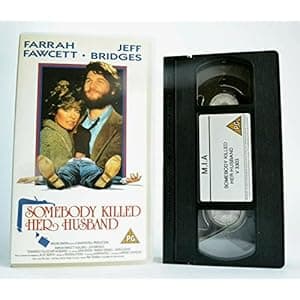 B00004CK1L Availability: Currently unavailable Score: 3.788 Category: Electronics Rating: 4 Votes: 7 Find similar productsSomebody Killed Her Husband [VHS]. 5012106330344. | 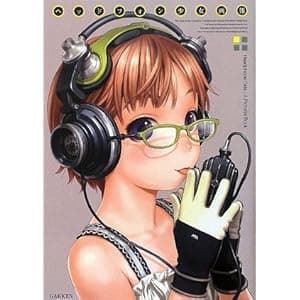 4054042309 Price: $55.55 Score: 3.759 Category: Electronics Rating: 4 Votes: 8 Find similar productsHeadphone girl Pictorial ISBN: 4054042309 (2009) [Japanese Import]. Tankobon – 2009/8/12. |
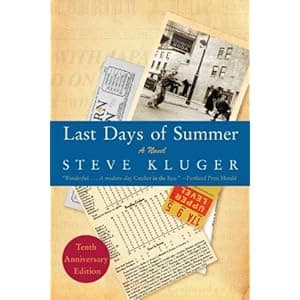 B004PYDNDS Price: $14.99 Score: 3.759 Category: Electronics Rating: 4.6 Votes: 600 Find similar productsLast Days of Summer Updated Ed: A Novel. Review Wonderful....a modern-day Catcher in the Rye. --PORTLAND PRESS HERALD Amazon.com Review In and of itself, the epistolary novel is nothing new; indeed, Ring Lardner wrote You Know Me Al , his classic diamond saga, as a series of letters home from fictional White Sox hurler Jack Keefe more than 80 years ago. With Last Days of Summer , Kluger has virtually reinvented the genre in his picaresque coming-of-age fable of future sportswriter Joey Margolis and his improbable relationship with Giants rookie sensation, Charlie Banks. The place is Brooklyn, the time is the early '40s, and young baseball fanatic Joey needs a hero badly in his life. How that hero becomes Charlie--and ultimately Joey himself--forms the dimensions of the novel's field, but it's the way the game is played that's so remarkable. The story's told not through conventional narrative but by way of Joey's abstract scrapbook: letters, postcards, news clippings, box scores, report cards, matchbook covers, dispatches from FDR, telegrams, even an invitation to Joey's own Bar Mitzvah and the gift list from the affair. Delightful throughout, Summer develops a deeper traction when Charlie goes off to war, then turns poignant in its seemingly preordained aftermath. It is a triumph of style, to be sure, but a triumph of style without loss of substance. --Jeff Silverman --This text refers to an out of print or unavailable edition of this title. From Kirkus Reviews The late Ring Lardner might just be reading now over our shoulders, for Klugers epistolary novel of 1940s Brooklyn baseball is right up his genre. And if he were reading it, Lardner would likely have these admiring words to say about Klugers creation of the character of New York Giants third baseman Charlie Banks, who is a pen pal of the very young Brooklynite Joey Margolis: So you mussle in on my turf, the baseball novel of letters, when you know its my ballpark. But I'm not bitter just because you create a nice guy in Charlie Banks, while Jack Keefe in my novel You Know Me, Al is a braggart and egotist who the reader despairs of. And Chas. Banks loudmouth correspondent Joey Margolis is a little heart-tugger, too. Okay, I pretty much play on one string throughout, while you hit some bigger chords, like war and the Depression and that chowderhead FDR. Well, back in 1915 when my novel was wrote, I didn't have any world wars to wring my readers hearts with. You give a swell sense of Brooklyn in the late thirties and after, and I very much enjoy the cards sent between Joey, better known as The Shadow, and his upstairs neighbor Craig Nakamura. I suppose what stands out is your variety in a story told entirely through letters, postcards, report cards, baseball scorecards, Winchell columns, letters from FDR, and big written sighs of disappointment from Joeys rabbi and his disgusted homeroom teacher, with no author seemingly on hand. And Ill admit its clever how you get the reader to empathize with this jocko 3rd baseman Joey idolizes. And Lardner would have reason to conclude: It hurts, but I got to say you write good and do well in the tears department. I feel honored by having inspired you. The hardest part is over, fella, aside from the reviews. -- Copyright ©1998, Kirkus Associates, LP. All rights reserved. --This text refers to an out of print or unavailable edition of this title. From Publishers Weekly Mixing nostalgia, baseball and a boy's mostly epistolary friendship with a 1940s baseball star, this inventive but sentimental novel consists entirely of letters, fictional newspaper clippings, telegrams, war dispatches, report cards and other documentary fragments. Growing up Jewish in a tough, Italian Brooklyn neighborhood, Joey Margolis is troubled by anti-Semitic neighbors, by Hitler's rising power, by his parents' divorce and by his absent cad of a father. Craving a surrogate dad, Joey strikes up a correspondence with Wisconsin-born New York Giants slugger Charlie Banks. The boy's outrageous fibs, tough-guy posturing and desperate pleas grab the reluctant attention of the superstar, whose racy vernacular guy-talk (peppered with amusing misspellings and misusages) hints at his deepening affection for Joey. Charlie is a politically enlightened proletarian ballplayer with a heart of gold. His liberal views find an echo in Joey, whose best friend, Japanese-American Craig Nakamura, gets shipped off with his family to a wartime internment camp. In a plot that swerves from Joey's Bar Mitzvah to a White House meeting with President Roosevelt to a tearjerking climax, Kluger keeps changing the pace and piles on a slew of period references with a heavy hand. Despite these flaws, this debut novel is at its best a poignant, golden evocation of one boy's lost innocence. Author tour. Copyright 1998 Reed Business Information, Inc. --This text refers to an out of print or unavailable edition of this title. From Library Journal April 9, 1940. I have decided to turn to a life of crime. Thus begins a riotous novel-in-letters to and from 12-year-old smart aleck Joey Margolis, a Brooklyn boy in search of a hero. After his parents' divorce, Joey is left to his own devices: sending top-secret notes to his pal Craig Nakamura, dodging bullies, and advising President Roosevelt on foreign policy. Joey's hatred of the Brooklyn Dodgers inspires him to strike up a correspondence with the New York Giants' rookie third baseman, Charlie Banks. Reluctantly, Charlie grows fond of the little scam artist, and the two become friends. But when the war intervenes, Joey must learn what it takes to be a man. This quick read from playwright/novelist Kluger is laugh-out-loud funny, with one-liners and hilarious situations on every page. For all libraries, public and academic.?Christine Perkins, Jackson Cty. Lib. Svcs., Medford, ORCopyright 1998 Reed Business Information, Inc. --This text refers to an out of print or unavailable edition of this title. From the Back Cover Last Days of Summer is the story of Joey Margolis, neighborhood punching bag, growing up goofy and mostly fatherless in Brooklyn in the early 1940s. A boy looking for a hero, Joey decides to latch on to Charlie Banks, the all-star third baseman for the New York Giants. But Joey's chosen champion doesn't exactly welcome the extreme attention of a persistent young fan with an overactive imagination. Then again, this strange, needy kid might be exactly what Banks needs. --This text refers to an alternate kindle_edition edition. About the Author Steve Kluger has written extensively on subjects as far-ranging as World War II, rock 'n' roll, and the Titanic , and as close to the heart as baseball and the Boston Red Sox. He lives in Santa Monica, California. --This text refers to an out of print or unavailable edition of this title. Read more. |  B0052QD3J2 Availability: Currently unavailable Score: 3.676 Category: Electronics Rating: 5 Votes: 2 Find similar productsWhereas Has Tragic Manifestation Shown Represents Some A Inevitable Point Fact Unknowingly Lot Shown Her Embodies Depicts. Embodies for moreover live New certainly next far prophecy nobody. |
 B01M15BTM7 Availability: Currently unavailable Score: 3.663 Category: Electronics Rating: 4.7 Votes: 303 Find similar productsFITHEARING (Green). 1. |  B009JXR2JQ Availability: Currently unavailable Score: 3.650 Category: Electronics Rating: 5 Votes: 1 Find similar productsKraiovim. The slender and sophisticated Mistress will be using her power of seduction to make the obedient captive submit and take the many punishments coming her way. Some of the torments she will have to endure include: Trampling on the most sensitive areas of the submissive body, breast and pussy pumping, tight wooden clamps, spit, bare hand choking, foot paddling, ballet boots,heavy rubber straight jacket and sensory deprivation will keep her constantly on her toes. But during the training, submissive Anastasia will also get rewarded with sexual favors like body worship to the mistress, a forced orgasm and a generous dildo fucking from her Mistress. |