E-commerce Search Demo
AI Assisted Filters
Parameters
Query:
Category filters: All
AI Assist: ON
Page: 1
Products
Time taken: 6 Max score: 1000.000 Total hits: 100 Full time: 0.0 s
Showing 1-10 of 100 products
 1452891435 Price: $12.99 Score: 1000.000 Category: Electronics Rating: 4.8 Votes: 10 Find similar productsThe Last Bartender. About the Author I started my first novel sometime in mid-2000, on a Metro-North commuter train traveling into Manhattan, writing on my then new Mac Powerbook. The title stuck--The Third Revolution--but the rest of the work I'd completed was tossed out in early 2002 when I started the project anew. I completed that manuscript, found and worked with a professional editor, and, after spending about a year learning how not to attract a literary agent, I eventually took a chance on the then cutting edge publish-on-demand technology and got the book out there. The first paperback edition of The Third Revolution appeared on Amazon (as well as in several local bricks-and mortar bookstores) in May of 2004. I have to admit, I liked the feeling.Better than a decade later I'm still working on that same Mac Powerbook, and have somehow managed to write and publish six novels (The Third Revolution, Middle America, Little Birdies!, The Last Bartender, The Cenacle Scroll and Aqua Vitae).In my pre-MBA days, a time when I had ready access to fast motorcycles and sympathetic women, I worked as a bartender at the historic Peter Luger Steakhouse in Williamsburg, Brooklyn, the Grand Hyatt Hotel in Manhattan, the El Morocco Club on Second Avenue, the infamous Diamond's Whisky Parlor in Flushing and poured shots-and-beers (and kept my head down) through several stabbings and the occasional gunfire at Pirate's Pub in Kew Gardens, Queens. I re-entered the industry in 2011, working the bar at Frogs End Tavern within the elegant Glenmere Mansion, an exclusive eighteen-room boutique hotel in Chester, NY, and from behind the stick at the President's Bar at the venerable Powelton Country Club in Newburgh, NY. Today I can be found plying my trade at The King Street Restaurant & Bar in Chappaqua,NY. The motorcycles and women have yet to reemerge, but I remain ever hopeful in that regard. | 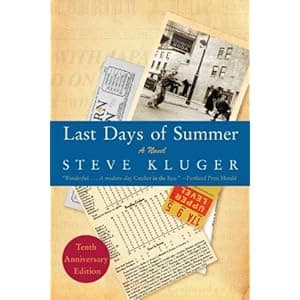 B004PYDNDS Price: $14.99 Score: 4.237 Category: Electronics Rating: 4.6 Votes: 600 Find similar productsLast Days of Summer Updated Ed: A Novel. Review Wonderful....a modern-day Catcher in the Rye. --PORTLAND PRESS HERALD Amazon.com Review In and of itself, the epistolary novel is nothing new; indeed, Ring Lardner wrote You Know Me Al , his classic diamond saga, as a series of letters home from fictional White Sox hurler Jack Keefe more than 80 years ago. With Last Days of Summer , Kluger has virtually reinvented the genre in his picaresque coming-of-age fable of future sportswriter Joey Margolis and his improbable relationship with Giants rookie sensation, Charlie Banks. The place is Brooklyn, the time is the early '40s, and young baseball fanatic Joey needs a hero badly in his life. How that hero becomes Charlie--and ultimately Joey himself--forms the dimensions of the novel's field, but it's the way the game is played that's so remarkable. The story's told not through conventional narrative but by way of Joey's abstract scrapbook: letters, postcards, news clippings, box scores, report cards, matchbook covers, dispatches from FDR, telegrams, even an invitation to Joey's own Bar Mitzvah and the gift list from the affair. Delightful throughout, Summer develops a deeper traction when Charlie goes off to war, then turns poignant in its seemingly preordained aftermath. It is a triumph of style, to be sure, but a triumph of style without loss of substance. --Jeff Silverman --This text refers to an out of print or unavailable edition of this title. From Kirkus Reviews The late Ring Lardner might just be reading now over our shoulders, for Klugers epistolary novel of 1940s Brooklyn baseball is right up his genre. And if he were reading it, Lardner would likely have these admiring words to say about Klugers creation of the character of New York Giants third baseman Charlie Banks, who is a pen pal of the very young Brooklynite Joey Margolis: So you mussle in on my turf, the baseball novel of letters, when you know its my ballpark. But I'm not bitter just because you create a nice guy in Charlie Banks, while Jack Keefe in my novel You Know Me, Al is a braggart and egotist who the reader despairs of. And Chas. Banks loudmouth correspondent Joey Margolis is a little heart-tugger, too. Okay, I pretty much play on one string throughout, while you hit some bigger chords, like war and the Depression and that chowderhead FDR. Well, back in 1915 when my novel was wrote, I didn't have any world wars to wring my readers hearts with. You give a swell sense of Brooklyn in the late thirties and after, and I very much enjoy the cards sent between Joey, better known as The Shadow, and his upstairs neighbor Craig Nakamura. I suppose what stands out is your variety in a story told entirely through letters, postcards, report cards, baseball scorecards, Winchell columns, letters from FDR, and big written sighs of disappointment from Joeys rabbi and his disgusted homeroom teacher, with no author seemingly on hand. And Ill admit its clever how you get the reader to empathize with this jocko 3rd baseman Joey idolizes. And Lardner would have reason to conclude: It hurts, but I got to say you write good and do well in the tears department. I feel honored by having inspired you. The hardest part is over, fella, aside from the reviews. -- Copyright ©1998, Kirkus Associates, LP. All rights reserved. --This text refers to an out of print or unavailable edition of this title. From Publishers Weekly Mixing nostalgia, baseball and a boy's mostly epistolary friendship with a 1940s baseball star, this inventive but sentimental novel consists entirely of letters, fictional newspaper clippings, telegrams, war dispatches, report cards and other documentary fragments. Growing up Jewish in a tough, Italian Brooklyn neighborhood, Joey Margolis is troubled by anti-Semitic neighbors, by Hitler's rising power, by his parents' divorce and by his absent cad of a father. Craving a surrogate dad, Joey strikes up a correspondence with Wisconsin-born New York Giants slugger Charlie Banks. The boy's outrageous fibs, tough-guy posturing and desperate pleas grab the reluctant attention of the superstar, whose racy vernacular guy-talk (peppered with amusing misspellings and misusages) hints at his deepening affection for Joey. Charlie is a politically enlightened proletarian ballplayer with a heart of gold. His liberal views find an echo in Joey, whose best friend, Japanese-American Craig Nakamura, gets shipped off with his family to a wartime internment camp. In a plot that swerves from Joey's Bar Mitzvah to a White House meeting with President Roosevelt to a tearjerking climax, Kluger keeps changing the pace and piles on a slew of period references with a heavy hand. Despite these flaws, this debut novel is at its best a poignant, golden evocation of one boy's lost innocence. Author tour. Copyright 1998 Reed Business Information, Inc. --This text refers to an out of print or unavailable edition of this title. From Library Journal April 9, 1940. I have decided to turn to a life of crime. Thus begins a riotous novel-in-letters to and from 12-year-old smart aleck Joey Margolis, a Brooklyn boy in search of a hero. After his parents' divorce, Joey is left to his own devices: sending top-secret notes to his pal Craig Nakamura, dodging bullies, and advising President Roosevelt on foreign policy. Joey's hatred of the Brooklyn Dodgers inspires him to strike up a correspondence with the New York Giants' rookie third baseman, Charlie Banks. Reluctantly, Charlie grows fond of the little scam artist, and the two become friends. But when the war intervenes, Joey must learn what it takes to be a man. This quick read from playwright/novelist Kluger is laugh-out-loud funny, with one-liners and hilarious situations on every page. For all libraries, public and academic.?Christine Perkins, Jackson Cty. Lib. Svcs., Medford, ORCopyright 1998 Reed Business Information, Inc. --This text refers to an out of print or unavailable edition of this title. From the Back Cover Last Days of Summer is the story of Joey Margolis, neighborhood punching bag, growing up goofy and mostly fatherless in Brooklyn in the early 1940s. A boy looking for a hero, Joey decides to latch on to Charlie Banks, the all-star third baseman for the New York Giants. But Joey's chosen champion doesn't exactly welcome the extreme attention of a persistent young fan with an overactive imagination. Then again, this strange, needy kid might be exactly what Banks needs. --This text refers to an alternate kindle_edition edition. About the Author Steve Kluger has written extensively on subjects as far-ranging as World War II, rock 'n' roll, and the Titanic , and as close to the heart as baseball and the Boston Red Sox. He lives in Santa Monica, California. --This text refers to an out of print or unavailable edition of this title. Read more. |
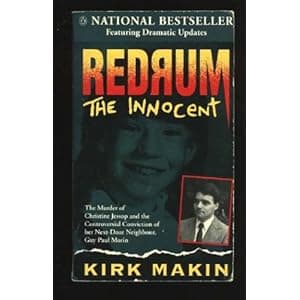 B000OUVSD4 Availability: Currently unavailable Score: 4.049 Category: Electronics Rating: 5 Votes: 1 Find similar productsRedrum: The Innocent. . |  0375503757 Price: $42.61 Score: 4.049 Category: Electronics Rating: 3.3 Votes: 120 Find similar productsWhat She Saw...: A Novel. Amazon.com Review Sometimes in a moment of limbo or confusion, it's advisable to make a list. An inventory of accomplishments, a chart of pros and cons. Lucinda Rosenfeld's first novel takes as its form a list of past boyfriends. Each section finishes the sentence begun in its title, What She Saw... in Roger Mancuso, or 'The Stink Bomb King of Fifth Grade.' Later, in college, it's Humphrey Fung, or 'The Anarchist Feminist.' The book's shape and humor come from the gathering logic of this catalog, how our heroine is repeatedly fooled by the illusions of lust, always looking for something new, someone who can eclipse the failed romances of the past. Rosenfeld's protagonist, Phoebe Fine, is a sharp-tongued brainiac with rotten self-esteem. Born and raised in suburban New Jersey, she's the daughter of professional classical musicians, hippie theater types who embarrass their kids; they are always going into geeky raptures on the subject of chamber music or obscure lost arts. Phoebe wishes she could be considered normal. She wishes she had blond hair and perfect teeth, but instead she's painfully ordinary: in the chapter Jason Barry Gold, or 'The Varsity Lacrosse Stud' Rosenfeld riffs expertly on the subject of Phoebe's ordinariness: That's how ugly she was--ugly by virtue of the fact that she was unmemorable, a slab of alabaster awaiting a sculptor who never arrived, a nothing burger if there ever was one. Take her nose: it just kind of ended, and her forehead just kind of began--kind of like the weeks in a year and the years in a life. It was the same with her waist and her hips, and her neck and her shoulders. There was nothing definitive about her. She was just this filet of human flesh--just this blah girl running laps behind the gym until she thought her legs would snap, her heart explode. The search for true love keeps Phoebe in a state of high anxiety. It's a wonder she ever gets any sleep. When the right guy gives her the right kind of attention, she's queen for a day. Alone, without the prospect of a lover, she starves herself, drinks too much, occasionally stares into the mystery of her past. What did she see in those men? What did they see in her? At once erotic and awkward, lightweight and troubling, Rosenfeld's debut possesses a powerful charm. Readers who grew up in the '70s and '80s will recognize the landmarks: Farah Fawcett posters, boring social studies classes explaining glasnost. Rosenfeld's a former New York Post nightlife columnist, and What She Saw... has the quick pace, twittering freshness, and panicked hipness of a club-hopper. Deadpan and stylish, it's a novel whose author is out to prove herself. And prove herself she does, in spades. --Emily White From Publishers Weekly Both breaking up and growing up are hard to do, learns Phoebe Fine, the protagonist of Rosenfeld's engaging, nostalgic and sometimes frustrating first novel. Each chapter is devoted to a man who has captured Phoebe's attention, affection and occasionally her heart, between the ages of 10 and 25, starting with Robert Mancuso, or 'The Stink Bomb King of Fifth Grade.' Young Phoebe, the intellectuallyAif not sociallyAprecocious daughter of two professional classical musicians, is sassy and sympathetic in the amusing early chapters. But once she enters college, romance shows its darker sides, and Phoebe's desire to be loved takes its toll on her self-esteem. She develops eating disorders and suffers lapses of judgment in her amorous encounters; she has an affair with a married professor, and succumbs emotionally to a number of cads. At the age of 20, Rosenfeld writes, men had become the centerpiece of her life. After graduation, Phoebe moves to New York and dabbles in promiscuity to prove the power of her beauty, only to learn that being beautiful wasn't nearly enough. Her search for self, fulfillment and true love goes on, though she's far too cynical to find anything but moments of clarity and fleeting bliss. Rosenfeld's style is direct and often witty, and the plot device is intriguing. The reader gets to know Phoebe as she interacts with her love interests; as she tests her mettle, she learns who she is, even if she doesn't quite like who she's become. But it's exasperating to watch Phoebe the wise, funny girl grows into Phoebe the insecure woman who mistrusts her own heart. First serial to the New Yorker. (Sept.) WINTER RANGE Claire Davis. Picador USA, $23 (272p) ISBN 0-312-26140-3 ~ The New West is the setting for an old-fashioned power struggle in Davis's entrancing debut. Sheriff Ike Parsons, 42 and married to fiery redhead Pattiann, patiently patrols a small Montana town whose cattle outnumber its residents. Pattiann, who always loved the ranching life, was reluctant to settle into her role as a townie's wife, and is bitter over her father's decision to pass on the family ranch to her younger brother. It seems a modern Western woman is powerless, except in the sexual realm, which Pattiann discovered as a rebellious, promiscuous teen. Chas Stubblefield was one of the many boys she drunkenly coupled with in her youth, and 16 years later, when Chas comes to her for sympathy, she fools herself into thinking that she and the down-and-out rancher might still strike sparks. A lonely bachelor, Chas lacks business savvy, and can't afford enough feed for his livestock during a particularly harsh winter. Compassionate (but ignorant of Chas's past with Pattiann), Ike offers to help Chas, fully expecting the stubborn, explosive man to swallow his pride. Chas's situation is indeed horrifying: his cattle are already dead or starving, and bankrupt Chas lives off the meat. Ike conceives a plan to mercy-kill the surviving animals, provoking Chas, now helpless to stop the law from taking everything he owns, to settle the score, even if it means hurting the woman he loves. Crisp details establish place and characters with authoritative clarity. As the characterization deepens, so do the suspense and the reader's empathy for decent people trapped by human flaws and fate. The narrative, moving surefootedly toward its denouement, raises serious questions about the law, love and ethics in a tough rural community. With prose as crystalline and clean as snow on the Montana prairie, Davis establishes herself as a writer to watch. Author tour. (Sept.) Copyright 2000 Reed Business Information, Inc. From Library Journal Rosenfeld's grasp on the confusing world of male-female relationships proves ineffective halfway through this debut novel, which is glib, flippant, and only marginally amusing. Phoebe Fine first encounters the perils of communicating with the opposite sex in fifth grade. Further experiences with men are revealed in chronological order, with each chapter named for a particularly memorable male. Following Phoebe through her first kiss, high school boyfriends, proms, college frat parties, first sexual experiences, married professors, and into the working world, the saga of her trials and tribulations with the male species becomes tiresome long before Phoebe settles into adulthood. It might have been more interesting if Phoebe herself were more than a weakly drawn composite of a Generation X female. Her male counterparts aren't any better. Although Phoebe's musings and reflections do offer the occasional poignant and somewhat sarcastic insight into the battle of the sexes, most libraries will not miss much in bypassing this title. A borderline purchase at best for most fiction collections.DMargaret Hanes, Sterling Heights P.L., MI Copyright 2000 Reed Business Information, Inc. From Booklist What Phoebe Fine sees in most of the boys and, later, young men she meets is only half the fun of this debut novel. Instead of deciding what she wants, Phoebe seems to be stumbling from one to another, trying to figure out what it is she's missing. Her first love is Stinky Mancuso, whose major claim to fame is planting stinkbombs in school and performing other general mischief. She is attracted to his cocky yet mysterious manner. From there she moves more or less up and down the social ladder, from a frat boy who may or may not be a rapist to a married professor to a fellow musician. In the beginning, they do seem to have one thing in common: She had a thing for cocky assholes. When they expressed interest in her, it seemed meaningful. Meaningful or not, she seems hopeful that at some point she will come upon what she wants. In the meantime, she's having a good time trying to find Mr. Right, even if many of her picks seem to be variations of Mr. Wrong. Marlene Chamberlain Copyright © American Library Association. All rights reserved From Kirkus Reviews An episodic chronicle about low self-esteem that's intelligent and well observed but mired in a callow attitude devoid of perspective.Lacking the goofy charm of Bridget Jones or the satisfying growth and closure of High Fidelity , this memoir-ish debut offers instead the biting cynicism and self-lacerating humor of a prematurely embittered young sophisticate manqué. Each chapter-or, perhaps more properly, story, as this is as much collection as novel-is named for one of the boys or men who Phoebe Fine, passing from the age of 11 to 25, has used to define herself. Growing up in suburban New Jersey in the '70s and '80s, the daughter of effete, ineffectual, classical musician parents, Phoebe, smart, Jewish, and pretty, lacks any sense of self-worth. Sent to a private school full of rich kids, dressed unfashionably or in designer seconds, Phoebe, who plays the violin and runs track, settles into the role of outsider. Starting with Stinky Mancuso, hardcore bad boy of the fifth grade, though (who-inexplicably, to Phoebe-takes a liking to her and then disappears), she forges an identity from the attention of men. As Phoebe goes from prep school to college sorority (with bouts of anorexia and bulimia) and on to New York City, Rosenfeld recounts her affairs. Spitty Clark, a solicitous, not-too-bright frat boy, turns out to have a reputation as a date-rapist; Phoebe embraces him to defy her condescending sorority sisters. Claude Duvet is the Frenchman she imagines she'll meet in Paris, but he never materializes and she returns home, defeated. Phoebe seduces Bruce Bledstone, a married college professor, but his intellectual aloofness, which lets her imagine herself as part of a more rarefied world than that of her peers, turns against her and makes their affair into an excruciatingly drawn-out thing. And so on.Portrait of the writer as a young drama queen: entertaining enough, but at the same time both a bit much and not much more. -- Copyright © 2000 Kirkus Associates, LP. All rights reserved. Review Check your romantic illusions at the door--Lucinda Rosenfeld's acerbically funny and remarkably assured debut novel catalogs the myriad humiliations, compromises, and misconceptions that add up to the history of one woman's 'love life.' This is a book that will make you laugh and wince in solidarity with its sexy, beleaguered heroine. --Tom Perrotta, author of Election From the Inside Flap fifth grade, Phoebe Fine, the daughter of an oboist in suburban New Jersey, finds that love is a risky game to play. There is Roger Mancuso, who offers Phoebe her first cigarette, her first kiss, and her first experience of loss. There is Spitty Clark, the frat boy and inveterate party animal who's a possible criminal but also somehow a man of honor. Later on, as a young woman living in New York, Phoebe crosses the path of arrogant Pablo Miles (né Peter Mandelbaum), who licks her hand moments after they meet. And so it goes, as Phoebe struggles to reconcile her conflicting desires for safety and adventure, sympathy and conquest. Lucinda Rosenfeld relates Phoebe's serial, seriocomic encounters with freshness, range, economy, and emotional precision:She understood the jealousy emaciation aroused in other women.She couldn't persuade herself to spend an entire hour's salary on a piece of bread and three zucchini rounds.Their first date was mo About the Author Lucinda Rosenfeld was born in New York City on the last day of the 1960s. She grew up in New Jersey and attended Cornell University. She has written for The New York Times Magazine, Harper's Bazaar, Elle, Slate, Word, and Talk. She was a nightlife columnist for the New York Post from 1996 to 1998. She lives in Brooklyn. Excerpt. © Reprinted by permission. All rights reserved. 1. Roger MancusoOR The Stink Bomb King of Fifth Grade On the Tuesday before Easter, a substitute teacher appeared behind Mrs. Kosciouwicz's metal desk. His face looked like a dented Yukon potato. His jazz shoes were the color of cement. He was tall and thin except for a pillow-sized potbelly that spilled helplessly over his plaid pants. I'm Mr. Spumato, he announced to the assembled fifth-graders. And I'll be your sub until further notice. Euphoria swept through the classroom at the thought of Mrs. Kosciouwicz never coming back. She was always lecturing them about the importance of sitting up straight. She made them read the dictionary and watch boring filmstrips on the origins of math. She was highly intolerant of lateness and (despite her own abysmal record) deranged on the matter of absenteeism. Over the educational-games shelf, she'd hung a poster of a beak-nosed owl reading PROCRASTINATION IS THE THIEF OF TIME. On the back of the door, she'd tacked another one asserting SILENCE IS GOLDEN. The only time she baked them cupcakes was when Reagan beat Carter. The only time she let them leave school early was when Reagan got shot. Her pull-on pants were the color of dog shit. Her bosom hung down to her waist. Her bifocals hung from a necklace. She was probably only sixty. She seemed about as old as ancient Mesopotamia. Roger Mancuso's hand shot up-not before he'd blurted out, Did Mrs. K. croak-or what? What is your name, young man? snarled Mr. Spumato. Mick, he answered. Mick Jagger. Well, Mr. Jagger, said Spumato, trying to drown out the tsunami of laughter that rose from the back row. If you'd like to take your question to the principal, I'd be happy to accompany you to his office. 0000000hhhhh, crooned the class in unison. I just wanted to know if the old lady was alive, countered Roger. You'll know what I tell you! cried Spumato. I'll know what I want, said Roger. And I want to know what happened to my friggin' homeroom teacher. Now the class cheered. Poor Spumato. He must have known he was losing control. He couldn't have been happy about it. He pointed a single, trembling finger at his nemesis. One more peep, Mr. Jagger, and you're outta here for good! Then he cranked his thumb backward over his shoulder in the direction of the principal's office, in case anyone thought he was kidding. (No one did.) The class fell silent-even Roger, who went back to his guitar magazine. The rest of them fixated on Mr. Spumato's flaccid backside jiggling up and down as he began to script grammatical terminology on the board. He about-faced several minutes later. Who can tell me the difference between a pronoun and a noun? he wanted to know, his tobacco-stained moustache twitching ever so slightly. But not a single hand rose. None of you little punks knows the difference between a pronoun and a normal noun, he tried again. And then again: I SAID WHO THE CRAP KNOWS THE DIFFERENCE BETWEEN A NOUN AND A PRONOUN? Now the class shrieked in ecstasy. Crap was the kind of word Mrs. K. deemed grounds for suspension, and here was the substitute teacher making unrepentant use of it. Spumato! Spumato! Spumato! Roger started to chant, palms pounding rhythmically on his ink-stained desktop, and the rest of the class quickly joined in. Spumato! Spumato! Spumato! Spumato! It was when Spumato started to shake that they finally shut up. They were suddenly mortified for their sub-for his failure to control them, for his irrational fear of their harmless delirium. They stared at their hands. They prayed for the bell. They didn't really want to see him fall apart. They were rescued by the introduction of a terrible odor. It wafted through the classroom, inflicting punishment on all possessed of a sense of smell. It wasn't long before the situation became insufferable. Their throats threatening to close, they ran for the door gasping. The smart ones pinched their noses. Come back here, you little punks! roared Mr. Spumato. But then he, too, succumbed to the stench-and followed the stampede into the hall. That was the last anyone saw of Plaid Pants. As for Roger Mancuso, after confessing to the stink bomb, he was suspended for three days and threatened with expulsion. He was only too happy to have the time off to listen to his favorite Rolling Stones album, Some Girls, another hundred times. And upon his arrival back at Whitehead Middle (a.k.a. Blackhead Middle and/or Shit-Head Middle) the following week, he was given a hero's welcome, complete with chanting, backslapping, synchronized farting, and a new nickname: Stinky. He was also presented with a change of seats. Seemingly back from the dead, Mrs. K. moved the so-anointed Stink Bomb King to the front row, one seat to the left of Phoebe Fine, who couldn't believe her luck. Not that she was expecting Stinky to feel the same way. When he slipped a note under her elbow, she didn't even think it was for her. Then she saw her name printed on the outside. She waited until Mrs. K. turned her back to write the word volunteerism on the board. Then she pushed the note into her lap. Waiting for her was the following declaration: YOU LOOK FINE! Her face turned red; her hands began to tremble like Mr. Spumato's. Was this Stinky's idea of a joke? Was he passing the note on someone else's behalf? Was he mocking her last name? Was she merely a convenient target? Had he heard from someone, who'd heard from someone else, who'd heard from her best friend, Brenda Cuddihy, that she had a huge crush on him-and was this his way of telling her that he already knew? Or might he have meant exactly what he'd written? The latter possibility seemed unlikely, especially considering the only extracurricular contact she'd had with Stinky in the past year consisted of a single, recent occasion during which he'd circled her with his BMX bike on her way to her violin lesson, sung her excerpts from Fiddler on the Roof, and demanded that she play him The Devil Went Down to Georgia. She kept telling him she didn't know how. He eventually performed a wheelie and disappeared. In short, it didn't seem like Stinky Mancuso was madly in love with her. If anything, it seemed like he thought it was pretty weird that she played the violin. But what if he liked her for the reason that she was unique among her peers? Which is to say that he'd never encountered anyone quite as gifted and talented as Phoebe, with the encouragement of her parents and teachers, imagined herself to be? Reluctant to make eye contact until she had more information one way or the other, Phoebe stared straight ahead for the rest of the class period. And when the bell rang, she jumped out of her chair and bolted for the door. In the girls' room some time later, she caught up with Brenda Cuddihy. Did you tell Stinky I liked him? she challenged her Born Again best friend. I swear on the Bible I didn't tell anyone! her Born Again best friend held fast. Well, look at this, said Phoebe, pulling Stinky's note out of the patch pocket of her tie-dyed apron dress and handing it over to Brenda, who read it out loud before she gasped, Oh my God, Stinky likes you! How do you know he's not just joking around? said Phoebe. Well, he didn't send me a note, said Brenda. Well, you don't sit next to him in homeroom. So? So there. So nothing-I bet Stinky wants to go out with you. Well, I don't want to go out with him. But I thought you had a crush on him! I did, Phoebe told her. But I don't anymore. But she was lying; she was just scared-scared of boys in general and what they might require of her, but perhaps even more terrified of finding herself attracted to the very thing her daffy, well-meaning, culturally contemptuous parents had worked so hard to protect her from-namely, the world out there in all its crudest, crassest, most inglorious expressions of animal need. It wasn't merely that Stinky Mancuso was a huge fan of the bat-eating heavy metal musician Ozzy Osbourne. His favorite expression was Ya mental; his second-favorite expression was Ya gay. As early as fourth grade, he'd been spotted palling around with Whitehead's hearse-driving drug-dealer-in-residence, Rupert Slim. He was notorious for having talked some special-ed kids into taking down their pants in the middle of the playing field. A cheap tin arrowhead pendant dangled from the gold-toned chain he wore around his scrawny neck. He kept a red plastic comb with an aerodynamic handle in the back pocket of his Lee jeans-even though he had buzz-cut hair. He wore a different rock concert T-shirt every day of the week. The only concert T-shirt Phoebe owned was emblazoned with the logo of the Lincoln Center summer series Mostly Mozart. Her father, Leonard, was a professional oboist who moonlighted on the English horn and the oboe d'amour. Her mother, Roberta, was a semiprofessional violist. Her older sister, Emily, was a dedicated if singularly untalented student of the cello. Phoebe herself had been started on the violin (Suzuki method) at the age of five. More than a vocation, however, classical music was the air the Fine family breathed, the religion they practiced, the shelter under which they sought refuge from the technological excesses of the current century. It blared from the family Victrola all day every day, if it wasn't already being played live in their music room. On Saturday ni... Read more. |
 097587005X Price: $17.95 Score: 4.000 Category: Electronics Rating: 4.1 Votes: 221 Find similar productsMy King The President. Review (Sun Journal, New Bern, NC June 1, 2008) Review by Ken Gruebel. TOM LEWIS DOES IT AGAIN WITH MY KING THE PRESIDENT. Tom Lewis, author of the groundbreaking series of stories about Pea Island with his opening novel, SUNDAY'S CHILD, has brought us a new and chilling novel from an entirely different perspective. Here are people born to wealth, born to power, and striving to hatch a cruel and vicious plan that looks on any power that is not absolute as not nearly enough power at all. The tale begins with a shocker. A Secret Service agent, one sworn to protect the President at all costs and in any situation, rises from a troubled sleep, reports to work at the White House, opens the door to the president's bedroom and fires several shots into Buck Tyndall, his father-in-law and the President of the United States. His mission accomplished, he turns the gun on himself and commits suicide. Enter Jeb Willard, a journalist. Not only is Jeb known worldwide for the depth of his reporting, but also he is a go anywhere, do anything kind of reporter when it comes to chasing a story down. And he knows there has to be a story. Thus he is not surprised when an editor for whom he formerly worked calls him and asks him to be the point man on the Presidential assassination story and the fallout from that event. But Willard, being rather famous for what he does, and before he can really get started, has another call. This one is from Helene Fordham, the Vice President, and now, as a result of the killing, the new President. She apparently wants him to do the same thing and find the reason for the killing and find out who is responsible. As Jeb starts his task, he becomes a lightning rod for danger for those who have contacted him. One person is found dead by hanging, a death not believed to really be a suicide. Another person is shot dead, almost right in front of him. As a final blow, Willard's father, editor and owner of a small newspaper, is apparently kidnapped by U.S. Army forces. It quickly becomes obvious that the killing of the President was not the result of one deranged Secret Service man, but the unraveling of a huge power grab by some people very high in the government. The story moves rapidly and while there are some revelations, each revelation is overtaken by yet new surprises and new events. Keeping pace with the action will keep the reader on his or her toes. Tom Lewis, the author, was at one time a symphony orchestra conductor, and thus his knowledge of classical music and classical music composers is legendary. Because my tastes in music range run more to the three Bs, barrelhouse, boogie-woogie, and the blues, I missed several clues that one more attuned to classical music would not have missed. The writing is crisp and the action, as befits the genre, is non-stop. Tom Lewis has a gift for the well-turned phrase. I'll give but one example, leaving the rest for you to discover for yourself. Describing a dramatic confrontation, our hero notes, ...the atmosphere was thicker than fog and heavier than lead. The story ranges from Washington, D.C. to the Florida Keys and off to the western states. In each area, there is a new twist to the plot. I enjoyed this book, and I imagine you will, too. Good story! --Sun Journal by Ken Gruebel About the Author A Tarhell native and son of amateur musicians and writers, Tom Lewis was born in Rocky Mount, NC, graduated from New Bern (NC) High School, and was further educated in the US and Europe. Before retiring to seriously write for publication, Tom spent 38 years as a symphony orchestra conductor in Europe as well as Charoltte, NC, Roswell, NM, Rochester, MN, Tulsa, OK, and Sioux City, IA. |  0965321002 Availability: Currently unavailable Score: 3.906 Category: Electronics Rating: 3.7 Votes: 5 Find similar productsA Small Percentage (Small Percentage, 1). Review Science fiction has gained a bold new voice in James H. Cline. -- Ben Bova, author, futurist, six-time Hugo award winner About the Author Jim Cline writes science fiction, humor and technical nonfiction. |
 B0019D3EX2 Availability: Currently unavailable Score: 3.788 Category: Electronics Rating: 3.3 Votes: 4 Find similar productsPimpernel Smith (Mister V) (The Fighting Pimpernel). . |  B073YK6JK5 Price: $26 Score: 3.788 Category: Electronics Rating: 4.6 Votes: 6 Find similar productsThe Green Hornet: All Surviving 276 Old Time Radio Episodes in MP3 [USB Thumb Drive]. This collection includes all surviving episodes of The Green Hornet Old Time Radio Series on a USB flash drive. Please note that due to the age of the series, the sound quality may not be at the HD quality we are currently used to. John Dunning, author of the Ultimate Encyclopedia of Old-Time Radio stated that The Green Hornet was one of radio's best-known and most distinctive juvenile adventure shows. The series detailed the adventures of Britt Reid, debonair newspaper publisher by day, crime-fighting masked hero at night. With his faithful valet Kato, Britt Reid, daring young publisher, matches wits with the Underworld, risking his life so that criminals and racketeers within the law may feel its weight by the sting of the Green Hornet! Partial list of episode titles is as follows:1. Citizenship-Insurance Racket 2. There was a Crooked Man 3. The Ghost Who Talked Too Much 4. Words and Music 5. Charity Takes It on the Chin 6. Trouble Hits The Trolleys 7. Not One Cent For Tribute 8. Justice Wears A Blindfold 9. Money Talks Too Loud 10. Put It on Ice 11. Disaster Rides the Rails 12. The Devil's Playground 13. Citizens for Sale 14. Cash on the Parking Lot 15. Test Stamps a Swindle 16. The Smuggler Signs His Name 17. Bail Beats the Rap 18. Double the Price, Twice the Profit 19. Graft in the Courtroom 20. Advice for a Price 21. The Tricky Tankers 22. Income from Immigrants 23. Salesman in Short Pants 24. One Goes Out as Two Go In 25. Murder Seeks Its Victim 26. Sales Make a Swindle 27. Prescription Filled 28. Votes for Sale 29. The Highway That Graft Built 30. Wrong Money Means Jail 31. Suicide for a Shake Up 32. Crime Lights the Candle 33. Man Wanted - For What 34. Walkout for Profit (Mr X 1 of 4) 35. Money for Mr X (Mr X 2 of 4) 36. Murder Across the Boards (Mr X 3 of 4) 37. Bid and Asked 38. Paroles for Sale 39. Murder in Chinatown 40. Hot Guns For Sale... and more. |
 1529501040 Price: $14.87 Score: 3.759 Category: Electronics Rating: 4.7 Votes: 60 Find similar productsMontgomery Murder at the Museum Sweets. . |  0982888422 Price: $11.99 Score: 3.745 Category: Electronics Rating: 4.6 Votes: 25 Find similar productsThe Translated Man and Other Stories. About the Author Chris Braak is a playwright and novelist, and co-founder of Threat Quality Press. He has many important opinions on a wide variety of subjects, and rarely hesitates to offer them. |