E-commerce Search Demo
AI Assisted Filters
Parameters
Query:
Category filters: All
AI Assist: ON
Page: 1
Products
Time taken: 3 Max score: 1000.000 Total hits: 100 Full time: 0.0 s
Showing 1-10 of 100 products
 B01411TW0W Availability: Currently unavailable Score: 1000.000 Category: Home Rating: 3.7 Votes: 6 Find similar productsVictorinox Cleaver Chinese Polypropylene Handle, Black, 8 X 3. Over the years, both customer needs and technology have changed. The Swiss Army knife has evolved by responding to these needs, while remaining an essential tool our clients can rely on. That's our story. But it's not what turned the victorinox knife into an icon. It's about the stories our customers experienced in which our products played a vital role: stories about memorable moments of adventure and expeditions on earth, in the sky and in space. Dramatic stories in which our products contributed to solutions and saved lives. Even stories of prominent encounters where our knives opened doors, helping to create ties between politicians, opinion leaders and nations. In all of these stories it becomes clear that thanks to the talent of our EMPLOYEES we have been able to develop products that excel in their functionality, quality and design - making them true Companions for life. We invite you to discover the world of victorinox and are proud to be a companion for your life. Thank you for your interest and trust in victorinox. | 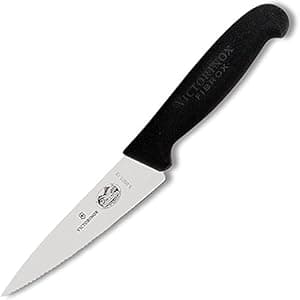 B000B5JXVQ Price: $34.99 Score: 9.524 Category: Home Rating: 3.6 Votes: 41 Find similar productsVictorinox Mini Chef's Serrated at Fibrox Pro Handle, 5/1.25, Black. Over the years, both customer needs and technology have changed. The Swiss Army knife has evolved by responding to these needs, while remaining an essential tool our clients can rely on. That's our story. But it's not what turned the victorinox knife into an icon. It's about the stories our customers experienced in which our products played a vital role: stories about memorable moments of adventure and expeditions on earth, in the sky and in space. Dramatic stories in which our products contributed to solutions and saved lives. Even stories of prominent encounters where our knives opened doors, helping to create ties between politicians, opinion leaders and nations. In all of these stories it becomes clear that thanks to the talent of our EMPLOYEES we have been able to develop products that excel in their functionality, quality and design - making them true Companions for life. We invite you to discover the world of victorinox and are proud to be a companion for your life. Thank you for your interest and trust in victorinox. |
 B001XCWGNS Availability: Currently unavailable Score: 6.897 Category: Home Rating: 5 Votes: 9 Find similar productsVictorinox Fibrox Sandwich Knife, 10-Inch, White. Victorinox Swiss Army Cutlery Who is Victorinox? Although Victorinox is known the world over as the creator of the Original Swiss Army Knife, the company started out in 1884 as a cutlery workshop. By the time company creator Karl Elsener delivered his first pocket knife to the Swiss Army, his cutlery business was already booming. Over the next century, Victorinox cutlery became a top-rated choice among professionals worldwide, with over 300 blades to offer. Victorinox knives have regularly appeared as highly ranked and recommended kitchen tools in Cook's Illustrated, Men's Health, The Cincinnati Enquirer, New York Magazine, and Natural Health, just to name a few. In 2009, the company announced a partnership with professional chef, Daniel Humm, of Eleven Madison Park in New York City. In addition, building on the success of its cutlery business, Victorinox has brought all the same quality and expertise to a wider range of products and accessories, including other kitchen tools, pocket tools, watches, luggage, and clothing. Who is R.H. Forschner? Victorinox had been a staple in European commercial cutlery for over 50 years when approached by New York's R.H. Forschner, known since 1855 as a builder of scales for butchers, to be their sole cutlery supplier. The two companies joined forces in 1937, and R.H. Forschner subsequently became North America's dominant professional brand, as ubiquitous in the bustling meatpacking plants of the Midwest as it is in the gleaming, four-star restaurant kitchens of Midtown Manhattan. As a division of Victorinox/Swiss Army Brands, R.H. Forschner marketed cutlery under the brand name RH Forschner by Victorinox and distributed to the commercial, food service, and retail trade classes. That brand has been considered a top choice of professionals worldwide with over 300 styles of blades bearing the R.H. Forschner name. However, in 2009, in conjunction with Victorinox's 125th anniversary, the company, Victorinox Swiss Army, Inc., has decided to remove the RH Forschner name from all blades. Blades thenceforth only include the Victorinox name. What is a stamped blade? A stamped knife can usually be identified by the absence of a bolster. Stamped blades are cut into their shapes from cold-rolled pieces of steel and then ground, tempered, and sharpened. Creating them requires many less steps than forging and results in lighter, narrower blades. Some professionals prefer the thicker, heavier forged blades, but many pros, who spend much of their day cutting and slicing, enjoy a lighter knife since it's less fatiguing and easier to manipulate at speed. Stamped knives are easier to produce and therefore less expensive. They perform very well and can approach the quality of a forged blade, but not the weight or feel. Victorinox manufactures a complete range of stamped blades with unique, patented Fibrox handles and they are considered among the greatest values in the knife industry. What knives do I need to own? Knife choice or selection is determined by many factors--size, function, style, and preference. The most important factor is function. Different knives have different uses. It is important to use the proper knife for a specific task, since proper knife selection and the use of a proper-sized, sharp knife make for safe cutting. General kitchen tasks and the knife to use for them are as follows: Paring: The most common to own and use, a paring knife is generally for small cutting jobs and peeling of vegetables or fruit. The blade size is usually from three to four inches. Choose the shape and size to fit your hand. Since this is one of the more versatile knives, owning more than one is recommended. Paring: The most common to own and use, a paring knife is generally for small cutting jobs and peeling of vegetables or fruit. The blade size is usually from three to four inches. Choose the shape and size to fit your hand. Since this is one of the more versatile knives, owning more than one is recommended. Chef's: The most important tool and essential to every cook, a chef's knife is most often used in a rocking method to mince, dice, and chop vegetables and herbs. This one is known as the chef's best friend. Chef's: The most important tool and essential to every cook, a chef's knife is most often used in a rocking method to mince, dice, and chop vegetables and herbs. This one is known as the chef's best friend. Slicer: Most commonly used to slice meats, poultry, and seafood, the slicer is an important companion to any host or hostess. Slicer: Most commonly used to slice meats, poultry, and seafood, the slicer is an important companion to any host or hostess. Boning: As its name suggests, a boning knife is used to trim or remove meat and fish from the bone. Boning: As its name suggests, a boning knife is used to trim or remove meat and fish from the bone. Bread: Designed with a special edge, a bread knife makes easy work of cutting through crusty bread, pastries, or any item with a crust and a soft interior. Bread: Designed with a special edge, a bread knife makes easy work of cutting through crusty bread, pastries, or any item with a crust and a soft interior. Fillet: Most often used by pros and seasoned home chefs, the fillet knife is used to fillet meat and fish. Fillet: Most often used by pros and seasoned home chefs, the fillet knife is used to fillet meat and fish. Cleaver: An important addition to any collection, a cleaver is often used to cut or chop through bones. Cleaver: An important addition to any collection, a cleaver is often used to cut or chop through bones. Santoku: This knife combines the features of a cleaver with a chef's knife. The curved blade helps the rocking motion used for chopping, and the wide blade works well for scooping sliced food off a cutting board and for crushing garlic. The santoku can also be used to slice meat and has a narrow spine for making thin cuts. Santoku: This knife combines the features of a cleaver with a chef's knife. The curved blade helps the rocking motion used for chopping, and the wide blade works well for scooping sliced food off a cutting board and for crushing garlic. The santoku can also be used to slice meat and has a narrow spine for making thin cuts. Utility: An all-purpose knife often referred to as a sandwich knife, the utility knife peels and slices fruits and vegetables, and even carves small meats. Utility: An all-purpose knife often referred to as a sandwich knife, the utility knife peels and slices fruits and vegetables, and even carves small meats. Shaping: With its curved blade, a shaping knife is great for small precision cuts where control is essential, such as peeling, trimming, or garnishing. Shaping: With its curved blade, a shaping knife is great for small precision cuts where control is essential, such as peeling, trimming, or garnishing. What are the different knife edges and what do they do? Straight: The vast majority of Victorinox knives come with a straight or fine edge. This means it has a perfect taper along the blade and no serrations. It is designed to cut without tearing or shredding. Straight: The vast majority of Victorinox knives come with a straight or fine edge. This means it has a perfect taper along the blade and no serrations. It is designed to cut without tearing or shredding. Serrated: An edge designed with small, jagged teeth along the edge. Serrated: An edge designed with small, jagged teeth along the edge. Scalloped: A blade with waves along the edge generally used to cut breads with a hard crust and soft interior, as well as tougher-skinned fruits and vegetables. Scalloped: A blade with waves along the edge generally used to cut breads with a hard crust and soft interior, as well as tougher-skinned fruits and vegetables. Granton: This edge has hollowed-out grooves or dimples on the sides of the blade. These grooves fill with the fat and juices of the product being cut, allowing for thin, even cuts without tearing. Even with the grooves, these are still straight-edge knives and can be honed with a sharpening steel. Granton: This edge has hollowed-out grooves or dimples on the sides of the blade. These grooves fill with the fat and juices of the product being cut, allowing for thin, even cuts without tearing. Even with the grooves, these are still straight-edge knives and can be honed with a sharpening steel. How should I care for my cutlery? After use, knives should not be allowed to soak in water. The best practice is to hand wash and dry them immediately. This is especially true if they have been used on fruit or salty foods, which may cause some staining, even on stainless steel. Most knives require very little maintenance and it is worth the effort to protect your investment. Though Victorinox knives are dishwasher safe, this is strongly discouraged. The dishwasher's agitation may cause damage. Additionally, harsh detergents can be harmful and cause pitting and spotting on the blades. The handles may also discolor and develop a white film with constant use of the dishwasher. Plus, intense heat associated with dishwashers is not good for the temper of the blade. How do I keep my knives sharp? All quality knives require proper maintenance to keep them in perfect cutting shape. The best of edges will quickly dull if it strikes metal, glass, or Formica. A wooden cutting board makes the best cutting surface. And, if a slip occurs, a proper cutting board is safer for the user. Frequent use of a Victorinox sharpening steel will keep blades in tip top working condition. All straight-edge knives need steeling to keep their edges. How to Steel a Knife Steeling a Knife Hold the steel firmly in your left hand with the guard positioned to stop the blade should it slip. Hold the steel firmly in your left hand with the guard positioned to stop the blade should it slip. Hold the knife in your right hand and place on top part of steel as shown. Hold the knife in your right hand and place on top part of steel as shown. Raise back of blade one-eighth inch. Raise back of blade one-eighth inch. Now, moving the blade only, draw it across the steel in an arching curve, pivoted at your wrist. The blade tip should leave the steel about two-thirds of the way down. Now, moving the blade only, draw it across the steel in an arching curve, pivoted at your wrist. The blade tip should leave the steel about two-thirds of the way down. Repeat the same action with the Blade on the bottom side of the steel. Always maintain the same pressure and angle on both sides of the steel. Repeat the same action with the Blade on the bottom side of the steel. Always maintain the same pressure and angle on both sides of the steel. Repeat five or six times. Repeat five or six times. How should I store my knives? Safety is the biggest concern of storage, both to the user and to protect the knife's edge. Choices include a knife magnet, knife block, drawer insets, and also individual knife protectors. |  B0019WUS7S Availability: Currently unavailable Score: 6.897 Category: Home Rating: 4.9 Votes: 32 Find similar productsVictorinox Cutlery 8-Inch Chef's Knife, Red Fibrox Handle. Victorinox Swiss Army Cutlery Who is Victorinox? Although Victorinox is known the world over as the creator of the Original Swiss Army Knife, the company started out in 1884 as a cutlery workshop. By the time company creator Karl Elsener delivered his first pocket knife to the Swiss Army, his cutlery business was already booming. Over the next century, Victorinox cutlery became a top-rated choice among professionals worldwide, with over 300 blades to offer. Victorinox knives have regularly appeared as highly ranked and recommended kitchen tools in Cook's Illustrated, Men's Health, The Cincinnati Enquirer, New York Magazine, and Natural Health, just to name a few. In 2009, the company announced a partnership with professional chef, Daniel Humm, of Eleven Madison Park in New York City. In addition, building on the success of its cutlery business, Victorinox has brought all the same quality and expertise to a wider range of products and accessories, including other kitchen tools, pocket tools, watches, luggage, and clothing. Who is R.H. Forschner? Victorinox had been a staple in European commercial cutlery for over 50 years when approached by New York's R.H. Forschner, known since 1855 as a builder of scales for butchers, to be their sole cutlery supplier. The two companies joined forces in 1937, and R.H. Forschner subsequently became North America's dominant professional brand, as ubiquitous in the bustling meatpacking plants of the Midwest as it is in the gleaming, four-star restaurant kitchens of Midtown Manhattan. As a division of Victorinox/Swiss Army Brands, R.H. Forschner marketed cutlery under the brand name RH Forschner by Victorinox and distributed to the commercial, food service, and retail trade classes. That brand has been considered a top choice of professionals worldwide with over 300 styles of blades bearing the R.H. Forschner name. However, in 2009, in conjunction with Victorinox's 125th anniversary, the company, Victorinox Swiss Army, Inc., has decided to remove the RH Forschner name from all blades. Blades thenceforth only include the Victorinox name. What is a stamped blade? A stamped knife can usually be identified by the absence of a bolster. Stamped blades are cut into their shapes from cold-rolled pieces of steel and then ground, tempered, and sharpened. Creating them requires many less steps than forging and results in lighter, narrower blades. Some professionals prefer the thicker, heavier forged blades, but many pros, who spend much of their day cutting and slicing, enjoy a lighter knife since it's less fatiguing and easier to manipulate at speed. Stamped knives are easier to produce and therefore less expensive. They perform very well and can approach the quality of a forged blade, but not the weight or feel. Victorinox manufactures a complete range of stamped blades with unique, patented Fibrox handles and they are considered among the greatest values in the knife industry. What knives do I need to own? Knife choice or selection is determined by many factors--size, function, style, and preference. The most important factor is function. Different knives have different uses. It is important to use the proper knife for a specific task, since proper knife selection and the use of a proper-sized, sharp knife make for safe cutting. General kitchen tasks and the knife to use for them are as follows: Paring: The most common to own and use, a paring knife is generally for small cutting jobs and peeling of vegetables or fruit. The blade size is usually from three to four inches. Choose the shape and size to fit your hand. Since this is one of the more versatile knives, owning more than one is recommended. Paring: The most common to own and use, a paring knife is generally for small cutting jobs and peeling of vegetables or fruit. The blade size is usually from three to four inches. Choose the shape and size to fit your hand. Since this is one of the more versatile knives, owning more than one is recommended. Chef's: The most important tool and essential to every cook, a chef's knife is most often used in a rocking method to mince, dice, and chop vegetables and herbs. This one is known as the chef's best friend. Chef's: The most important tool and essential to every cook, a chef's knife is most often used in a rocking method to mince, dice, and chop vegetables and herbs. This one is known as the chef's best friend. Slicer: Most commonly used to slice meats, poultry, and seafood, the slicer is an important companion to any host or hostess. Slicer: Most commonly used to slice meats, poultry, and seafood, the slicer is an important companion to any host or hostess. Boning: As its name suggests, a boning knife is used to trim or remove meat and fish from the bone. Boning: As its name suggests, a boning knife is used to trim or remove meat and fish from the bone. Bread: Designed with a special edge, a bread knife makes easy work of cutting through crusty bread, pastries, or any item with a crust and a soft interior. Bread: Designed with a special edge, a bread knife makes easy work of cutting through crusty bread, pastries, or any item with a crust and a soft interior. Fillet: Most often used by pros and seasoned home chefs, the fillet knife is used to fillet meat and fish. Fillet: Most often used by pros and seasoned home chefs, the fillet knife is used to fillet meat and fish. Cleaver: An important addition to any collection, a cleaver is often used to cut or chop through bones. Cleaver: An important addition to any collection, a cleaver is often used to cut or chop through bones. Santoku: This knife combines the features of a cleaver with a chef's knife. The curved blade helps the rocking motion used for chopping, and the wide blade works well for scooping sliced food off a cutting board and for crushing garlic. The santoku can also be used to slice meat and has a narrow spine for making thin cuts. Santoku: This knife combines the features of a cleaver with a chef's knife. The curved blade helps the rocking motion used for chopping, and the wide blade works well for scooping sliced food off a cutting board and for crushing garlic. The santoku can also be used to slice meat and has a narrow spine for making thin cuts. Utility: An all-purpose knife often referred to as a sandwich knife, the utility knife peels and slices fruits and vegetables, and even carves small meats. Utility: An all-purpose knife often referred to as a sandwich knife, the utility knife peels and slices fruits and vegetables, and even carves small meats. Shaping: With its curved blade, a shaping knife is great for small precision cuts where control is essential, such as peeling, trimming, or garnishing. Shaping: With its curved blade, a shaping knife is great for small precision cuts where control is essential, such as peeling, trimming, or garnishing. What are the different knife edges and what do they do? Straight: The vast majority of Victorinox knives come with a straight or fine edge. This means it has a perfect taper along the blade and no serrations. It is designed to cut without tearing or shredding. Straight: The vast majority of Victorinox knives come with a straight or fine edge. This means it has a perfect taper along the blade and no serrations. It is designed to cut without tearing or shredding. Serrated: An edge designed with small, jagged teeth along the edge. Serrated: An edge designed with small, jagged teeth along the edge. Scalloped: A blade with waves along the edge generally used to cut breads with a hard crust and soft interior, as well as tougher-skinned fruits and vegetables. Scalloped: A blade with waves along the edge generally used to cut breads with a hard crust and soft interior, as well as tougher-skinned fruits and vegetables. Granton: This edge has hollowed-out grooves or dimples on the sides of the blade. These grooves fill with the fat and juices of the product being cut, allowing for thin, even cuts without tearing. Even with the grooves, these are still straight-edge knives and can be honed with a sharpening steel. Granton: This edge has hollowed-out grooves or dimples on the sides of the blade. These grooves fill with the fat and juices of the product being cut, allowing for thin, even cuts without tearing. Even with the grooves, these are still straight-edge knives and can be honed with a sharpening steel. How should I care for my cutlery? After use, knives should not be allowed to soak in water. The best practice is to hand wash and dry them immediately. This is especially true if they have been used on fruit or salty foods, which may cause some staining, even on stainless steel. Most knives require very little maintenance and it is worth the effort to protect your investment. Though Victorinox knives are dishwasher safe, this is strongly discouraged. The dishwasher's agitation may cause damage. Additionally, harsh detergents can be harmful and cause pitting and spotting on the blades. The handles may also discolor and develop a white film with constant use of the dishwasher. Plus, intense heat associated with dishwashers is not good for the temper of the blade. How do I keep my knives sharp? All quality knives require proper maintenance to keep them in perfect cutting shape. The best of edges will quickly dull if it strikes metal, glass, or Formica. A wooden cutting board makes the best cutting surface. And, if a slip occurs, a proper cutting board is safer for the user. Frequent use of a Victorinox sharpening steel will keep blades in tip top working condition. All straight-edge knives need steeling to keep their edges. How to Steel a Knife Steeling a Knife Hold the steel firmly in your left hand with the guard positioned to stop the blade should it slip. Hold the steel firmly in your left hand with the guard positioned to stop the blade should it slip. Hold the knife in your right hand and place on top part of steel as shown. Hold the knife in your right hand and place on top part of steel as shown. Raise back of blade one-eighth inch. Raise back of blade one-eighth inch. Now, moving the blade only, draw it across the steel in an arching curve, pivoted at your wrist. The blade tip should leave the steel about two-thirds of the way down. Now, moving the blade only, draw it across the steel in an arching curve, pivoted at your wrist. The blade tip should leave the steel about two-thirds of the way down. Repeat the same action with the Blade on the bottom side of the steel. Always maintain the same pressure and angle on both sides of the steel. Repeat the same action with the Blade on the bottom side of the steel. Always maintain the same pressure and angle on both sides of the steel. Repeat five or six times. Repeat five or six times. How should I store my knives? Safety is the biggest concern of storage, both to the user and to protect the knife's edge. Choices include a knife magnet, knife block, drawer insets, and also individual knife protectors. |
 B000WLFNL8 Price: $7.95 Score: 6.711 Category: Home Rating: 4.8 Votes: 1315 Find similar productsVictorinox VIC-6.7733 Swiss Classic Paring 4 Serrated Spear Point Blade 5/8 Width at Handle Black. A rock solid heritage, exacting commitment to Swiss precision and a consistent focus on quality and innovation are the absolute cornerstones of our business. Founded on integrity and family values, today we operate in over ten countries worldwide. The original Swiss Army knife, created by Karl Lesner in 1897, embodies the essence of Victoriana. Directional, intrepid and pioneering on the global stage, today Our international brand spans five product categories: Swiss Army knives, cutlery, watches, travel gear and fragrances. |  B001XCWM50 Price: $77.5 Score: 6.536 Category: Home Rating: 4.4 Votes: 63 Find similar productsVictorinox Cutlery 10-Inch Chef's Knife, White Fibrox Handle, 10 Inch. From the inventors of the famous Swiss Army knife comes a line of fine cutlery designed for accomplished and aspiring chefs at work or in the home. Each blade in the Stamped collection is expertly made in Switzerland from high-carbon stainless steel and undergoes a special tempering process for an edge that can be resharpened again and again. The result is a knife that can keep its original sharpness throughout the entire life of the blade. Each blade is conical ground throughout its length and depth, and laser tested to ensure optimum cutting power and durability. Ergonomically designed to minimize wrist tension, the unique, patented Fibrox handles are slip resistant when wet. Plus, all Stamped cutlery with Fibrox handles is approved by the National Sanitary Foundation (NSF). Although cutlery steel is naturally sanitary, materials and construction details of these handles minimize crevices that may otherwise offer hospitality to bacteria. The Victorinox Stamped collection is an extensive range with open-stock pieces as well as handy and versatile sets. Often referred to as a chef's best friend, the 10-inch multipurpose chef's knife is designed for chopping, mincing, slicing, and dicing. Sized for comfort, it's also available in 6- and 8-inch versions as well. Made from the same material as the ergonomic black Fibrox, Victorinox's white Handles offer a sanitary view that is necessary for hospital and school kitchens, large food services institutions, and governmental contracts. All Stamped cutlery should be washed by hand for best care, and Victorinox covers each piece with a lifetime warranty against manufacturer defects. From the Manufacturer Who is Victorinox? Although Victorinox is known the world over as the creator of the Original Swiss Army Knife, the company started out in 1884 as a cutlery workshop. By the time company creator Karl Elsener delivered his first pocket knife to the Swiss Army, his cutlery business was already booming. Over the next century, Victorinox cutlery became a top-rated choice among professionals worldwide, with over 300 blades to offer. Victorinox knives have regularly appeared as highly ranked and recommended kitchen tools in Cook’s Illustrated , Men’s Health , The Cincinnati Enquirer , New York Magazine , and Natural Health , just to name a few. In 2009, the company announced a partnership with professional chef, Daniel Humm, of Eleven Madison Park in New York City. In addition, building on the success of its cutlery business, Victorinox has brought all the same quality and expertise to a wider range of products and accessories, including other kitchen tools, pocket tools, watches, luggage, and clothing. Who is R.H. Forschner? Victorinox had been a staple in European commercial cutlery for over 50 years when approached by New York’s R.H. Forschner, known since 1855 as a builder of scales for butchers, to be their sole cutlery supplier. The two companies joined forces in 1937, and R.H. Forschner subsequently became North America’s dominant professional brand, as ubiquitous in the bustling meatpacking plants of the Midwest as it is in the gleaming, four-star restaurant kitchens of Midtown Manhattan. As a division of Victorinox/Swiss Army Brands, R.H. Forschner marketed cutlery under the brand name “RH Forschner by Victorinox” and distributed to the commercial, food service, and retail trade classes. That brand has been considered a top choice of professionals worldwide with over 300 styles of blades bearing the R.H. Forschner name. However, in 2009, in conjunction with Victorinox’s 125th anniversary, the company, Victorinox Swiss Army, Inc., has decided to remove the “RH Forschner” name from all blades. Blades thenceforth only include the “Victorinox” name. What is a stamped blade? A stamped knife can usually be identified by the absence of a bolster. Stamped blades are cut into their shapes from cold-rolled pieces of steel and then ground, tempered, and sharpened. Creating them requires many less steps than forging and results in lighter, narrower blades. Some professionals prefer the thicker, heavier forged blades, but many pros, who spend much of their day cutting and slicing, enjoy a lighter knife since it’s less fatiguing and easier to manipulate at speed. Stamped knives are easier to produce and therefore less expensive. They perform very well and can approach the quality of a forged blade, but not the weight or feel. Victorinox manufactures a complete range of stamped blades with unique, patented Fibrox handles and they are considered among the greatest values in the knife industry. What knives do I need to own? Knife choice or selection is determined by many factors--size, function, style, and preference. The most important factor is function. Different knives have different uses. It is important to use the proper knife for a specific task, since proper knife selection and the use of a proper-sized, sharp knife make for safe cutting. General kitchen tasks and the knife to use for them are as follows: Paring: The most common to own and use, a paring knife is generally for small cutting jobs and peeling of vegetables or fruit. The blade size is usually from three to four inches. Choose the shape and size to fit your hand. Since this is one of the more versatile knives, owning more than one is recommended. Chef's: The most important tool and essential to every cook, a chef‘s knife is most often used in a rocking method to mince, dice, and chop vegetables and herbs. This one is known as the chef’s best friend. Slicer: Most commonly used to slice meats, poultry, and seafood, the slicer is an important companion to any host or hostess. Boning: As its name suggests, a boning knife is used to trim or remove meat and fish from the bone. Bread: Designed with a special edge, a bread knife makes easy work of cutting through crusty bread, pastries, or any item with a crust and a soft interior. Fillet: Most often used by pros and seasoned home chefs, the fillet knife is used to fillet meat and fish. Cleaver: An important addition to any collection, a cleaver is often used to cut or chop through bones. Santoku: This knife combines the features of a cleaver with a chef's knife. The curved blade helps the rocking motion used for chopping, and the wide blade works well for scooping sliced food off a cutting board and for crushing garlic. The santoku can also be used to slice meat and has a narrow spine for making thin cuts. Utility: An all-purpose knife often referred to as a sandwich knife, the utility knife peels and slices fruits and vegetables, and even carves small meats. Shaping: With its curved blade, a shaping knife is great for small precision cuts where control is essential, such as peeling, trimming, or garnishing. What are the different knife edges and what do they do? Straight: The vast majority of Victorinox knives come with a straight or fine edge. This means it has a perfect taper along the blade and no serrations. It is designed to cut without tearing or shredding. Serrated: An edge designed with small, jagged teeth along the edge. Scalloped: A blade with waves along the edge generally used to cut breads with a hard crust and soft interior, as well as tougher-skinned fruits and vegetables. Granton: This edge has hollowed-out grooves or dimples on the sides of the blade. These grooves fill with the fat and juices of the product being cut, allowing for thin, even cuts without tearing. Even with the grooves, these are still straight-edge knives and can be honed with a sharpening steel. How should I care for my cutlery? After use, knives should not be allowed to soak in water. The best practice is to hand wash and dry them immediately. This is especially true if they have been used on fruit or salty foods, which may cause some staining, even on stainless steel. Most knives require very little maintenance and it is worth the effort to protect your investment. Though Victorinox knives are dishwasher safe, this is strongly discouraged. The dishwasher’s agitation may cause damage. Additionally, harsh detergents can be harmful and cause pitting and spotting on the blades. The handles may also discolor and develop a white film with constant use of the dishwasher. Plus, intense heat associated with dishwashers is not good for the temper of the blade. How do I keep my knives sharp? All quality knives require proper maintenance to keep them in perfect cutting shape. The best of edges will quickly dull if it strikes metal, glass, or Formica. A wooden cutting board makes the best cutting surface. And, if a slip occurs, a proper cutting board is safer for the user. Frequent use of a Victorinox sharpening steel will keep blades in tip top working condition. All straight-edge knives need steeling to keep their edges. How to Steel a Knife 1. Hold the steel firmly in your left hand with the guard positioned to stop the blade should it slip. 2. Hold the knife in your right hand and place on top part of steel as shown. 3. Raise back of blade one-eighth inch. 4. Now, moving the blade only, draw it across the steel in an arching curve, pivoted at your wrist. The blade tip should leave the steel about two-thirds of the way down. 5. Repeat the same action with the Blade on the bottom side of the steel. Always maintain the same pressure and angle on both sides of the steel. 6. Repeat five or six times. When a sharpening steel no longer does the job, it’s time to take the knife to a qualified knife sharpener who will place a new edge on it. This, along with use of the sharpening steel, will give you many years of sharp, safe blades. Please note that electric knife sharpeners can be harmful. They have to be used carefully as they remove too much metal, can harm the temper of the blade, and most important can change the factory-applied edge angle. How should I store my knives? Safety is the biggest concern of storage, both to the user and to protect the knife's edge. Choices include a knife magnet, knife block, drawer insets, and also individual knife protectors. |
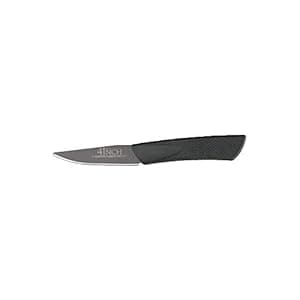 B07YF3TQNY Availability: Currently unavailable Score: 5.882 Category: Home Rating: 5 Votes: 1 Find similar productsSandrin 4inch Tungsten Carbide Knife. Sandrin Knives has done the impossible - create a tungsten carbide knife blade that isn't brittle. It is the only blade in the world made of tungsten carbide, and it’s rated at 71 Rockwell C. This industry-wide success story starts at the legendary Italian metallurgical company, Turmond SPA, where they developed a proprietary breakthrough method for using tungsten carbide in truly revolutionary ways. In so doing, they developed the most technically advanced Chef knife ever made. This engineered metal is capable of so much more than regular steel. Because of the properties of this special compound, functional stresses are setting new standards for the knife industry, as demonstrated by the Sandrin TCK folding knife. Since the engineered tungsten carbide blade is now the hardest knife blade in the world, this unique knife can probably be called - The Knife That Will Last Forever! It's not an exaggeration. This is a knife that gets sharp and STAYS sharp. Even with repeated, rugged use, these patented tungsten carbide blades will keep their edge and remain razor sharp vastly outperforming steel knives. Sure, nothing lasts forever, but with industry applications showing that a carbide edge lasts up to 20 times longer than steel, this sure comes close! A sharp knife is easier to control and the Sandrin 4inch will stay sharp up to 20x longer than traditional steel knives making it safer to use. Also, since this knife achieve an amazing 71 Rockwell, it won't leave behind microscopic particles in your food the same way steel knives do. The 4inch blade is sharpened to a combined final angle of 21 degrees which allows for a very fine and durable cutting edge while being as wear resistant as possible. The rounded tip helps prevent any accidental cuts as this blade will stay VERY sharp for a long time. Specs - OAL: 8.66, Blade: 5, Thickness: 0.36, Edge: 21deg, Grind: Flat, Edge Type: Hollow Grind, Handle Material: PA11. |  B00IGHU5N6 Availability: Currently unavailable Score: 5.848 Category: Home Rating: 5 Votes: 4 Find similar productsUnited Cutlery BV156 Black Legion Cyclone Assisted Open Tanto Pocket Knife. This assisted-open Cyclone tango folder from Black Legion features a 3 1/2 black-coated, razor-sharp stainless steel blade with partial serrations that opens with lightning speed. Aluminum handle scales offer a checkered pattern for an excellent grip. A strong, metal pocket clip holds it tightly in place in your pocket or pack. |
 B00093092W Availability: Currently unavailable Score: 5.848 Category: Home Rating: 5 Votes: 3 Find similar productsVictorinox 10-1/4 Bread Knife, Yellow Fibrox. Victorinox cutlery is the knife of choice for professionals and consistently receives high accolades in product testing. This best-in-class commercial grade cutlery is now available for home use. Victorinox knives feature high carbon, stainless steel blades, hand finished at victorinox in switzerland by skilled craftsmen. A special tempering process is used to produce an edge that can be resharpened over and over again, so the knife can keep its original sharpness throughout the entire life of the blade. Victorinox handles are ergonomically designed to minimize wrist tension. They provide a natural fit. A good heft and comfortable, positive grip are indications of a well-made knife. A sure-grip handle with a finger guard is valuable feature since the handle inevitably gets greasy, wet, or both. Although cutlery steel is naturally sanitary, materials and construction details of the handle minimize crevices what would offer hospitality to bacteria. Patented, nsf approved fibrox handles. |  B0009308I2 Availability: Currently unavailable Score: 5.814 Category: Home Rating: 1 Votes: 1 Find similar productsVictorinox VIC-40114 Wood Boning - Straight Wide 7 Stiff Blade. A rock solid heritage, exacting commitment to Swiss precision and a consistent focus on quality and innovation are the absolute cornerstones of our business. Founded on integrity and family values, today we operate in over ten countries worldwide. The original Swiss Army knife, created by Karl Lesner in 1897, embodies the essence of Victoriana. Directional, intrepid and pioneering on the global stage, today Our international brand spans five product categories: Swiss Army knives, cutlery, watches, travel gear and fragrances. |